

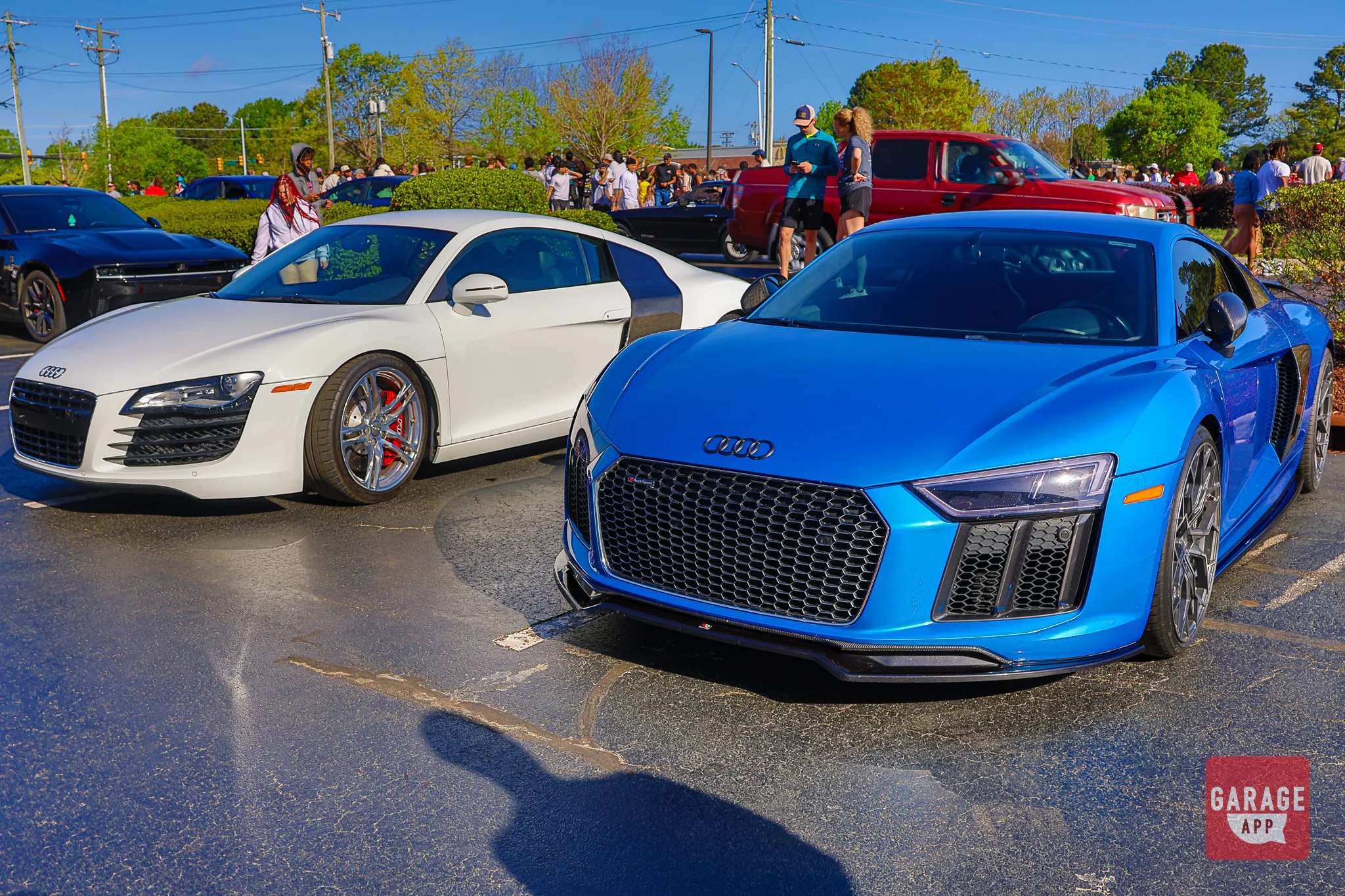
A car meet is an informal gathering where owners park their cars together in one lot to show them and talk with other enthusiasts. There’s no judging and usually no entry fee. Most meets happen in a shopping center, coffee shop or parking garage and last a couple of hours. Motorcycle riders hold the same kind of gathering, usually called a bike meet. Meets are popping up in more cities every weekend, and you can find car events near you almost any day of the week. The reasons behind the 2026 boom go deeper than good photos of shiny bumpers. Car meets have also become one of the easiest ways to find people who drive the same car and turn that into a club or regular group.
What Does Car Meet Mean?
“Car meet” is short for car meetup. You’ll also see it written as carmeet or car meet-up, and all of them mean the same thing. The word “meet” is the point. People come to see cars and talk to the owners, not to compete. A meet isn’t a car show. Nothing is judged, there are no classes and you usually don’t register in advance. It also isn’t a street takeover, which is an illegal gathering on public roads. A legitimate meet takes place on private property with the owner’s permission.
What Are Car Meets? The Common Types
Car meets come in a few formats, and most areas have more than one running each month.
- Cars and Coffee: Weekend morning meets, usually at a coffee shop or large lot. They draw a wide mix of cars and bikes and tend to be family-friendly. Read our full guide on cars and coffee meets.
- Night meets: Evening gatherings, often in a retail lot or parking garage. They lean toward modified cars and younger crowds.
- Make or model meets: Gatherings for one brand or style, such as Miata owners, BMW clubs or air-cooled Porsches. These are the easiest way to find people who drive the same car you do.
- Bike meets: The motorcycle version, often with a group ride before or after. Find bike meets and groups with GarageApp.
| Car meet | Cars and Coffee | Car show | Street takeover | |
|---|---|---|---|---|
| When | daily | Weekend mornings | Scheduled event day | Unannounced, at night |
| Judging | None | None | Classes and awards | None |
| Cost | Usually free | Usually free | Registration fee common | - |
| Legal | Yes, with property permission | Yes | Yes | No |
What Happens at a Car Meet?
You pull in and park. Some meets group cars by make or style, but most let you take any open spot. If you came to look rather than show, park in the spectator area or at the edge of the lot. Then people walk the lot. Owners open hoods, talk through their builds and take photos. Asking about someone’s car is the normal way to start a conversation, and most owners are glad to explain what they’ve done to it. Organizers sometimes announce the next meet or a group cruise. People leave in waves after a couple of hours.
Car Meet Etiquette
Leave quietly. No burnouts and no revving on the way out. Meets that lose their venue usually lose it for this reason. Ask before touching anyone’s car, and pick up your trash. If the property has posted rules, follow them. If you have any questions, our guide on car meet etiquette is the place to look.
Why People Go to Car Meets: Real-World Connection
Most people don't go to a car meet just for the cars. They go for the people. A meet is one of the easiest ways to spend time with others who share your interest: there's no membership, no entry fee, and no pressure to own something expensive. You pull in, park next to everyone else, and within minutes someone is asking about your wheels or telling you about their own build or restoration project. For a lot of regulars, that first meet leads to a group chat, a weekend group drive, or a spot in a local car club. That sense of belonging is the biggest reason people keep coming back.
Car meets also fill a gap that other car events leave open. Judged car shows and track days rank or time cars, but a meet doesn't, so any car belongs. A stock Civic can park next to a restored Porsche, and both owners get the same attention. Most meets are organized by local enthusiasts rather than companies, which keeps them casual and easy to join. That low-pressure format is a big reason car meets grew so quickly in 2026, as more people found them online and decided to show up in person.
Social Media Car Events: How Instagram and TikTok Fuel Car Meets
Instagram and TikTok have become the main way people find out about car meets. A short clip of a clean JDM build rolling into a meet, or a row of lifted trucks lit up with custom underglow, can reach millions of viewers in a few days. Many of those viewers have never been to a meet, and a single video is often what gets them to their first one. Creators who film and photograph car meets now act as ambassadors for the scene, showing newcomers what a typical meet looks like and which makes and models show up locally.
The algorithms favor car content. A beautifully edited video of a car meet attracts hundreds of thousands of views, generates engagement, and most importantly, inspires viewers to attend the next event. Photography enthusiasts have discovered car meets as gold mines for content creation. Automotive influencers now build entire careers around documenting the car community. This created a positive feedback loop: more content drives more attendance, which creates more opportunities for content, which attracts even more people.
The democratization of content creation has also made car culture more accessible. You don't need a professional film crew to document a car meet. A smartphone and some creative editing skills are enough to create content that resonates with millions. This has lowered barriers to entry for automotive enthusiasts of all backgrounds.
You Don't Need a Big Budget to Join a Car Meet
Modifying a car used to take serious money and specialized knowledge. Parts were expensive, installs were complicated, and the know-how stayed inside small, established circles that were hard for newcomers to break into.
That's no longer the case. Online guides and video tutorials cover almost every common modification, and affordable aftermarket parts are easy to find. A modest car with a few well-chosen upgrades can draw a crowd at a meet, and plenty of featured builds started out as everyday drivers. You don't even need a modified car to go. Most meets welcome stock cars, and many people show up just to look.
DIY culture has made a big difference too. People who never thought of themselves as "car people" have learned to work on their own cars with some time, patience, and help from others. When you're ready to meet those people in person, you can join a GarageApp group for your area or your car and connect with experienced builders who are happy to share what they know.
How Online Car Communities Became Real-World Meets
For years, car enthusiasm lived mostly online. Reddit threads, Discord servers, and model-specific forums connected owners around the world, but those friendships rarely went beyond the screen. Car meets changed that. After years of trading build advice and photos online, people wanted to see the cars in person and meet the owners behind the usernames, and a local meet was the easiest place to do it.
Organizing a meet has also become much easier. A few enthusiasts can pick a spot, share it in a group chat, and post it on Instagram in an afternoon. Apps built for car owners go further: GarageApp's event and club tools let organizers post a meet, invite nearby members, and keep everyone updated in one place. Many meets now end with a group cruise, and our guides to scenic routes and drives can help you plan one.
What Kinds of Cars Show Up at Car Meets?
Almost every kind of car has a place at a modern car meet. JDM cars (Japanese Domestic Market models) are still some of the most popular, and modified Hondas, Nissans, Subarus, and Mazdas draw big crowds. European sports cars from BMW, Porsche, and Volkswagen have a loyal following, and American muscle cars like Mustangs, Camaros, and Challengers are a staple at most meets. Lifted and lowered trucks have become a scene of their own, and electric vehicles are showing up more often, especially Teslas and modified EV hatchbacks. Many meets also draw classic, exotic, and collector cars, so a restored '60s muscle car might park next to a new supercar. Some meets focus on a single make or style, while others are open to everyone, so it's easy to find one that fits the car you drive.
How Car Meets Help Local Businesses
Car meets bring business to more than the auto industry. A popular meet can draw hundreds or even thousands of people, and they spend money on food, drinks, and merchandise. Food trucks, local coffee shops, and small apparel and sticker brands often set up at meets, and some have built their whole business around the car scene. Many of those brands grow by partnering with car apps and creators, for example through the GarageApp affiliate program.
The aftermarket automotive industry has experienced a renaissance driven by car meet culture. Parts suppliers, fabricators, and custom shops report unprecedented demand for their products and services. People attend meets, see modifications they love, research the parts involved, and make purchases. This direct connection between community events and retail sales has created a self-reinforcing economic cycle.
Tourism has also benefited. Major car meets attract attendees from across the country and increasingly from around the world. Hotels, restaurants, and local attractions benefit from the influx of car enthusiasts. Some cities have begun recognizing car meets as significant events worthy of municipal support and investment.
The Role of Community Organizers
The success of car meet culture owes much to dedicated community organizers who pour countless hours into coordinating events. These individuals are automotive evangelists who believe in the power of bringing enthusiasts together. They negotiate with property owners, manage logistics, coordinate security, and handle countless other details that make successful meets possible.
What's remarkable is that many of these organizers do this work without compensation, driven purely by passion and community spirit. Their efforts have created thriving ecosystems of car culture in cities and towns across the country. As car meets have grown, some organizers have turned their passion into legitimate businesses, creating jobs and economic opportunity while maintaining the community focus that makes these events special.
Inclusivity as a Core Value
Modern car meets have embraced inclusivity as a core value in ways that would have been unimaginable a generation ago. Event organizers explicitly work to create welcoming environments for people of all backgrounds, genders, and automotive interests. This isn't performative; it's a fundamental shift in how the community sees itself.
The emphasis on inclusivity has attracted new participants who might not have felt welcome in previous iterations of car culture. Women's automotive groups have exploded in popularity. LGBTQ+ car enthusiasts have found community and acceptance at meets. People from all economic backgrounds feel welcomed. This cultural evolution has enriched car culture immeasurably, bringing new perspectives, aesthetics, and ideas.
The Future of Car Meets
Looking forward, car meet culture shows no signs of slowing down. The structural factors driving growth remain robust. Social media will continue to amplify car culture. Accessibility of modifications will only improve. The human desire for community and connection won't diminish. And as more people participate, the culture itself becomes more entrenched and normalized.
We're likely to see further professionalization and organization of car meets, with major events securing corporate sponsorships and municipal support. Technology may play an increasingly important role, with apps helping organize logistics and enhance the meet experience. However, the core appeal will likely remain unchanged: people gathering to celebrate the vehicles they love and the communities they've built.
Tools like GarageApp are making it easier for communities to organize and manage their events, ensuring that the logistical aspects don't overshadow the passion and joy that draws people to car culture. The technology serves the community, not the other way around.
Conclusion
The rise of car meet culture in 2026 represents far more than a trend. It's a fundamental expression of human desire for community, authenticity, and shared passion. The convergence of post-pandemic community hunger, social media amplification, increased accessibility, and genuine inclusivity has created the perfect conditions for an automotive renaissance.
Car meets are places where people from different backgrounds, with different vehicles and different motivations, come together united by their love of cars and community. In a world that often feels increasingly fragmented and digital, car meets offer something precious: genuine human connection centered around a shared passion.
The next time you encounter a video of a car meet online, remember that you're witnessing a genuine cultural phenomenon. These aren't staged events. They're authentic expressions of community spirit that will likely define automotive culture for years to come. Whether you're a dedicated gearhead or just someone who appreciates a well-executed paint job, there's probably a car meet near you. The community is waiting. Find out how to find cars and coffee events near you to join the movement.