

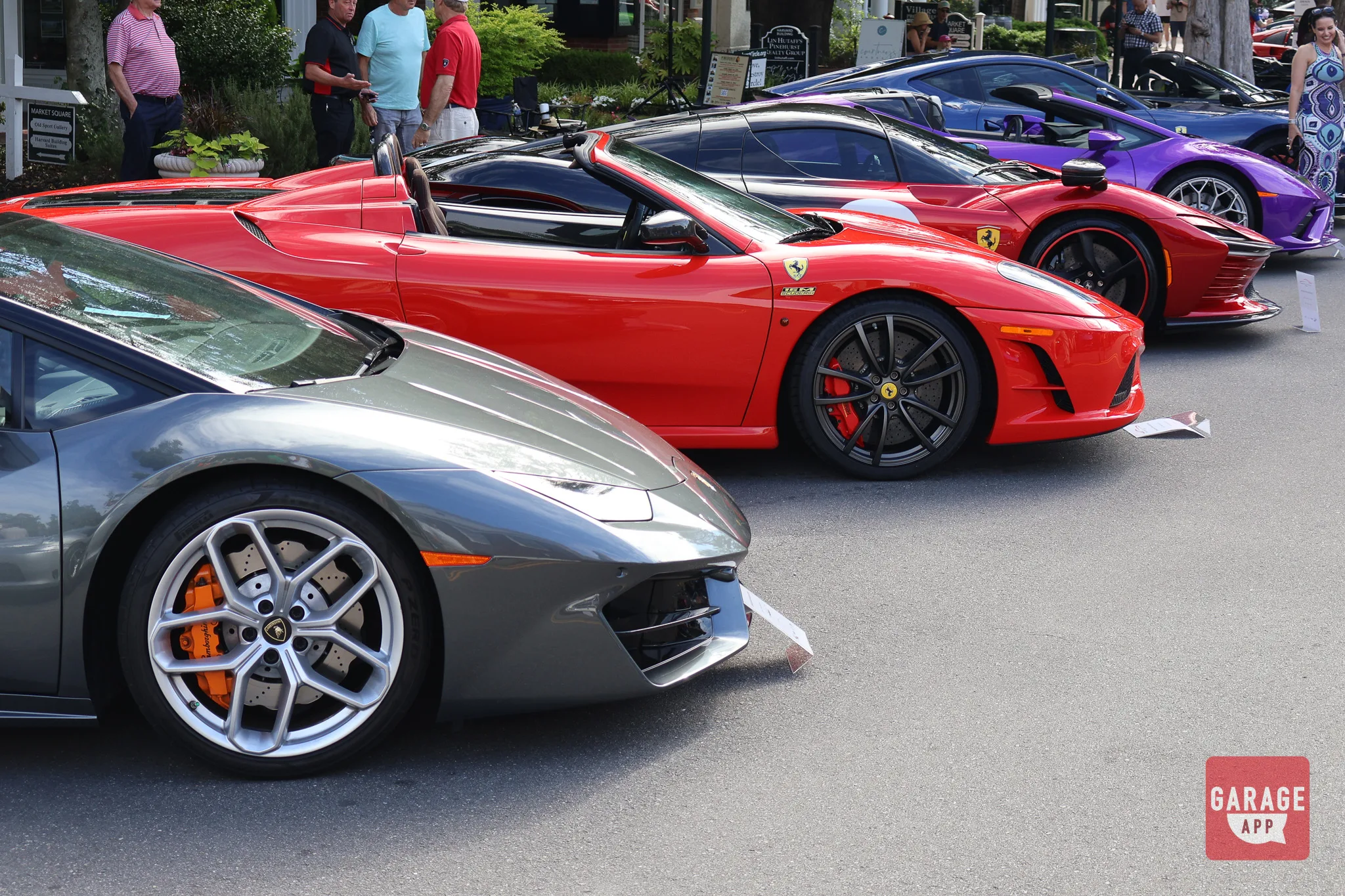
You already know clubs come in two broad shapes. There is the club built around a single badge, and there is the club that welcomes anything with wheels and a pulse. We first drew that line in the Single-Marque vs. Multi-Marque section of the bigger club guide, but that was a definition. This is the decision. Which one actually fits the way you enjoy your car, your time, and the people you want around you?
There is no trophy for picking correctly. But there is a real difference in what you get out of each, and knowing that difference before you show up saves you a season of feeling slightly out of place.
What You Actually Get From a Single-Marque Club
A single-marque club is a room full of people who own what you own. That sounds simple. The payoff is not. When everyone is running the same platform, the knowledge gets specific in a way that a general forum never matches. Someone in the group has already chased down the exact rattle you are hearing at 3,200 rpm. Someone else knows which shop in your area actually understands the torque spec on that one stubborn bracket.
Parts move differently too. In a tight marque community, a member parting out a car will offer bits to the group before they ever hit a listing. Rare trim pieces, discontinued hardware, the sensor that has been backordered for eight months. These trade hands through relationships, not marketplaces.
Look at how Porsche owners connect near each other for a concrete picture. That kind of community goes deep on model-year quirks, transmission variants, and the difference between what the factory says and what the car actually does. You get people who care about the same details you obsess over, which means your questions land with folks who have already lived the answer.
Before you join a marque club, ask what their most active discussion channel is. The healthiest single-marque groups have a spot where technical talk happens daily, not just event announcements.
What You Actually Get From a Multi-Marque Club
A multi-marque club trades depth for breadth, and that trade is not a downgrade. It is a different thing entirely. The social pool is bigger. The calendar is fuller. On any given weekend there is a cruise, a meet, a charity drive, or a coffee run happening within reach, and you are welcome at all of it regardless of what you drive.
You lose some technical specificity. Nobody in the group may share your exact platform, so the deep parts network and model-specific troubleshooting mostly evaporate. What you gain is variety. You end up parked next to an air-cooled Volkswagen, a built truck, a Japanese coupe, and a muscle car all in one morning, and the conversations range wider because of it.
Open, come-one-come-all meets are usually where this energy lives. The different flavors of Cars and Coffee show how multi-marque culture overlaps with public events. A lot of broad clubs essentially organize their social life around these gatherings, using them as the anchor point where members and strangers mix freely.
The Tradeoff Nobody States Plainly
Neither type wins. People argue about it like there is a right answer, but the honest version is that they solve different problems. One gives you deep expertise on a single car. The other gives you a wider circle that happens to share a general interest in cars.
I know a guy who ran with a dedicated Miata club for years. He loved the technical depth, but eventually he realized he was spending every weekend talking about the same four suspension setups. He drifted toward a local multi-marque group, kept one foot in the Miata world, and got the social variety he was actually missing. He did not leave because the first club was bad. He left because his priorities had shifted, and the club had not shifted with them.
The club that fits you at year one is not always the club that fits you at year five.
When Single-Marque Makes the Most Sense
Some cars practically demand a marque club. Rare or discontinued models, cars with thin factory documentation, anything where the official service literature ran out years ago. In those cases the club is not a nice extra. It is the primary knowledge base. If the collective memory of the owner community disappears, so does the practical ability to keep the car running right.
Marque clubs also handle internal variety better than people expect. A single brand can split into vintage, performance, and daily-driver crowds under one roof. Look at how BMW owners find each other across those camps. The E30 restorers, the M-car track folks, and the people daily-driving a modern sedan all fall under the same badge but pull knowledge in very different directions. A good single-marque club holds all of that without diluting any of it.
When Multi-Marque Makes the Most Sense
If you own something uncommon and there is simply no local group for it, a multi-marque club is often the only realistic option nearby. You are not going to find a chapter for your oddball import in a small city. A broad group gives you people to actually meet in person, which beats a national forum you never see face to face.
It also fits anyone who wants the social side more than the technical side. Some people just want good company and a reason to drive somewhere on a Saturday. If no group exists near you, you can start by locating individuals first with find car enthusiasts by make and model, then decide whether to build something yourself using a step-by-step guide to starting a car club.
You do not have to pick sides forever. Plenty of enthusiasts belong to one marque club for the deep knowledge and one local multi-marque group for the social calendar.
Testing the Waters Before Committing
The whole marque-versus-broad question gets a lot easier the moment you can actually see who is around you. Deciding in the abstract is guesswork. Deciding after you know there are twelve owners of your exact model within an hour is not.
This is where a tool like GarageApp earns its keep. You can find nearby owners by make, model, year, and even trim, so you learn whether a real single-marque crowd exists close by before you commit to anything. From there you can create or join a group centered on a specific brand, or a broader local community, and feel out both without any pressure. Treat it as a low-commitment trial run rather than a signup.
Before you choose, run through a few honest questions:
- How many owners of your exact model are within an hour of you?
- Do you want technical depth on one car, or social variety across many?
- Is there an active local meet already tied to a broad group you could sample?
- Does your car have a maintenance need that only marque-specific knowledge can solve?
- Would you rather learn from people who own what you own, or meet people who drive nothing like you?
Answer those and the fit usually reveals itself. Someone restoring a documentation-thin classic will land on marque every time. Someone who just wants weekend company and a full calendar will lean broad. Most people fall somewhere in between, which is exactly why sampling both first beats guessing.
One last thing worth holding onto. The single-versus-multi choice is only one slice of a bigger structural picture. How a club is governed, how it grows, and how it keeps members engaged matters just as much as what badge sits on the marquee. The foundations of what makes a club actually work will shape your experience far beyond this one decision, so treat the marque question as a starting point, not the whole answer.
And if you end up being the person who drags half your local scene onto GarageApp, you may as well get paid for it. The GarageApp affiliate program pays 30% for anyone who signs up through your link, which suits club organizers and meet hosts especially well since you are already the one telling people where to be on Saturday. Read the breakdown first, then grab your link from the signup page when you are ready.