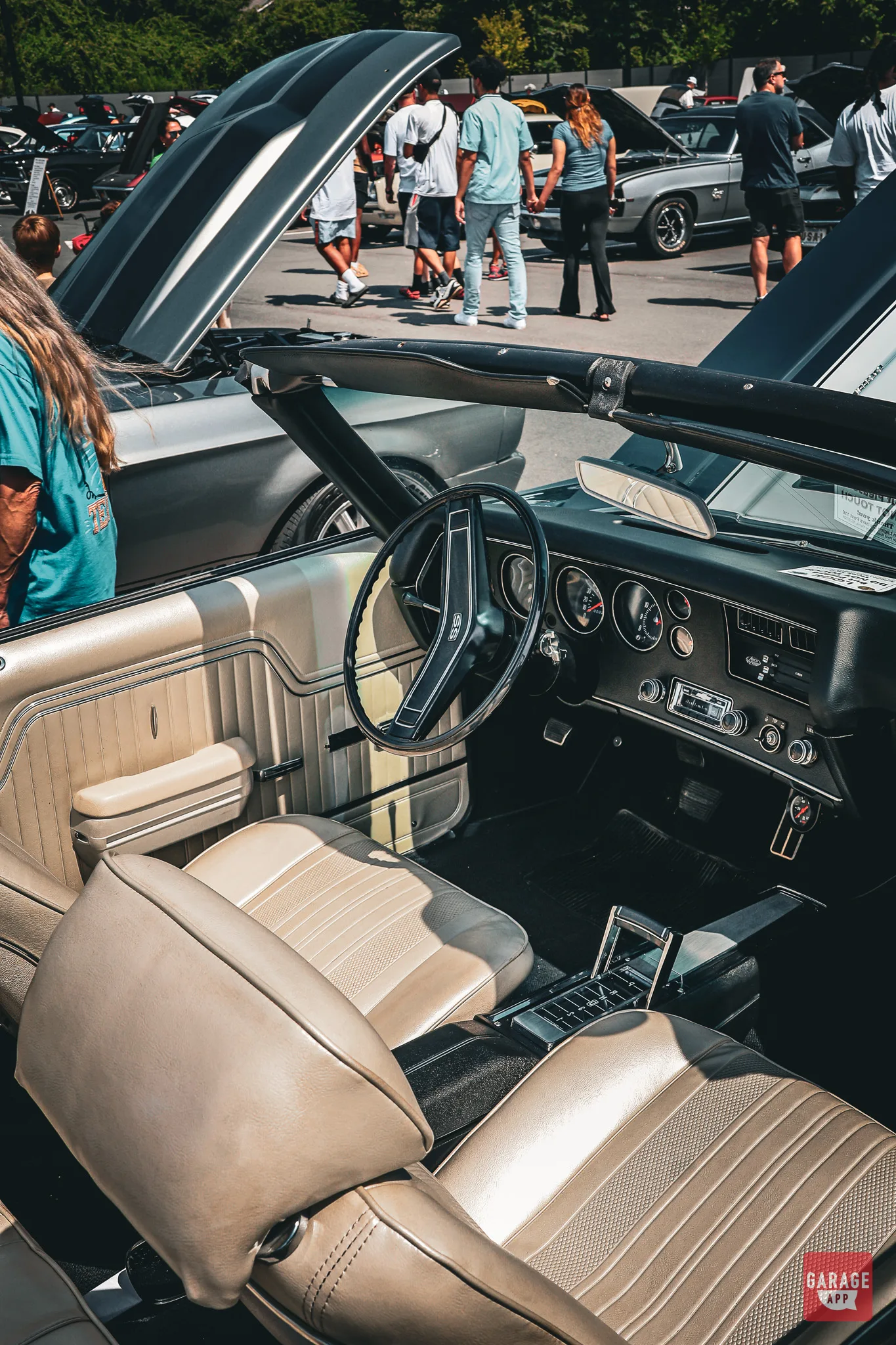

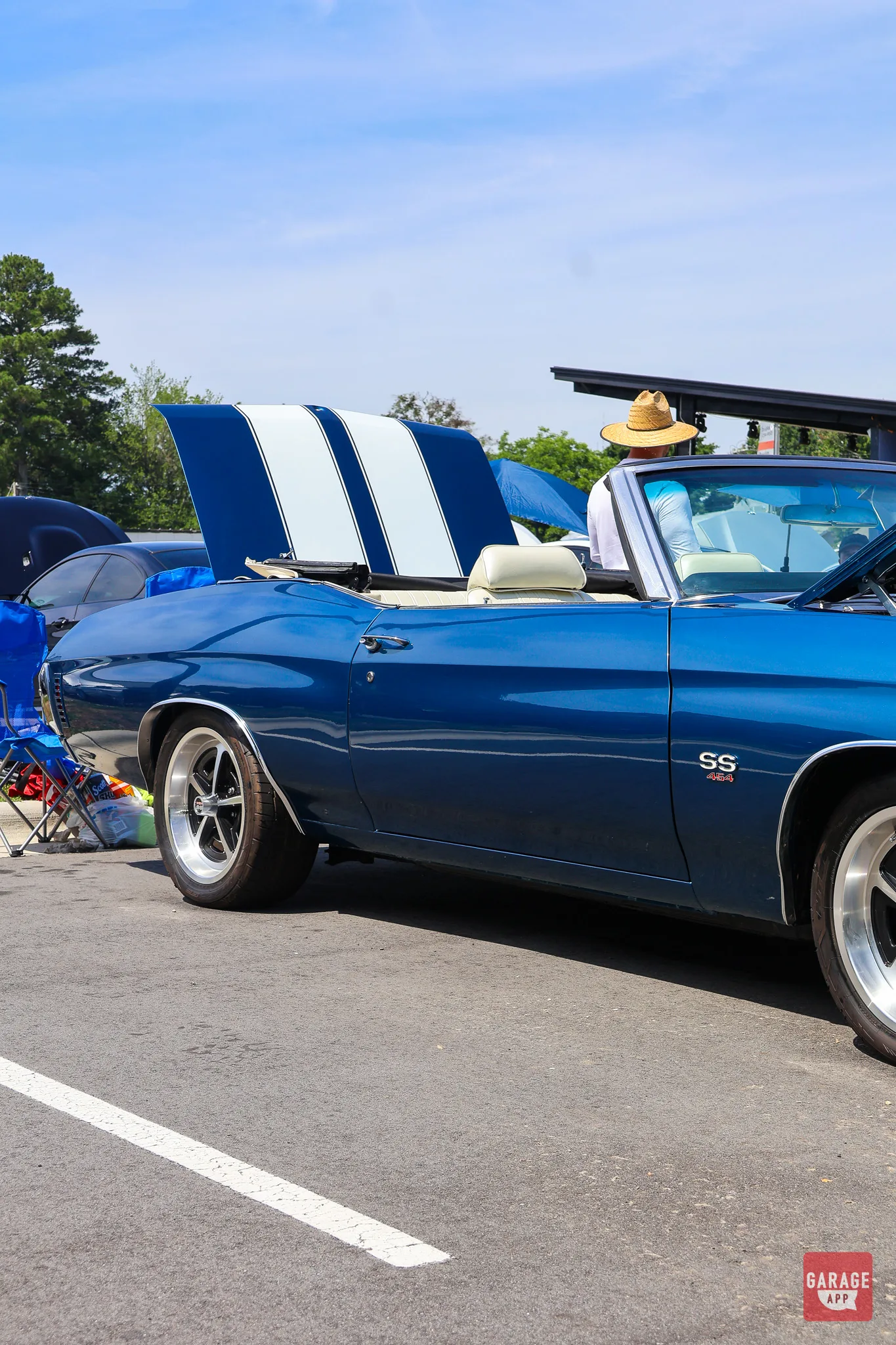
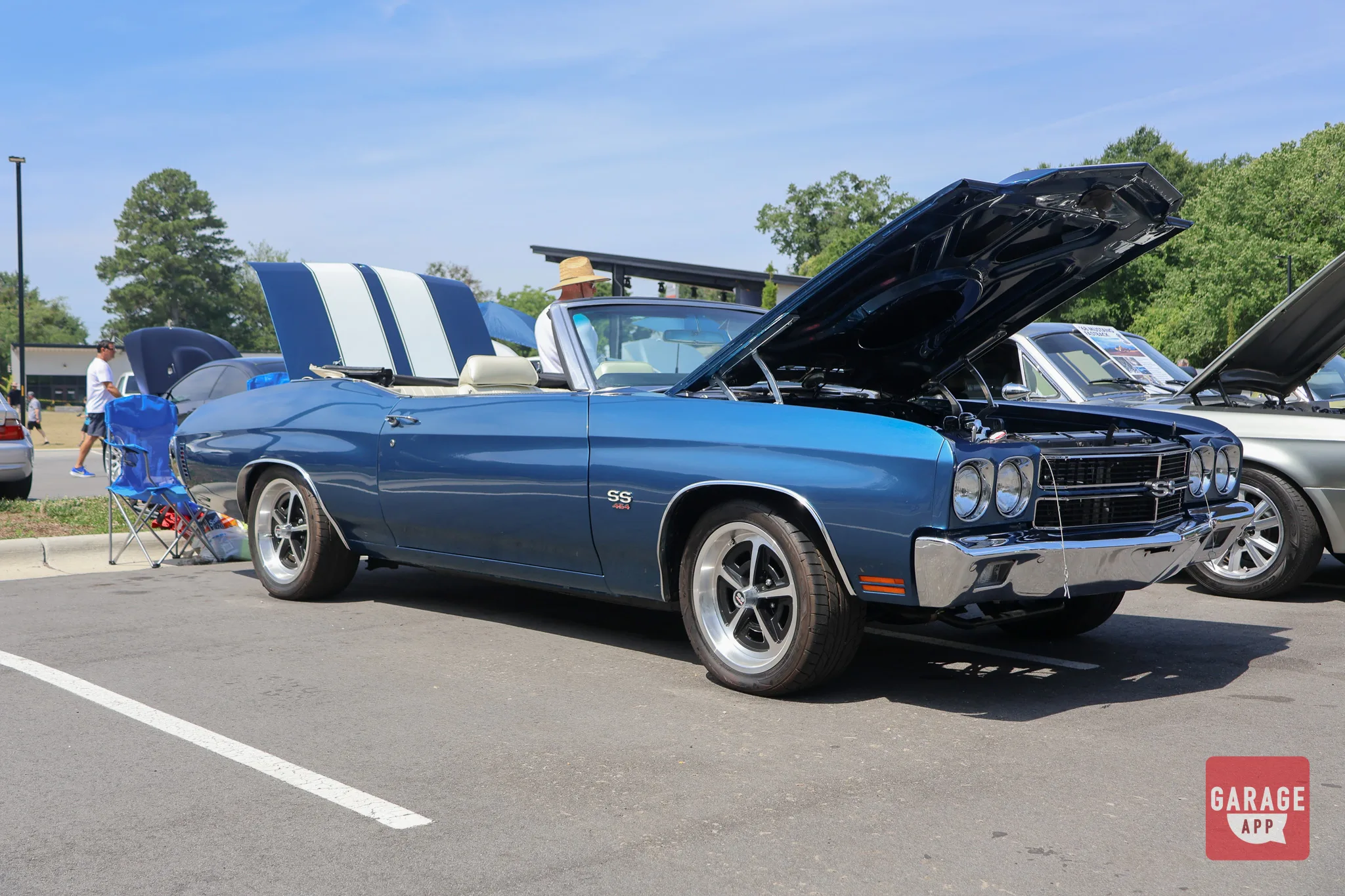
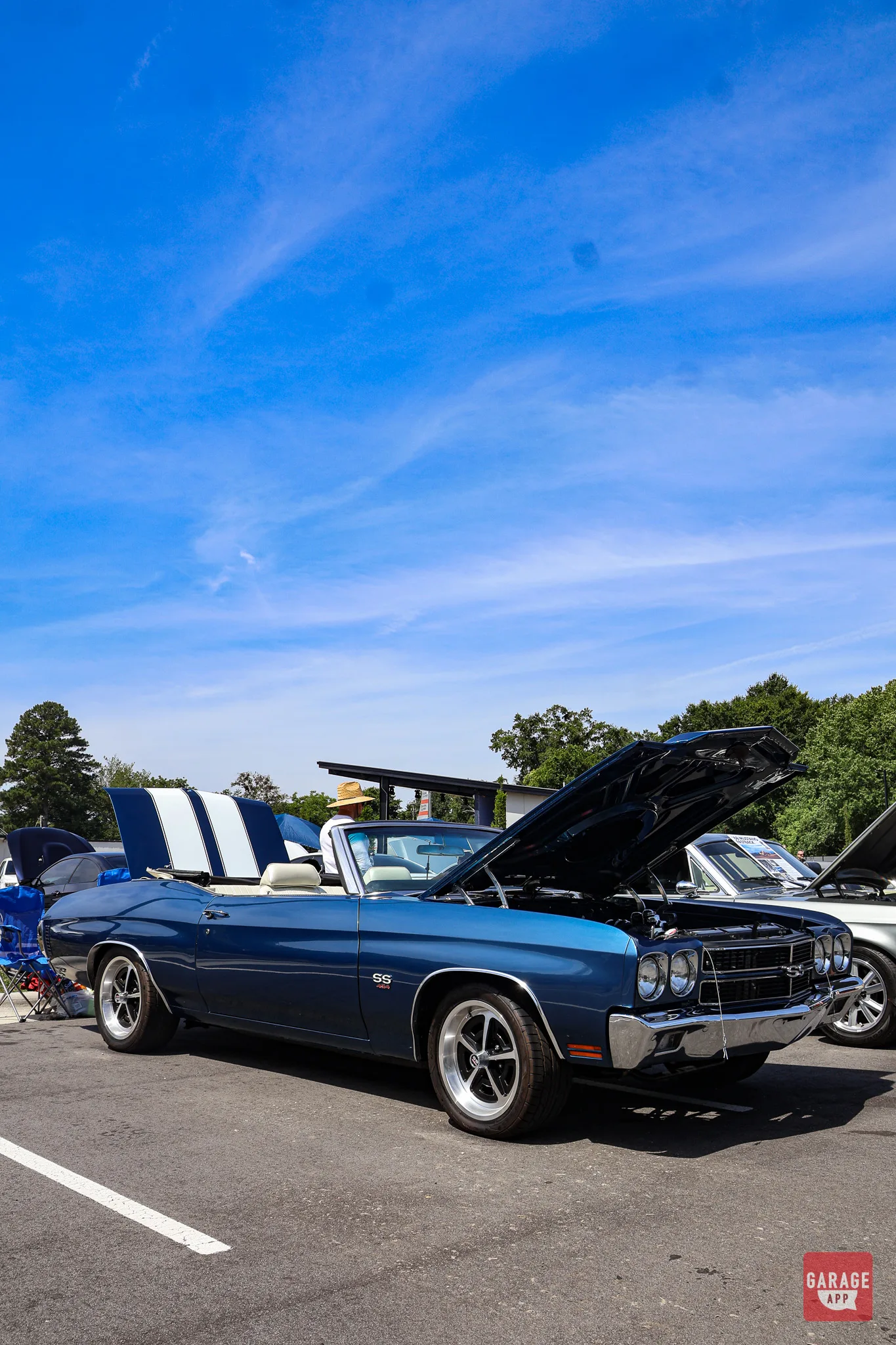
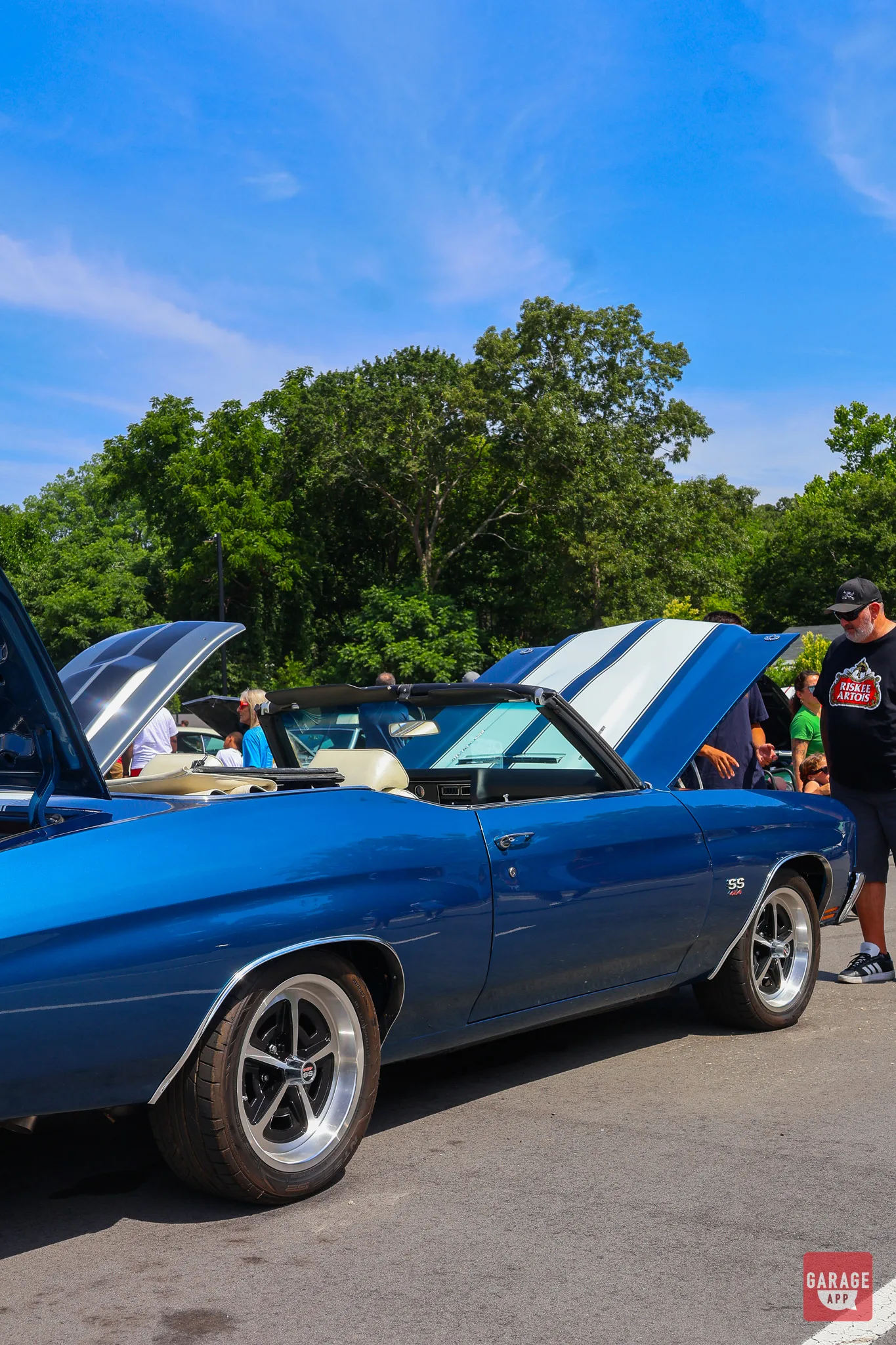
There is a moment at every good car show when a crowd forms without anyone announcing it. People just drift toward one car. At a recent Cars and Coffee gathering, that car was a metallic blue 1970 Chevrolet Chevelle SS 454 Convertible, top down, hood up, its white interior glowing in the morning light. This was the peak of the muscle car era wearing its Sunday best, and it's exactly the kind of machine we love spotlighting in our featured vehicles.
The 1970 Chevrolet Chevelle SS 454 occupies a special place in American automotive history. It arrived at the exact moment when General Motors finally stopped holding back, dropped its self-imposed displacement limits for intermediate cars, and gave enthusiasts a factory beast that could embarrass just about anything on the street.
The Story Behind the 1970 Chevelle SS
To appreciate the 1970 model, remember what the late 1960s felt like on American roads. Ford had the Torino and the Mustang. Dodge and Plymouth were swinging hard with the Hemi Charger, Road Runner, and GTX. Pontiac had the GTO. The horsepower war had gone fully nuclear.
GM's corporate policy capped intermediate cars at 400 cubic inches, which kept the Chevelle competitive but not dominant. For 1970, the policy was lifted and Chevrolet wasted no time. The Chevelle SS 454 was born on the trusted GM A-body platform, and suddenly the car wasn't just keeping pace with the Mopars. It was setting it.
This is why so many enthusiasts consider 1970 the high point of GM muscle. Emissions rules and insurance surcharges would soon strangle horsepower across the industry. For one glorious year, the SS represented Detroit at full throttle, and it remains one of the crown jewels of the classic, exotic and collector world.
If you ever get the chance to see documented build sheets or a Protect-O-Plate for a 1970 Chevelle, look them over carefully. Original documentation dramatically affects both value and story, especially on LS6 cars.
LS5 vs LS6: Understanding the Legendary 454
The heart of any conversation about this car comes down to two engine codes: the LS5 454 and the LS6 454. Both are 454 cubic inch big-block V8s, but they are very different animals in character and reputation.
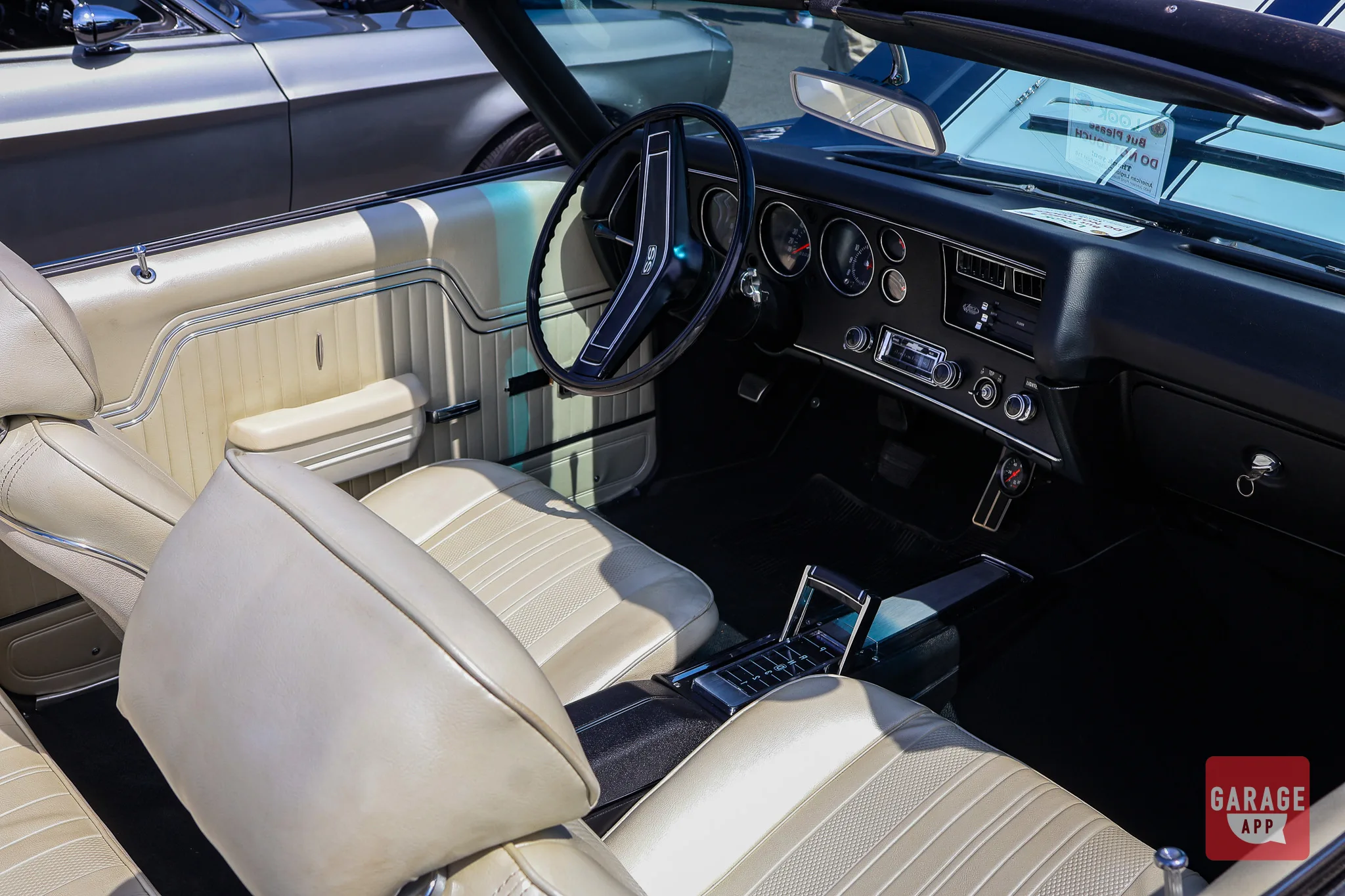
The LS5 was the standard big-block, rated at 360 horsepower and a mountainous 500 lb-ft of torque. It pulls from low in the rev range with a shove that never really lets up, which makes it a genuinely pleasant street engine as well as a fast one. The LS6 is the engine that turned the Chevelle into a legend. Rated at 450 horsepower, it added an 11.25:1 compression ratio, a hotter camshaft, a large Holley four-barrel, and forged internals. On paper, it was the most powerful engine offered in any American muscle car that year.
The LS6 Chevelle was the moment Chevrolet decided to build the fastest thing it possibly could and let the competition worry about catching up.
A longtime Chevelle restorer at the show
The LS6 was rare to begin with and rarer still in convertible form, which is why documented examples command staggering money today. Most SS 454 buyers left the showroom with the LS5, so a genuine LS6 convertible sits near the top of the muscle car collecting world.
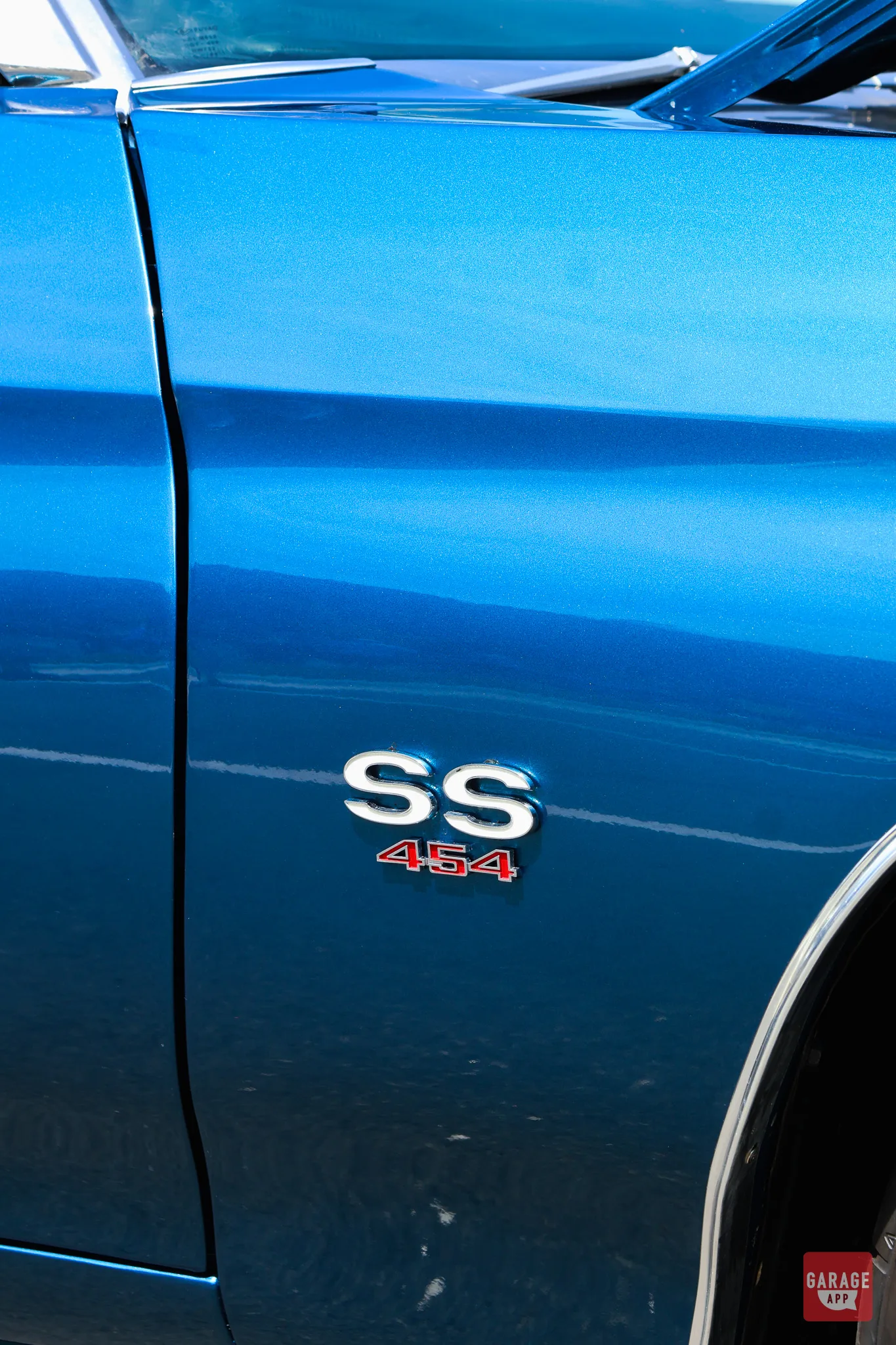
- LS5 454: 360 hp, 500 lb-ft, standard big-block, smooth and torque-rich.
- LS6 454: 450 hp, 500 lb-ft, high compression, solid-lifter cam, rare and coveted.
- Both engines could be paired with the Muncie 4-speed manual or the Turbo 400 automatic.
Styling That Defined the Peak of the Era
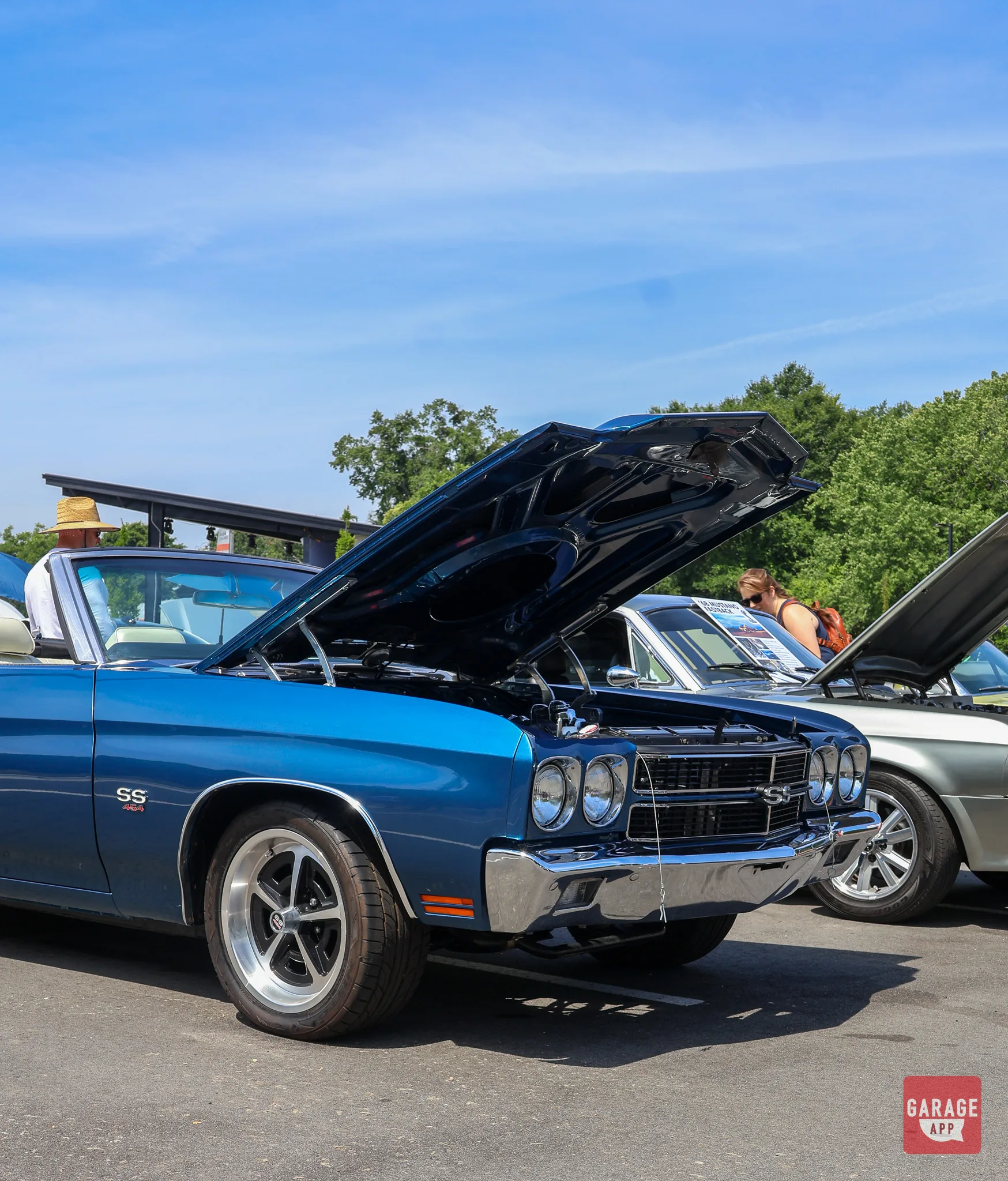
The 1970 redesign gave the Chevelle a squarer, more muscular body that has aged beautifully. Where the 1968 and 1969 cars had a rounder Coke-bottle shape, this one looked planted and purposeful. Up front, a bold blacked-out grille split into two segments sat between quad headlights, and the power bulge hood, with its optional twin domes and available cowl induction, hinted at the displacement below.
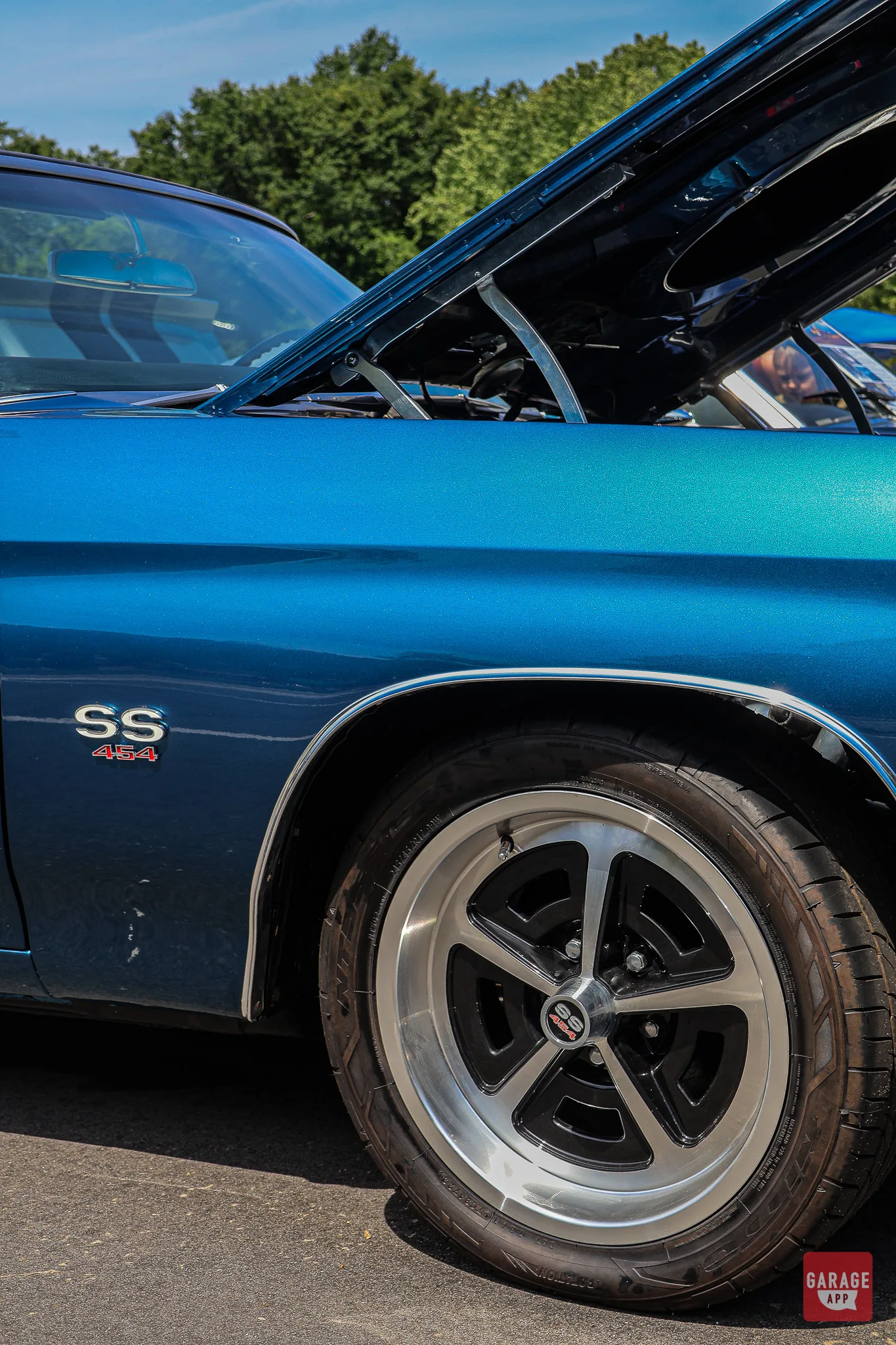
The SS 454 emblems on the grille and rear tell you what you're looking at without shouting. Round taillights recessed into a clean bumper read as simple and aggressive at once, and a slight nose-down stance on styled wheels gives the car a look no modern retro tribute has quite recaptured. The metallic blue over a white interior photographs like a dream and reflects the kind of careful restoration celebrated in the builds and restorations community.
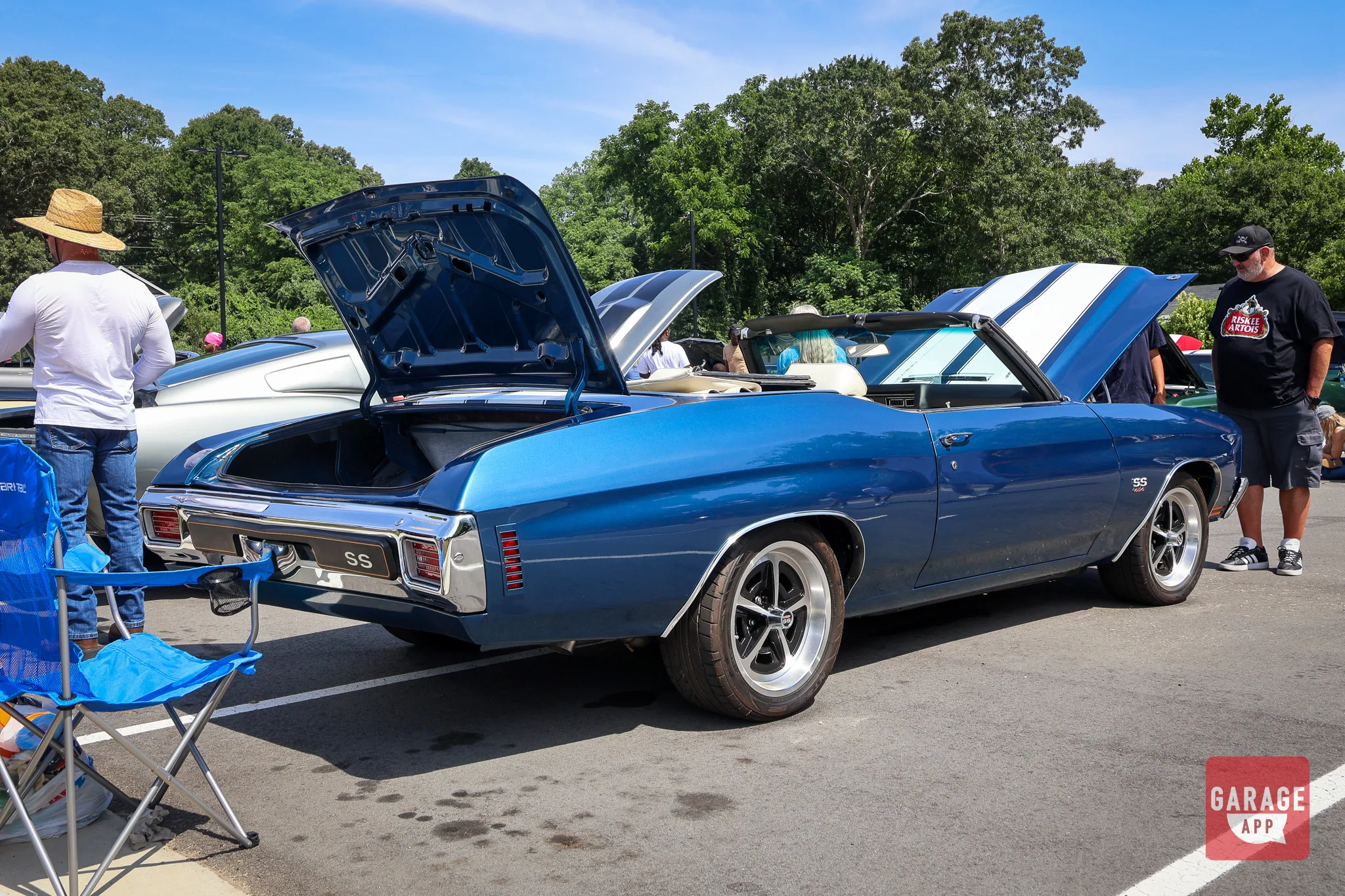
When photographing a convertible like this, shoot low and from a three-quarter front angle to capture the hood bulge, the grille, and the open cabin all in one frame. Morning light on metallic blue paint is hard to beat. For more, browse our video and photography guides.
Performance and Driving Experience
An LS6-equipped Chevelle could run the quarter mile in the low 13-second range straight off the showroom floor, embarrassing cars costing far more, and even the LS5 was seriously quick thanks to that flood of low-end torque. But character is what really defines the experience. A big-block Chevelle doesn't feel frantic the way a small, high-revving engine does. It feels heavy and inevitable. You squeeze the throttle and the whole car leans back and launches, its exhaust a chest-thumping bellow rather than a scream.
The A-body chassis gave the car better manners than many expect. It was never a corner carver, but with the F41 suspension option it handled well enough to be genuinely fun on a back road. If you want a look at how the era's heavy hitters compare, the 1968 Shelby GT500 tells the Ford side of that same horsepower war, and our routes and drives coverage has plenty of inspiration for putting a car like this to work.
Why Collectors Value the 1970 Chevelle SS
The 1970 model sits at the intersection of peak performance, peak styling, and peak rarity. Convertibles were produced in smaller numbers than hardtops, and big-block convertibles rarer still. Documentation is everything here: a car with matching numbers and a verified engine code will command far more than a clone or a car with a swapped drivetrain. If you're researching a specific model before you buy, our makes and models hub is a good place to start.
- Verify the engine code and check for matching numbers.
- Look for original documentation like build sheets and the Protect-O-Plate.
- Confirm the car is a genuine SS 454 and not a converted lesser model.
- Assess restoration quality, especially bodywork and interior fit.
- Factor in whether it's a rarer convertible or the more common hardtop.
For anyone getting serious about ownership, keeping meticulous records matters as much as the wrenching. That's why so many owners now build a full car profile in a virtual garage, one of the GarageApp features that owners lean on most.
Why Cars Like This Still Draw a Crowd
Back at the show, older enthusiasts traded stories about the ones they owned or lost, restorers nodded at details, photographers circled for the light, and a group of teenagers discovered big-block muscle for the first time. That mix of generations is what makes classic car events special. A car like the SS 454 becomes a shared reference point to an era most of us never lived through, and events like Cars and Coffee in Morrisville and Raleigh exist to keep that connection alive. Our Cars and Coffee events guide and the state-by-state guide for 2026 can help you find one near you.
Cars like this survive because people care enough to restore, document, and share them, and that work thrives in community. Knowing where the local cruise-ins are or finding a shop that specializes in big-block rebuilds can make the difference between a project that stalls and one that finishes, so keeping an eye on shows and events pays off. If you want to go further, our guide on how to organize a car meet walks through the details, and our first track day guide covers what to expect when you finally let the big-block stretch its legs.
The Last Word on a Genuine Legend
The 1970 Chevrolet Chevelle SS 454 Convertible earns its place among the greatest American muscle cars because it captured a fleeting moment perfectly: fast, beautifully styled, and unapologetically bold at the exact instant before the industry pulled back. If this Chevelle stirred something in you, go see one in person. GarageApp makes it easier to find the events and the people that turn a solitary hobby into a shared passion.