
The Origins of the Ferrari 612 Scaglietti
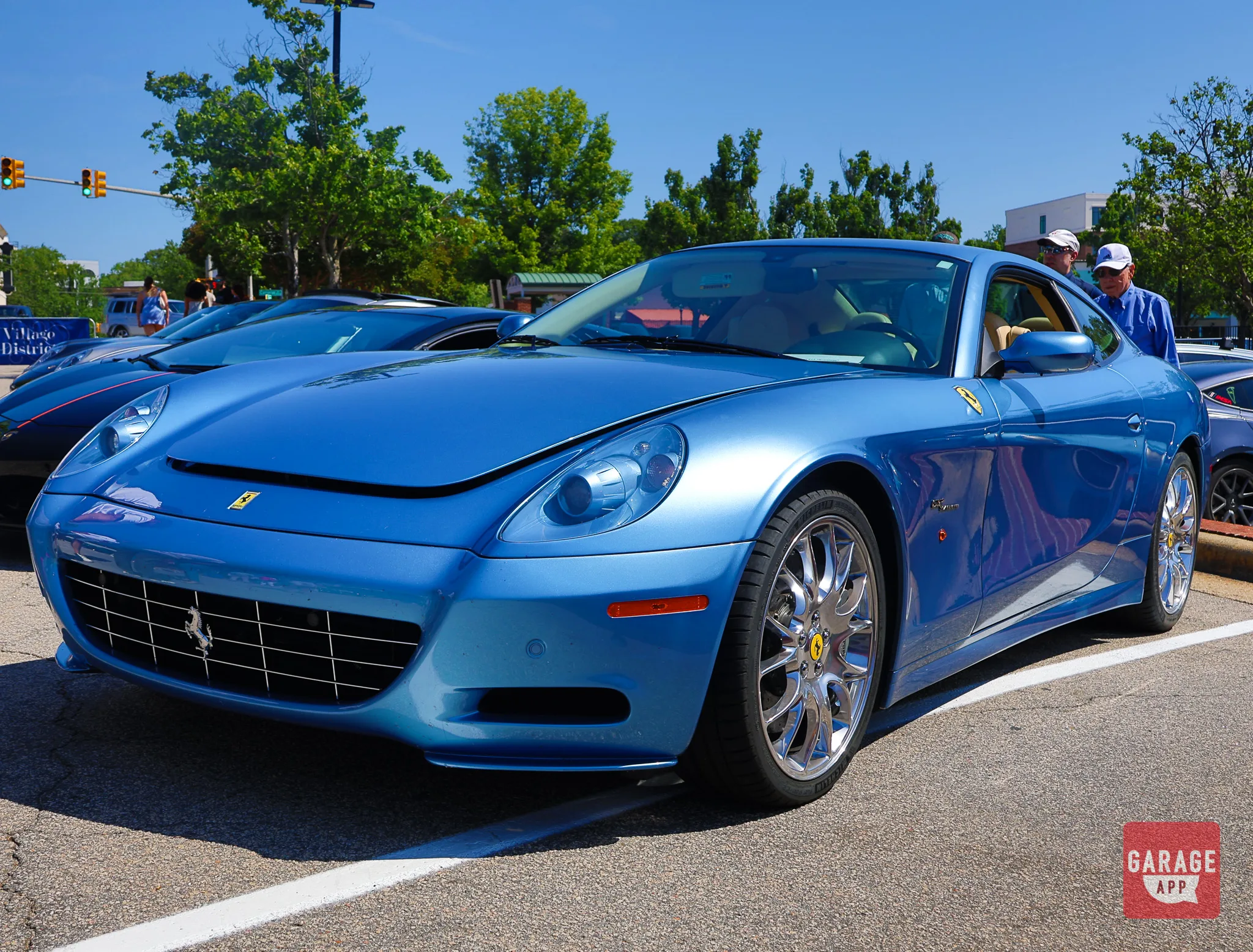
When the Ferrari 612 Scaglietti arrived in 2004, it had a difficult job. It replaced the Ferrari 456M, a car that had quietly defined the modern four-seat Ferrari, and it carried the name of Sergio Scaglietti, the coachbuilder responsible for some of the most beautiful Ferraris ever bodied in aluminum. That is a lot of expectation to hang on one car.
The 612 was Ferrari's big front-engine V12 grand tourer, built to swallow continents with two people up front and two real adults in the back. It was longer, wider, and more sophisticated than the 456M, and it leaned into something Ferrari had always done well but rarely advertised loudly: making a fast car that you could actually live with. The 456 was the proof of concept. The 612 Scaglietti was the refinement.
By the time the 2008 Ferrari 612 Scaglietti came around, the car had matured. Build quality was sorted, the F1 automated manual had been improved, and Ferrari was offering the HGTC handling package that sharpened the chassis for owners who wanted more bite. A 2008 example sits in a sweet spot of the production run, late enough to benefit from the running improvements but still fully analog in character.
Pininfarina Design and Styling
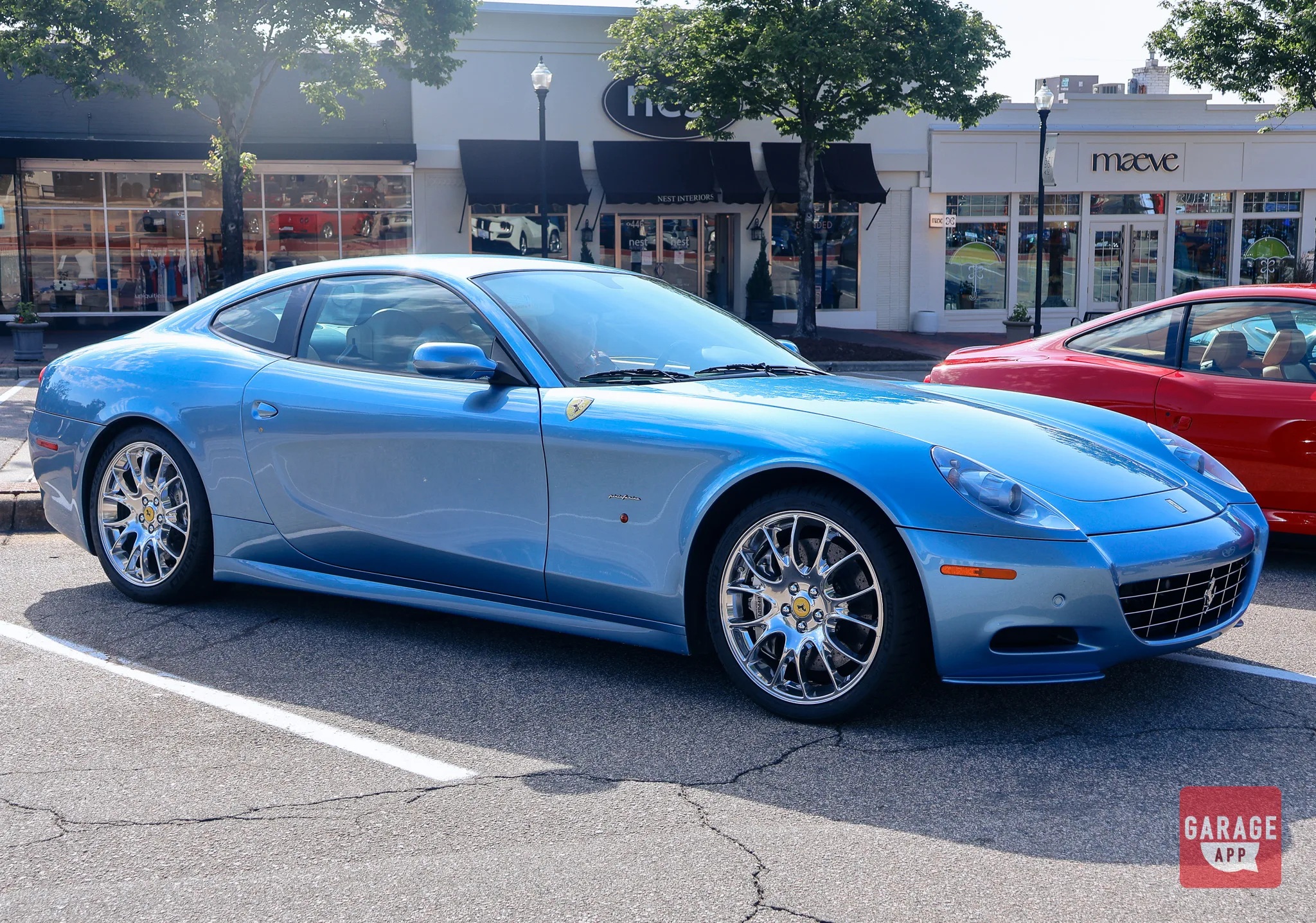
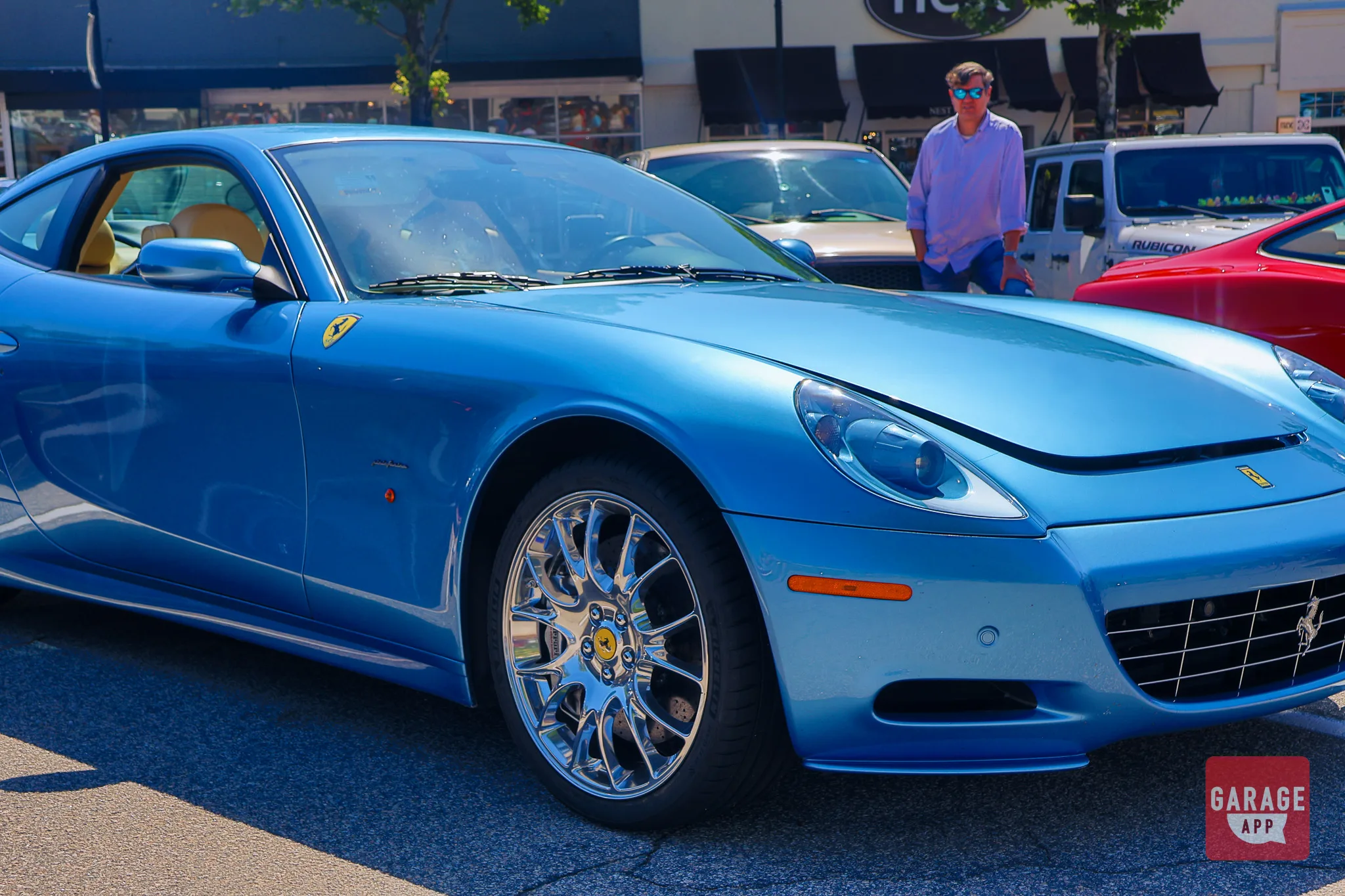
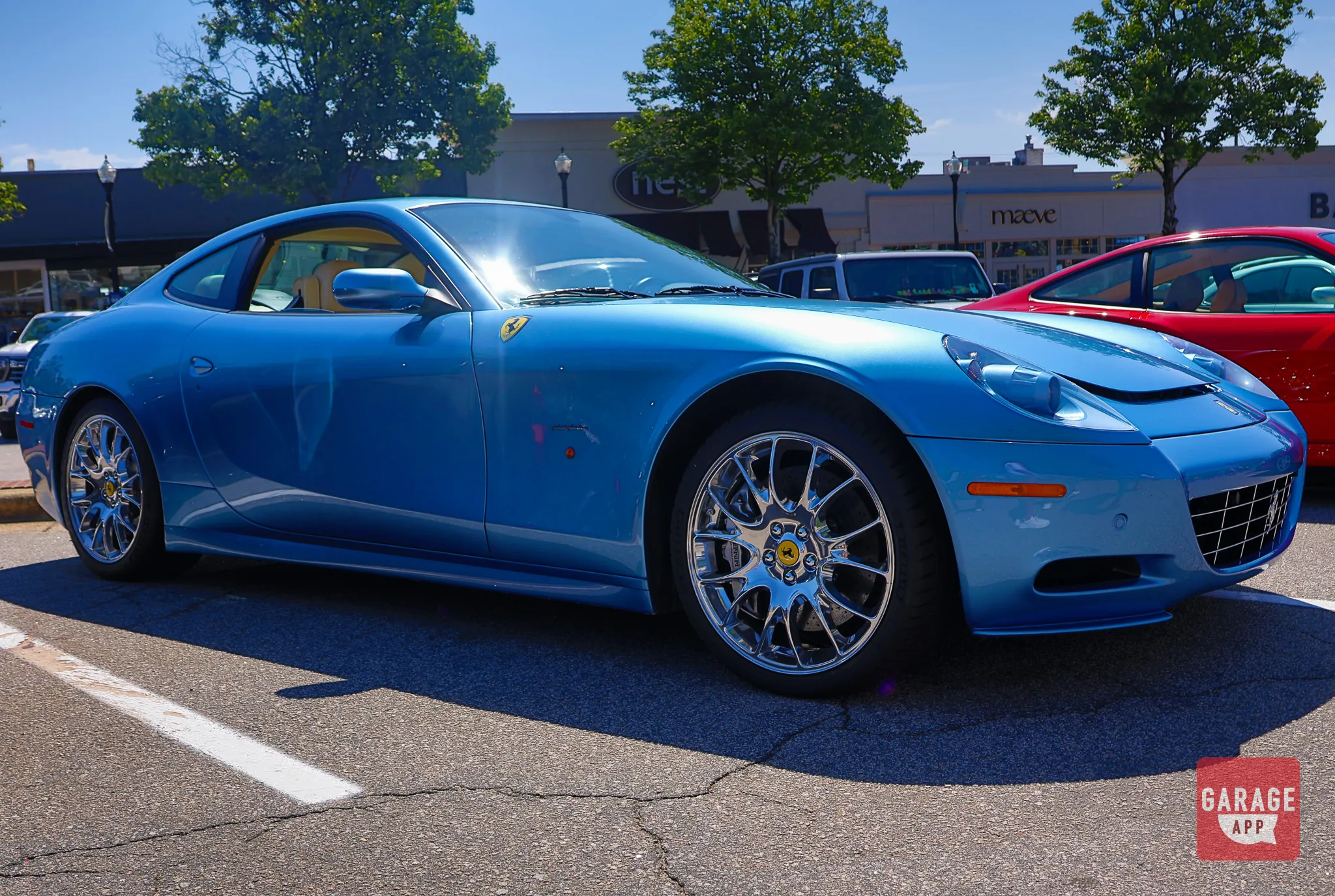
Pininfarina Ferrari design has produced some of the most celebrated shapes in automotive history, and the 612 is one of the more debated entries in that catalog. People either get it immediately or they need time. The proportions are unusual at first glance: a very long hood, a cabin pushed far back, and those scallops along the flanks that nod directly to the 1954 375 MM built for Roberto Rossellini and Ingrid Bergman.
Where Ferrari's mid-engine cars shout, the 612 murmurs. It has presence without aggression. The bodywork flows rather than slashes, and the whole thing reads as a mature design meant for someone who has nothing left to prove. The long nose covers that front-mid mounted V12, pushing the engine mass behind the front axle for better weight distribution, which is the kind of engineering decision that shapes the styling rather than fighting it.
Why Azzurro California Works So Well
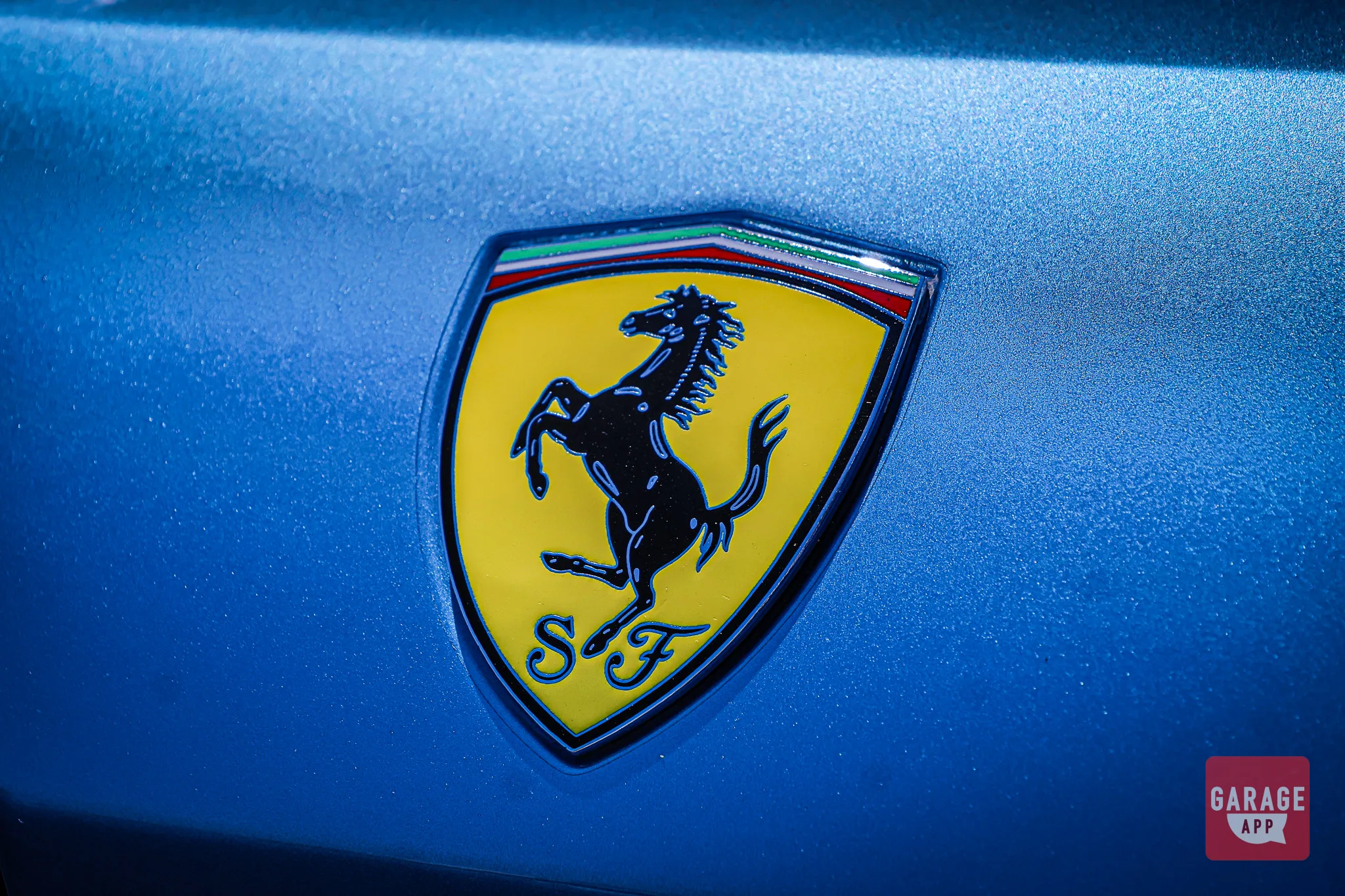
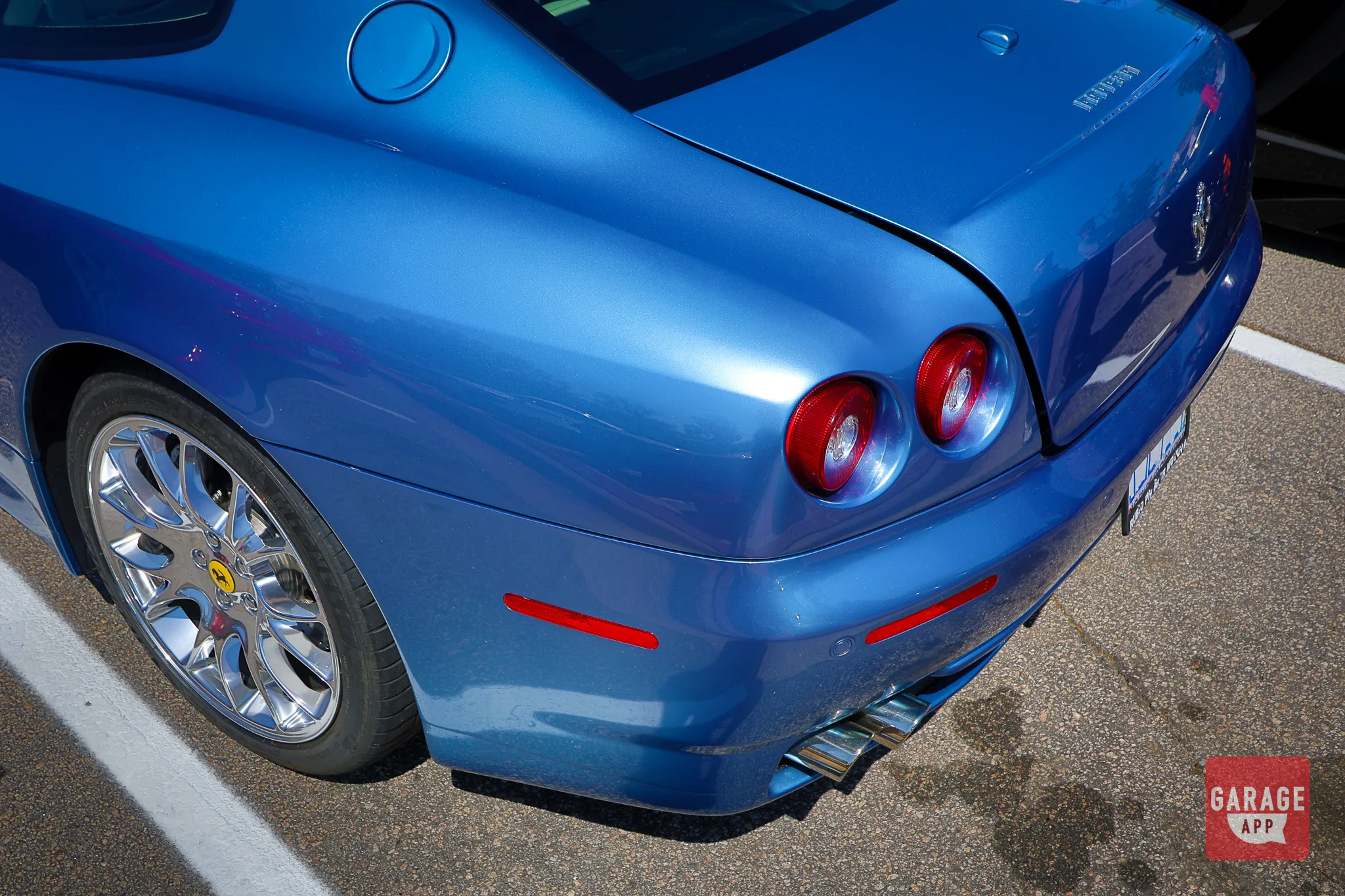
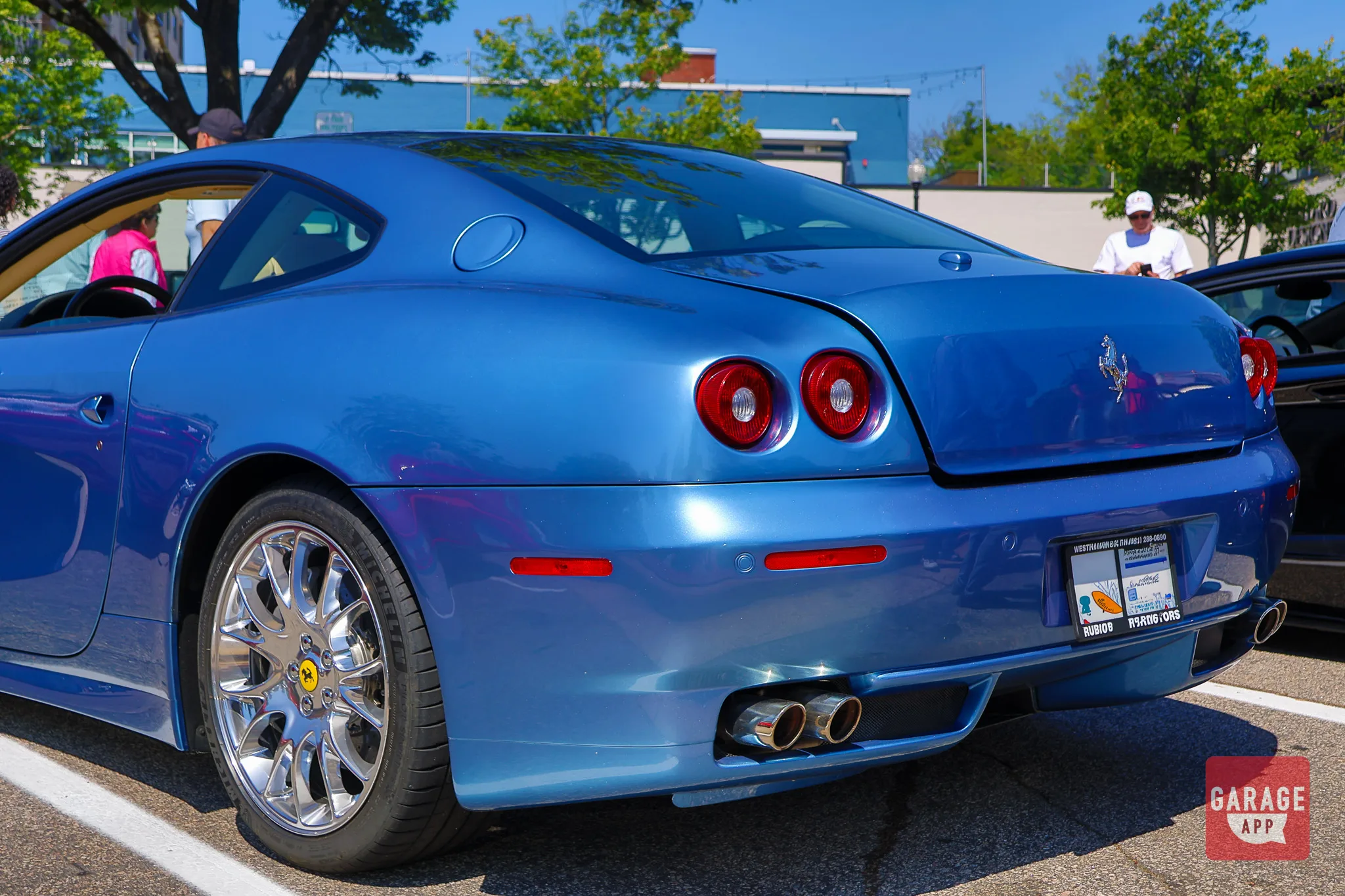
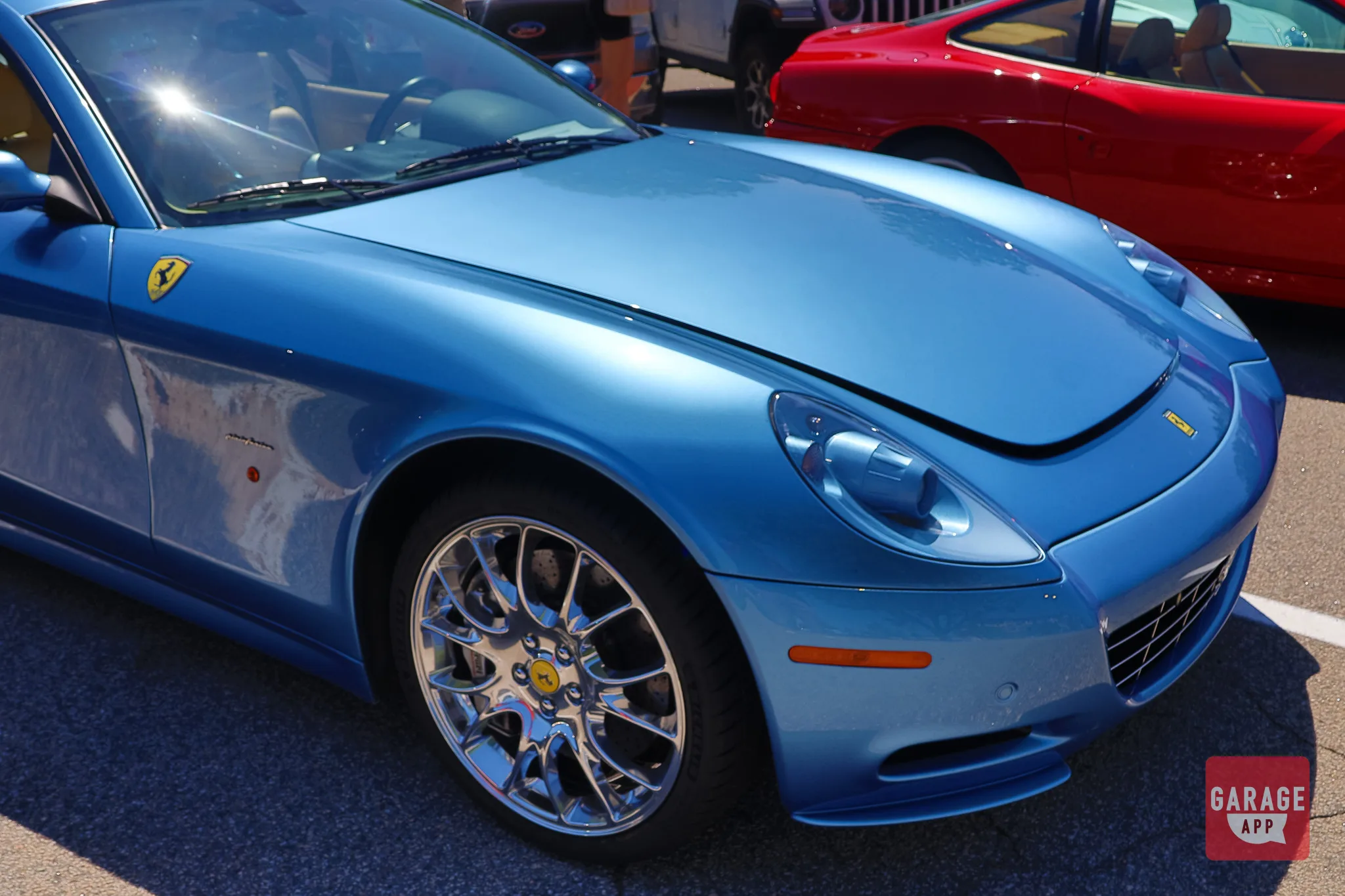
Color matters enormously on a car this size, and Azzurro California is one of the best choices you can make on a 612. The soft metallic blue does something clever with all that aluminum bodywork. It catches the light along the long hood and the scalloped sides, picking out the surface changes that a darker color would swallow whole.
Red makes the 612 look heavy. Azzurro California makes it look refined, almost coastal, the kind of car you picture parked outside a hotel in the south of France rather than burning rubber at a track. It suits the grand touring mission perfectly. If you are building a wishlist of dream specs in your virtual garage, an Azzurro California 612 belongs near the top.
When evaluating a 612 in a lighter color, inspect the aluminum panel gaps and any repaint areas in raking light. Body work on aluminum cars is specialized, and a poor refinish shows badly on metallics like Azzurro California.
Performance and Specifications
Underneath the elegance, the 612 is a genuinely fast car. The Ferrari 612 specifications still read well two decades later, and the numbers explain why this is a serious Ferrari V12 grand tourer rather than a soft cruiser.
- 5.7-liter naturally aspirated V12.
- 540 horsepower.
- 434 lb-ft of torque.
- 0-60 mph in roughly 4.0 seconds.
- 199+ mph top speed.
- Rear-wheel drive.
- F1 automated manual transmission.
That engine is the F133 family unit, the same lineage that powered the 575M, displacing 5,748cc and spinning past 7,000 rpm. Putting 540 horsepower through the rear wheels alone in a car this size used to raise eyebrows, but the chassis handles it. The aluminum spaceframe keeps weight in check for the class, and the near 47/53 front to rear balance gives the 612 a planted, confident feel once you are moving.
The F1 automated single-clutch gearbox is the one quirk modern drivers need to understand. It is not a dual-clutch. Shifts have a deliberate pause, and the box rewards a driver who lifts slightly between gears the way you would in a manual. Once you adapt, it feels mechanical and honest in a way that today's instant paddle shifts do not. Some buyers actively prefer it for that reason.
The Naturally Aspirated V12 Experience
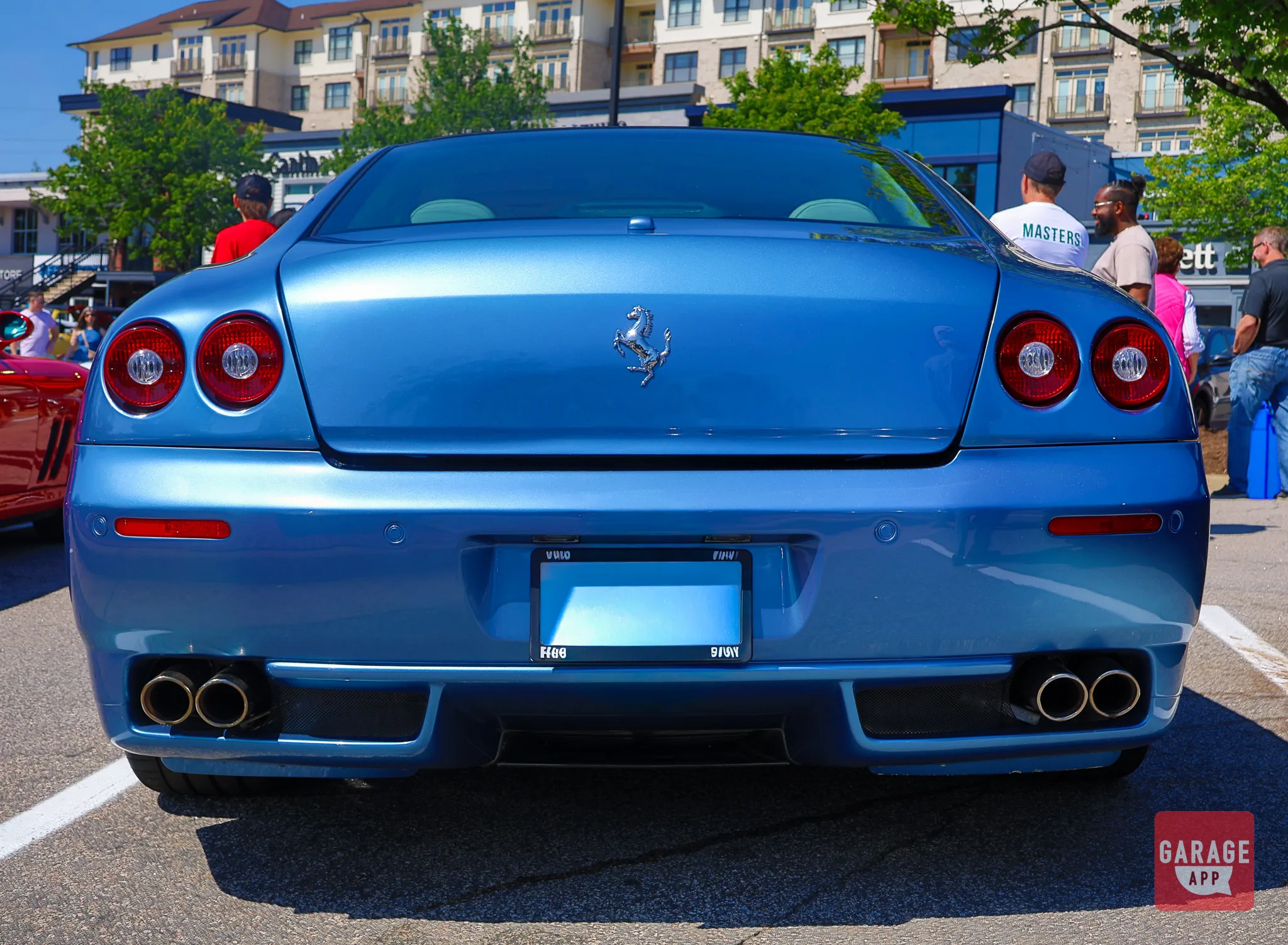
This is the heart of the case for the 612, and it gets stronger every year. A naturally aspirated Ferrari V12 is becoming an endangered species. The industry has moved hard toward turbocharging and electrification, and while modern Ferraris are staggeringly fast, none of them sound or breathe like this.
Turn the key and the V12 settles into a deep, busy idle. Open the throttle and the engine pulls cleanly from low revs, but the real event happens past 4,000 rpm, where the note hardens and climbs into that unmistakable twelve-cylinder wail. There is no turbo lag, no electric fill-in, just a direct line between your right foot and the crankshaft. The response is immediate and linear, and it never stops building until the limiter.
A naturally aspirated V12 does not just make power, it tells you a story every time the revs climb.
That experience is exactly why values for naturally aspirated Ferraris keep firming up. Cars like the Ferrari Dino 246 GT show how analog Ferrari mechanicals appreciate once the world moves on from them. The 612 sits at the tail end of an era, and enthusiasts are starting to recognize that.
Interior Luxury and Grand Touring Comfort
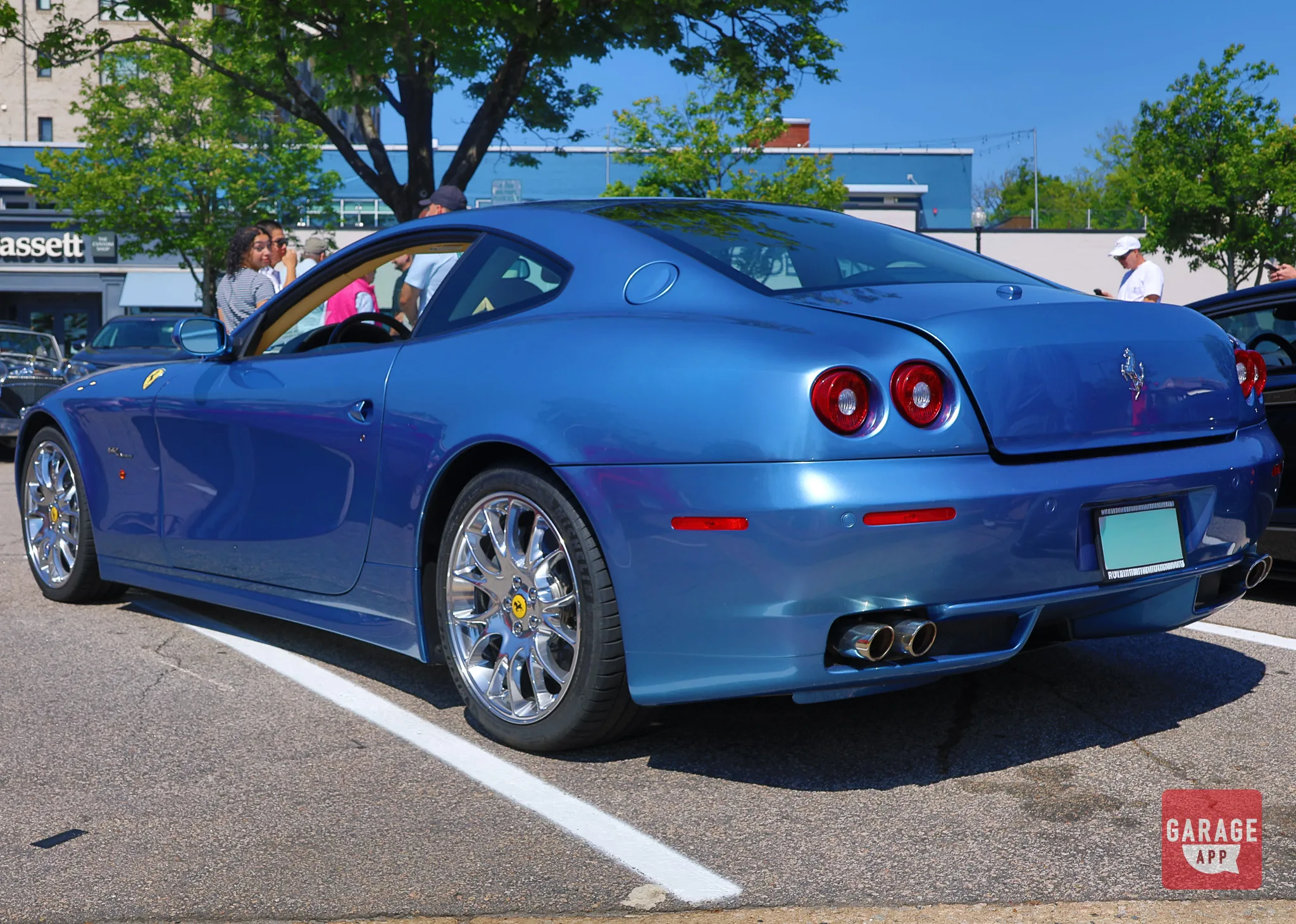
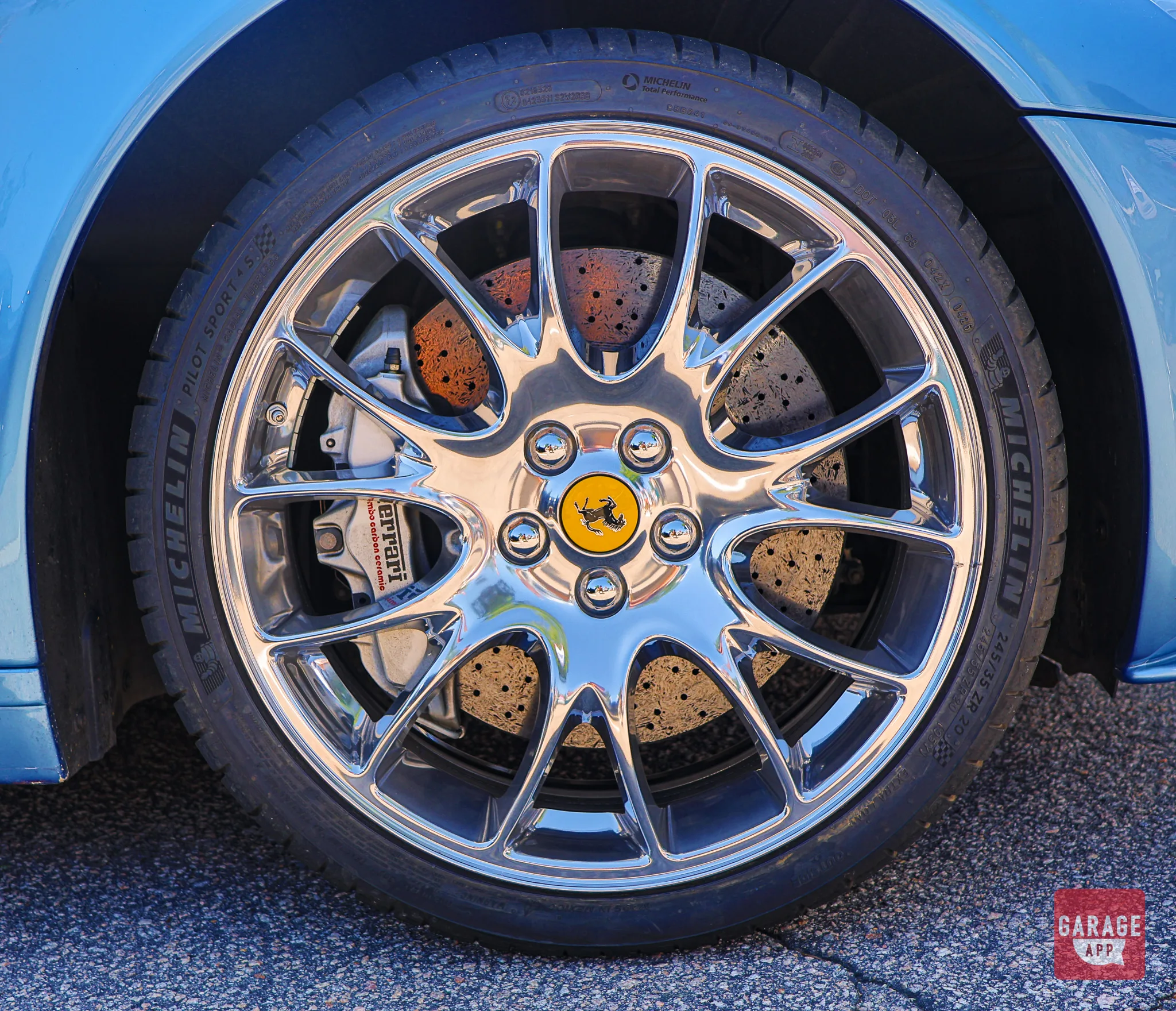
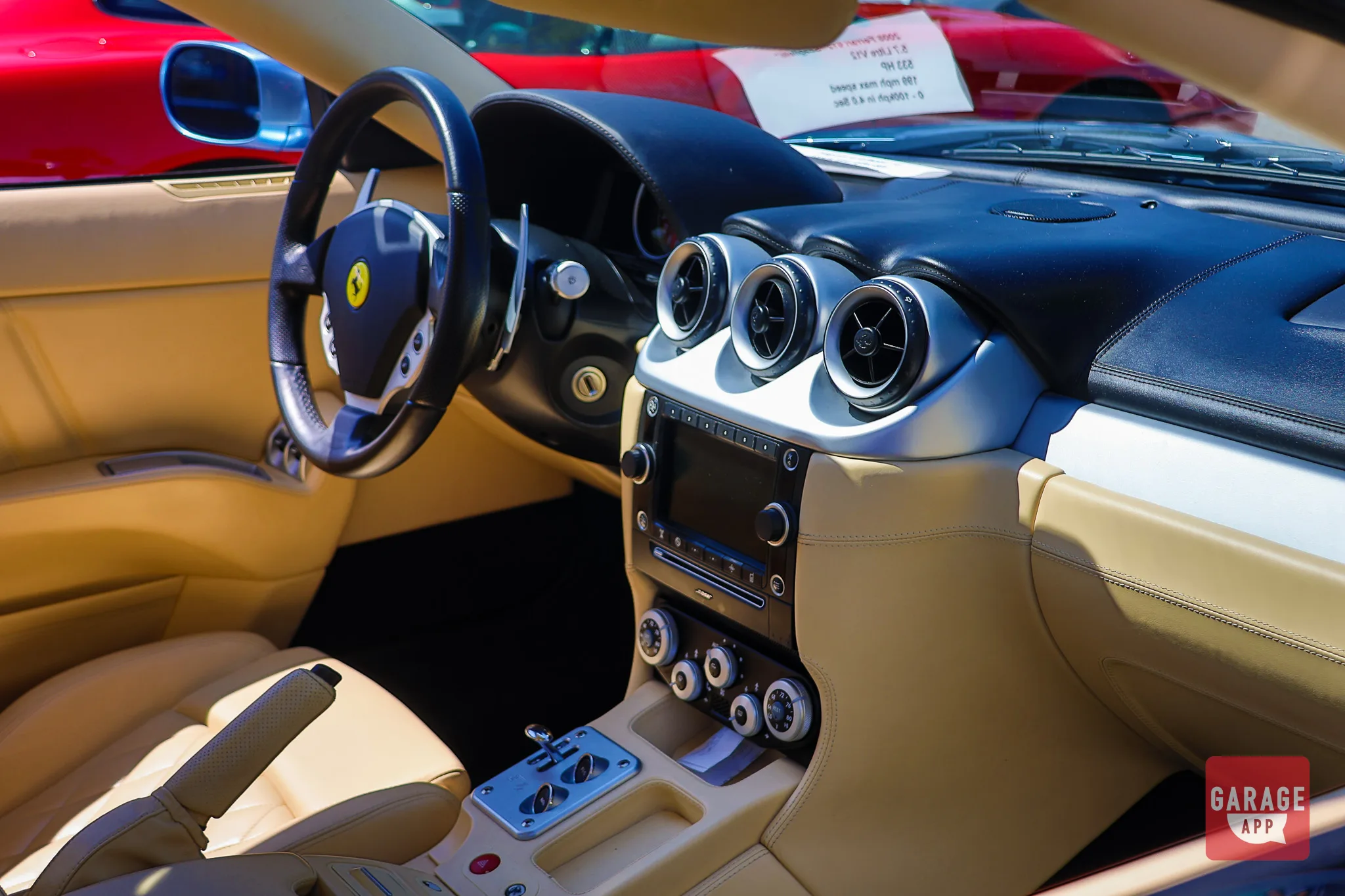
The Ferrari 612 interior is where the grand touring mission really comes through. This is a car built to cover serious distance, and the cabin reflects that. The leather is genuine handcrafted Ferrari hide, stitched and wrapped across the dash, doors, and seats, and you can option it in nearly any combination Ferrari's customization program allowed at the time.
Aluminum accents tie the cabin to the bodywork, the instrument cluster reads with classic yellow-faced Ferrari tachometry front and center, and the driving position strikes a balance between sporting and relaxed. The front seats are supportive enough for hard driving but soft enough for an all-day stint across three countries.
Rear Seats That Actually Work
The party trick is the back. Unlike the token rear bench in many so-called four-seaters, the 612's rear quarters fit adults. The long wheelbase pays off here, giving real legroom and a usable space for two passengers on a weekend trip. This is the practicality that separates a true Ferrari V12 grand tourer from a stripped-out supercar.
On a long drive, the 612 makes a brilliant road trip car for two couples. Plan a proper route, pack light luggage in the boot, and use the rear seats for the people you actually like.
If you want to put that grand touring ability to work, the 612 is made for the kind of sweeping, scenic miles you find on the best California driving routes. Azzurro California and the Pacific Coast feel like a matched set.
Collector Values and Market Trends
Here is where things get interesting for buyers paying attention. Ferrari 612 value has been one of the quieter stories in the collector market. For years the 612 traded as a usable but somewhat depreciated V12 Ferrari, the kind of car that scared people away with maintenance fears. That perception is shifting.
The Ferrari 612 collector market has firmed considerably as buyers realize how much car this is for the money. Clean, well-documented examples have stopped falling and started climbing. The cars that command the strongest prices share a few traits worth knowing before you buy.
- Complete service history with documented major work.
- Low to moderate mileage with consistent use rather than long storage.
- Original paint and unmolested aluminum bodywork.
- Desirable color and interior combinations such as Azzurro California.
- Evidence of proper transmission and clutch servicing.
The single biggest factor in any 612 review of long-term ownership is the F1 transmission system. The clutch is a wear item and the actuator can be expensive, so documented servicing genuinely protects value. Suspension components, particularly the shocks on cars with the adaptive setup, also need attention as the cars age. A 612 with a thick folder of receipts is worth meaningfully more than a cheap one with mystery history.
Compared to a budget classic Ferrari collecting entry point, the 612 still represents real value. You are buying a hand-built aluminum V12 Ferrari for a fraction of what its successors cost, with appreciation potential that looks increasingly likely rather than hopeful.
Budget for ownership, not just purchase. Set aside funds for an annual service and an eventual clutch on the F1 cars. A maintained 612 is a joy. A neglected one is a money pit.
Why Enthusiasts Are Rediscovering the 612
Several Ferraris define the front-engine V12 grand touring lineage, and seeing where the 612 fits explains the renewed interest. The 456M was the elegant pioneer that proved the modern formula. The 599 GTB Fiorano took the same basic layout and turned it into a two-seat performance weapon. Then the FF and later the GTC4Lusso added all-wheel drive and a shooting brake body, chasing all-weather usability.
The 612 occupies a unique slot in that family. It is the last pure four-seat, rear-wheel-drive, naturally aspirated V12 Ferrari GT before the brand pivoted toward all-wheel drive and eventually turbocharging. It is the final expression of a recipe that started with the 365 GT 2+2 decades earlier.
Enthusiasts also value how analog it feels. There is no giant touchscreen, no overwhelming digital layer between you and the machine. The 612 is one of Ferrari's last truly analog luxury grand tourers, a car you drive with your hands and ears rather than menus. As newer Ferraris grow more digital, that simplicity becomes a feature, not a limitation. You can track exactly the kind of car you want using the best apps for car enthusiasts and GarageApp to follow market listings and connect with other 612 owners.
The Legacy of Ferrari's Front-Engine V12 GT Cars
Ferrari's front-engine V12 grand tourers have always been the brand's most personal cars. They were the models Enzo himself favored, the ones built for actually getting somewhere rather than chasing lap times. The 612 Scaglietti is a direct descendant of that tradition, and it deserves more recognition than it currently gets.
Drive one and the case makes itself. The 2008 Ferrari 612 Scaglietti combines genuine supercar performance with everyday usability, a sublime naturally aspirated V12, a handcrafted leather interior, and Pininfarina styling that grows on you with every viewing. In Azzurro California it looks like nothing else on the road, refined and confident and a little bit timeless.
The collector market is starting to agree. As the supply of naturally aspirated V12 Ferraris stays fixed and demand grows, the 612 looks less like an overlooked oddity and more like one of the smartest entries into proper V12 Ferrari ownership available today. It is not the loudest Ferrari, and it never tried to be. That restraint is exactly why it endures.