

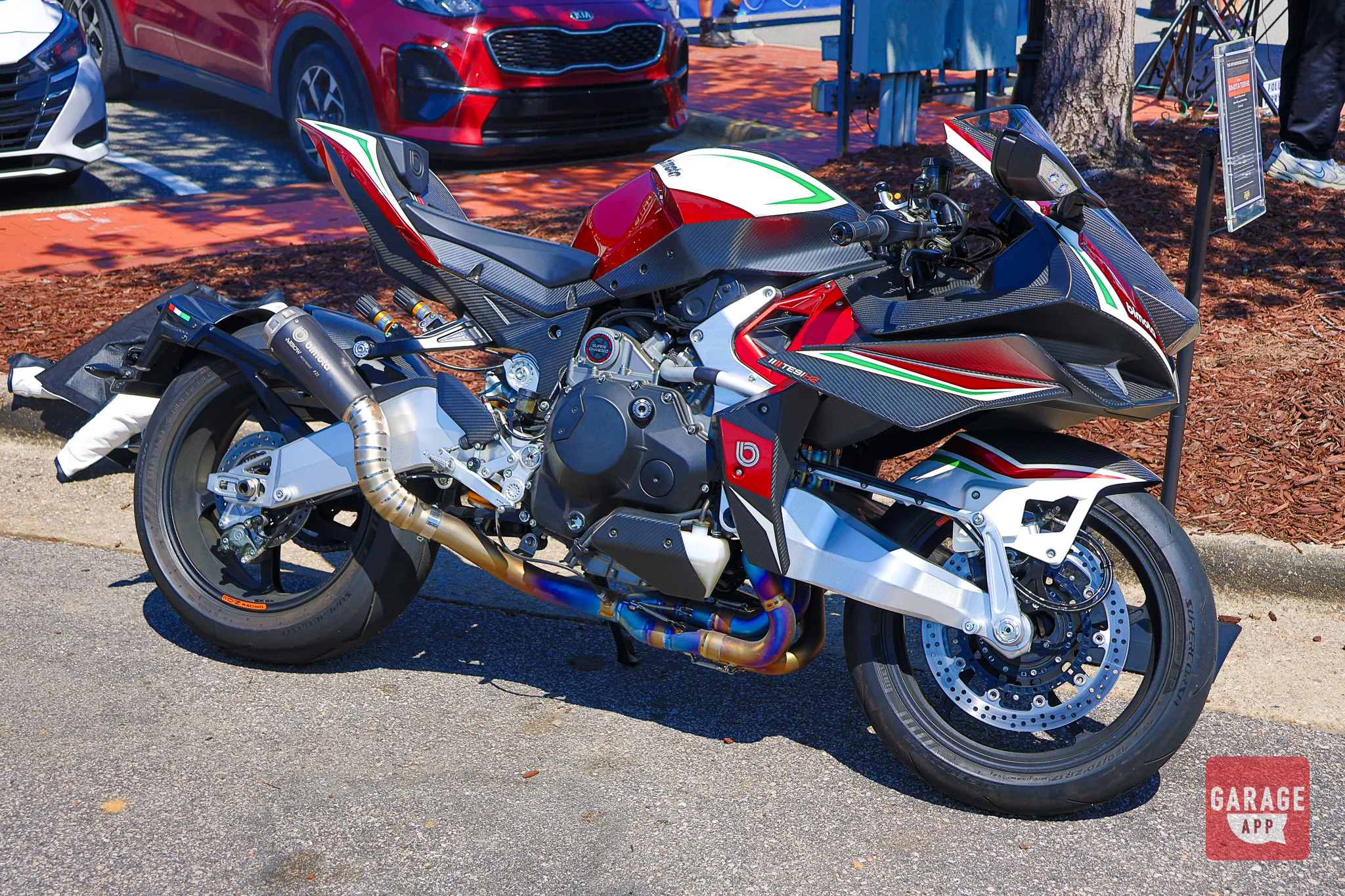
The Bimota Tesi H2 is what happens when a legendary Italian chassis house stops asking permission and starts building its own comeback. Hand-assembled around Kawasaki's supercharged inline-four and wrapped in a hub-center steering front end that looks like nothing else on two wheels, it revives Bimota's most radical idea at exactly the moment the brand needed a statement. This is a hub-steered motorcycle built as much for the eyes as the road, and it is one of the rarest superbikes you can theoretically buy new.
If you have spent any time chasing exotic machinery, you already know the Tesi name carries weight. The H2 chapter is different though, because it fuses Rimini craftsmanship with Japanese forced induction in a way no one had attempted at this level. Let's get into what makes it special, why it matters to collectors, and how to actually find, document, and enjoy one.
Design and Aesthetics: Sculpture With a Powertrain
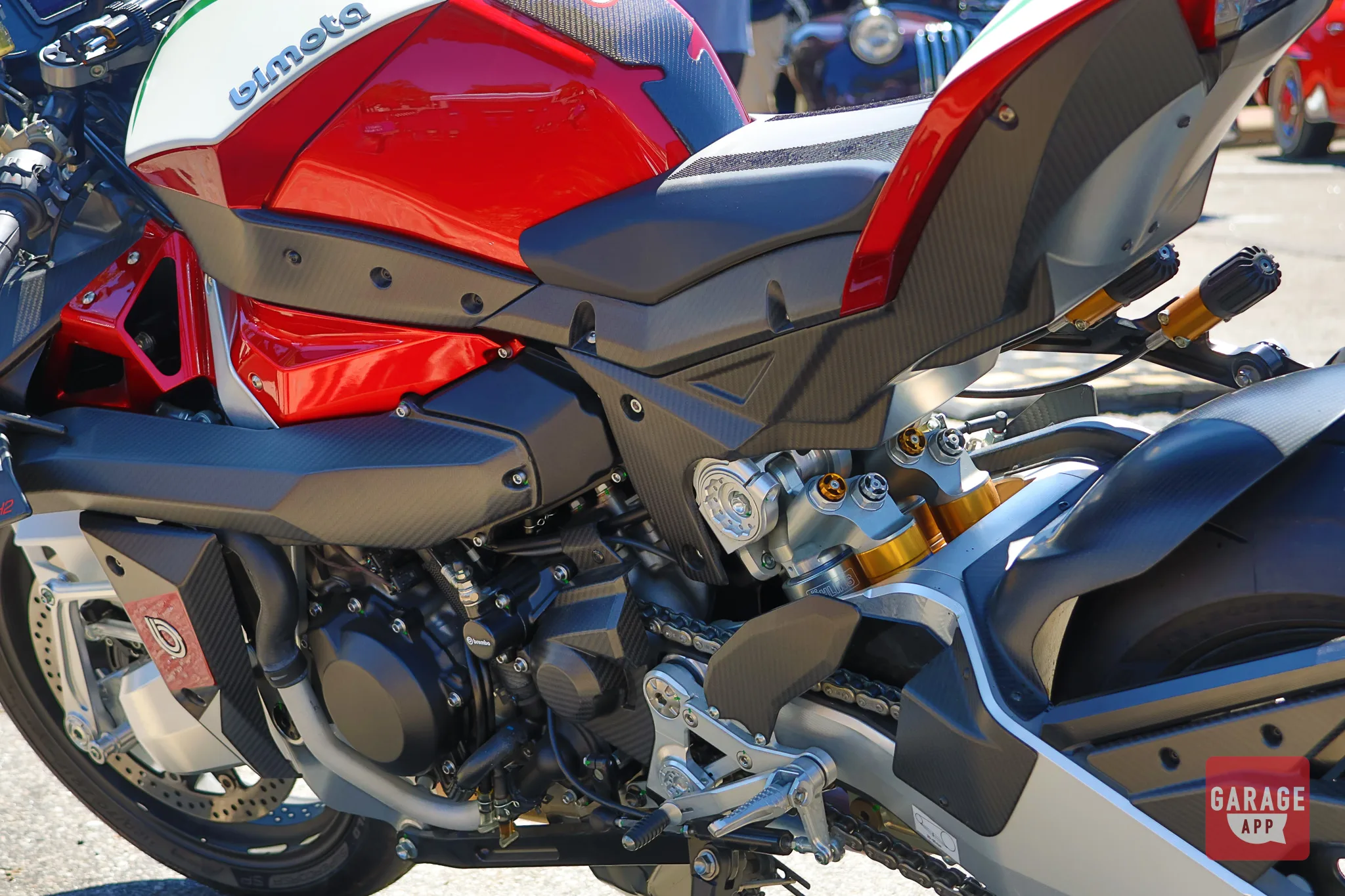
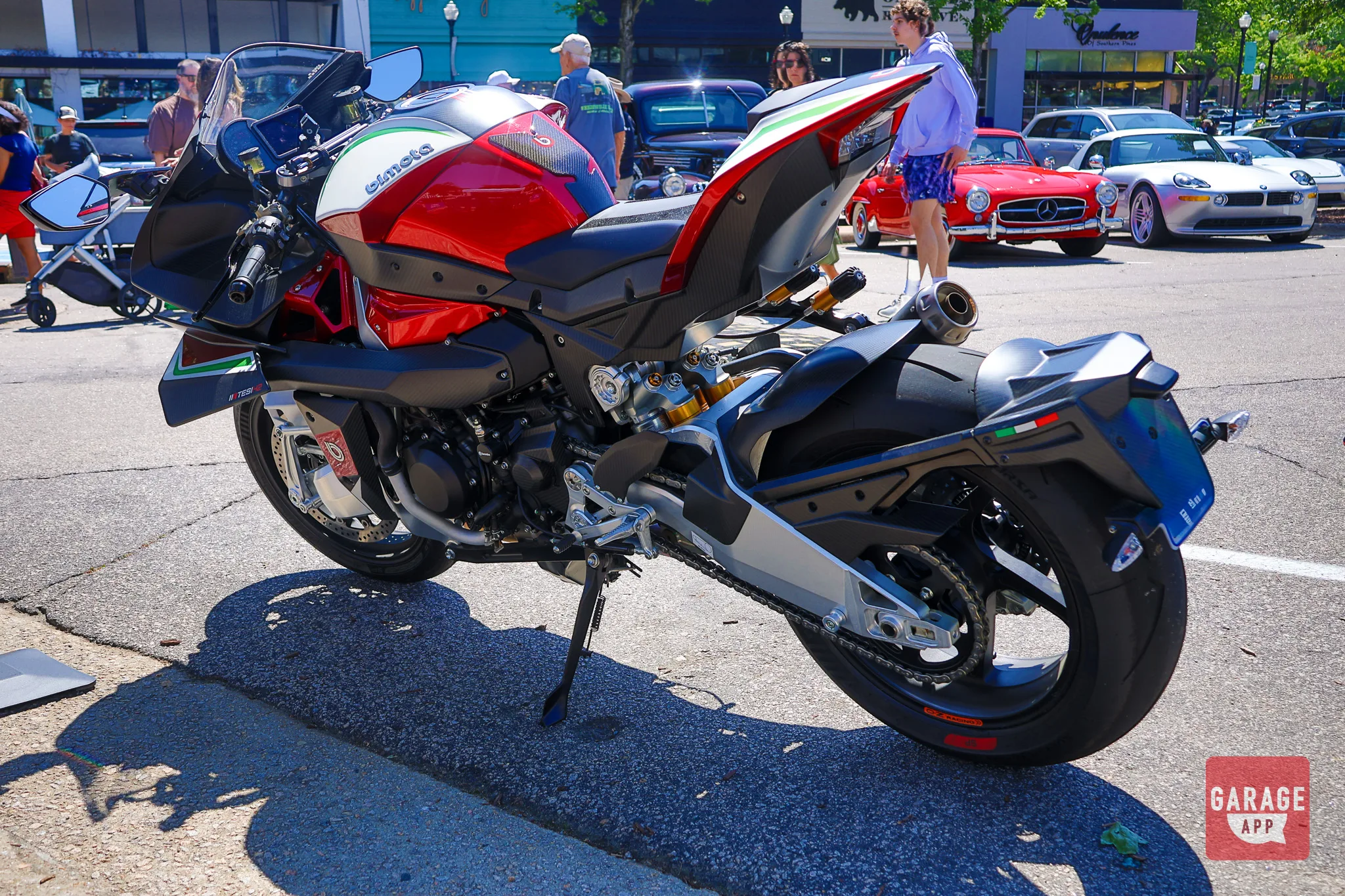
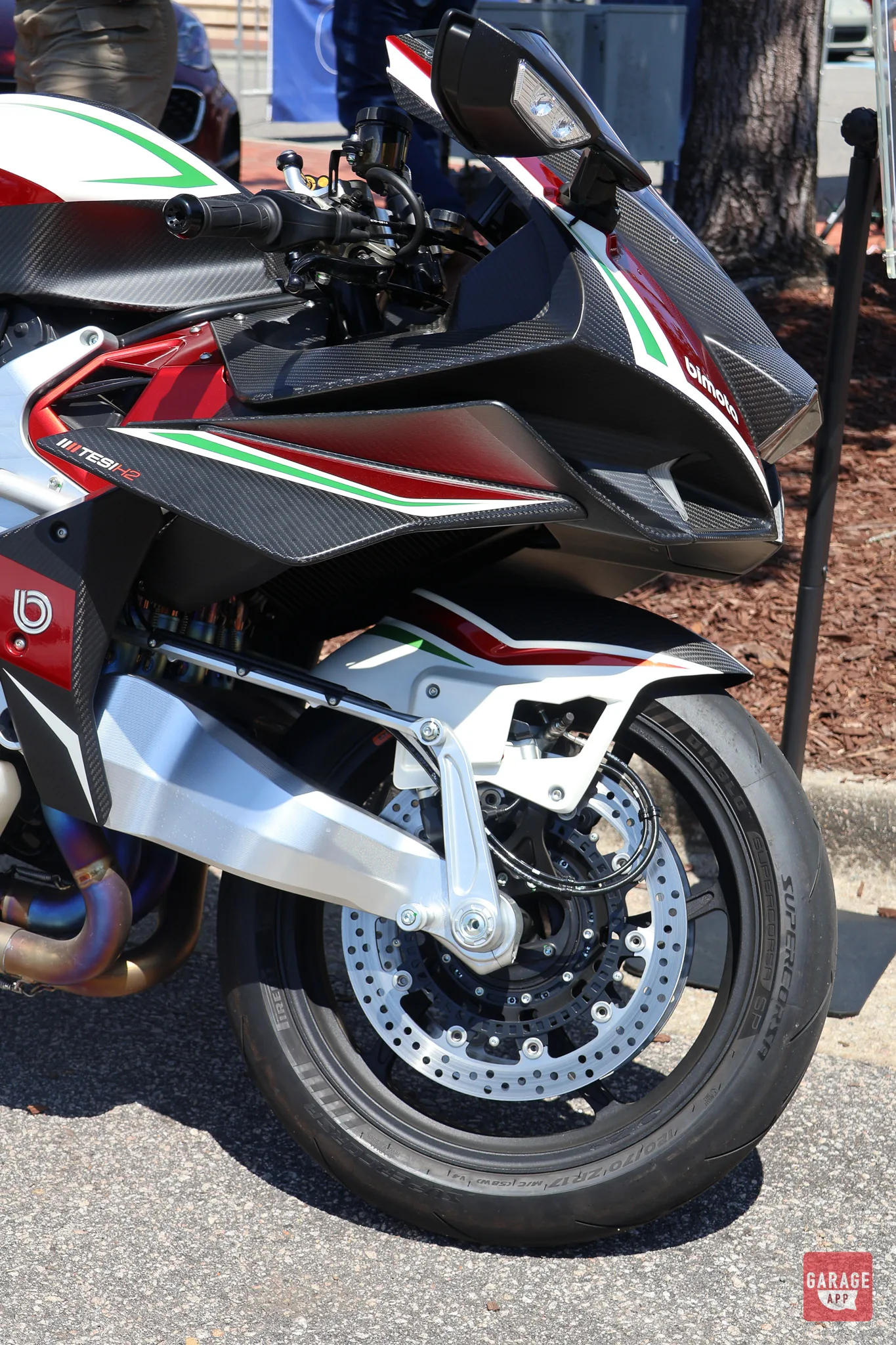
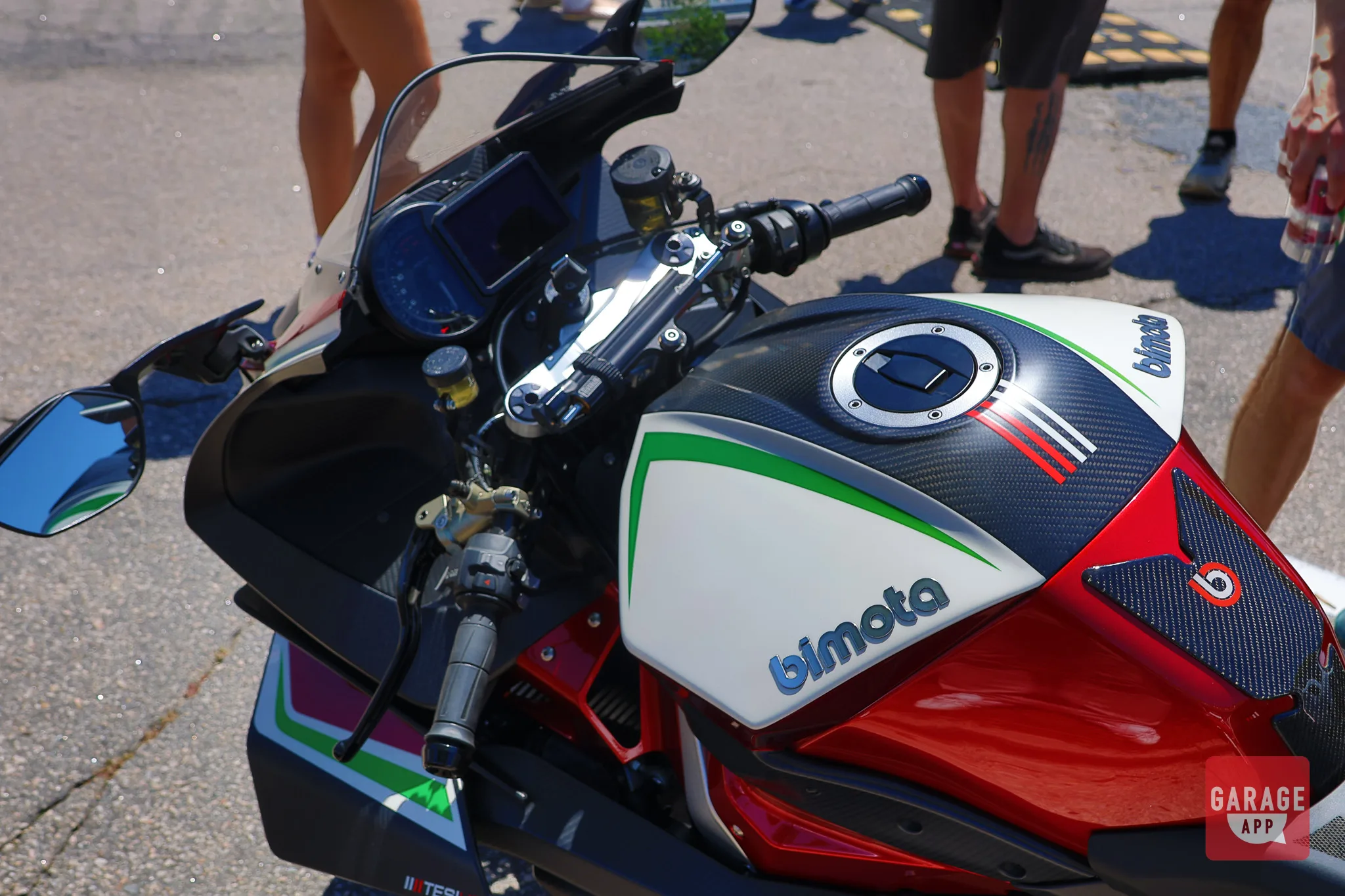
Walk up to a Tesi H2 and your brain takes a second to process it. There is no telescopic fork. There is no conventional headstock. Instead you get exposed swingarms front and rear, a spine of billet aluminum, and carbon fiber bodywork that seems to float over the mechanicals rather than hide them. Bimota has never been shy about showing its engineering, and this bike turns that philosophy into full-blown industrial art.
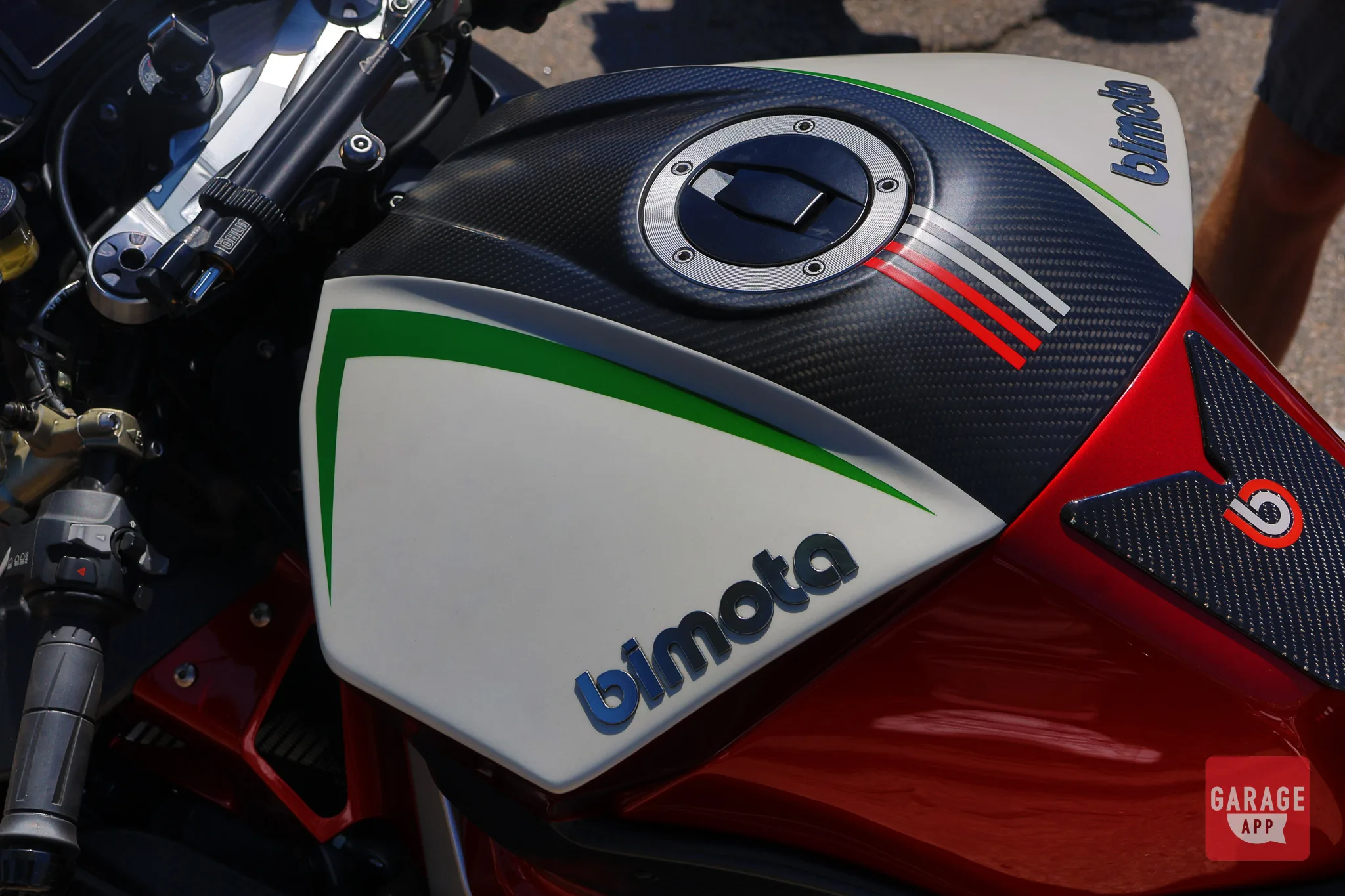
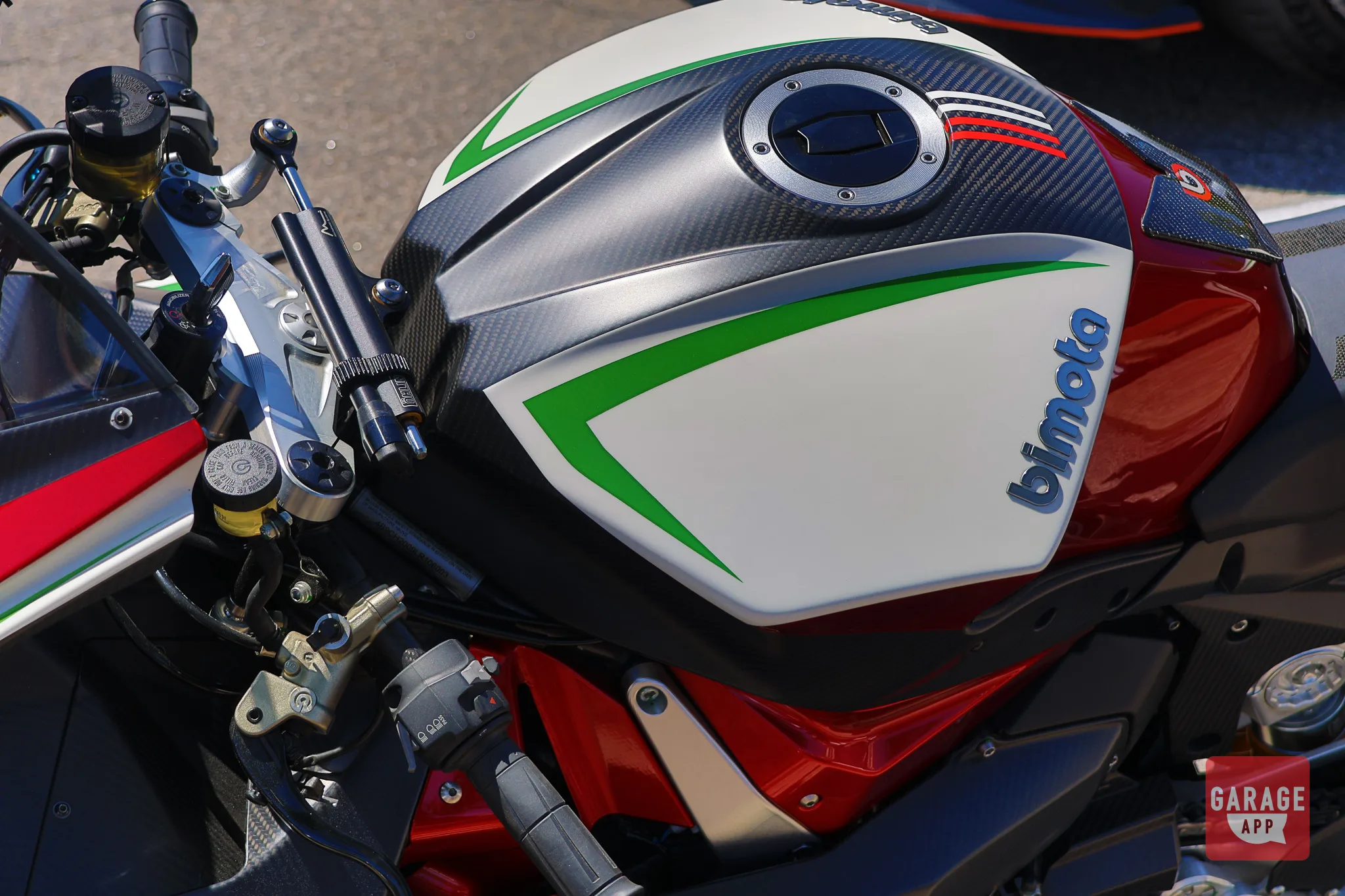
The Tricolore livery is the signature look, green, white, and red flowing across the tank and tail in a nod to both the Italian flag and Bimota's own heritage. The carbon weave sits proud in the light, the CNC-machined pieces are finished like jewelry, and even the front suspension linkage becomes a design feature rather than something to disguise.
This is Italian motorcycle craftsmanship in the older sense of the phrase, where a small team builds a small number of things by hand and expects you to notice the details. It reads as art as much as machine, and that duality is exactly what makes it so hard to photograph well and so magnetic in person.
Shooting a bike this detailed rewards patience. Low, raking light picks up the carbon weave and the machined suspension arms far better than flat midday sun.
Engine and Performance: Kawasaki Supercharging, Bimota Character
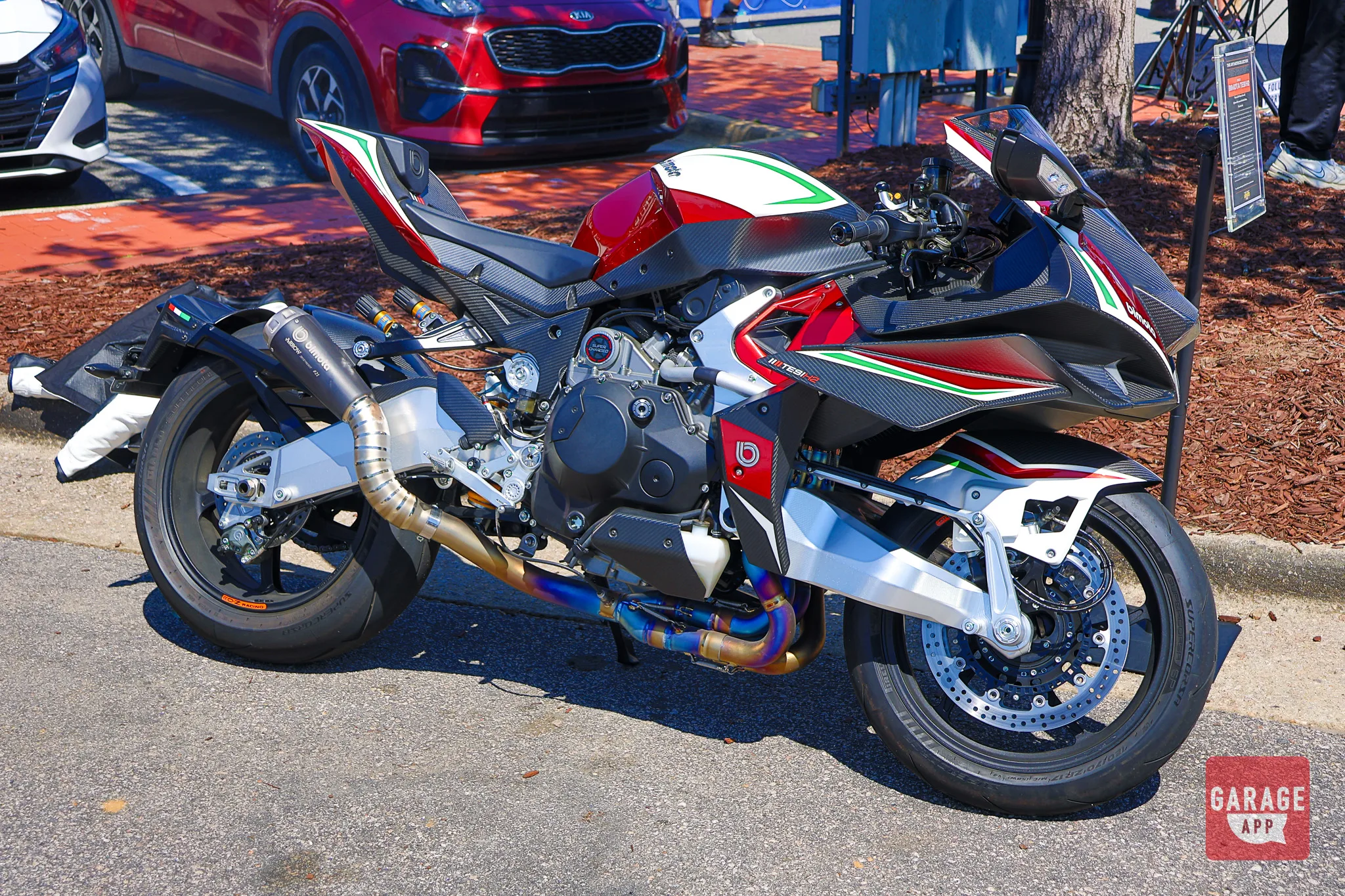
At the heart of the Tesi H2 sits Kawasaki's supercharged 998cc inline-four, the same forced-induction masterpiece that powers the Ninja H2. That means roughly 231 horsepower on tap, or more with ram air, and the unmistakable whine of a centrifugal supercharger spooling behind you. This is a genuinely violent supercharged motorcycle engine, and Bimota did not water it down.
What changed is the delivery. By wrapping the motor in its own chassis and shifting weight balance around the hub-center front end, Bimota reshapes how that power reaches the road. The engine feels familiar to anyone who has ridden an H2, but the way the bike settles under acceleration and refuses to pitch the way you expect gives it a distinct personality.
- Engine: 998cc supercharged inline-four (Kawasaki-sourced)
- Output: approximately 231 hp, around 240 hp with ram air
- Chassis: Bimota hub-center steering, billet aluminum spine
- Bodywork: full carbon fiber
- Weight distribution: rebalanced versus the donor Ninja H2 platform
The engine is Japanese muscle. The way it steers and stops is pure Bimota. The result is a bike that does not feel like anything else in the segment.
The enthusiast consensus on the Tesi H2
Hub-Center Steering Explained
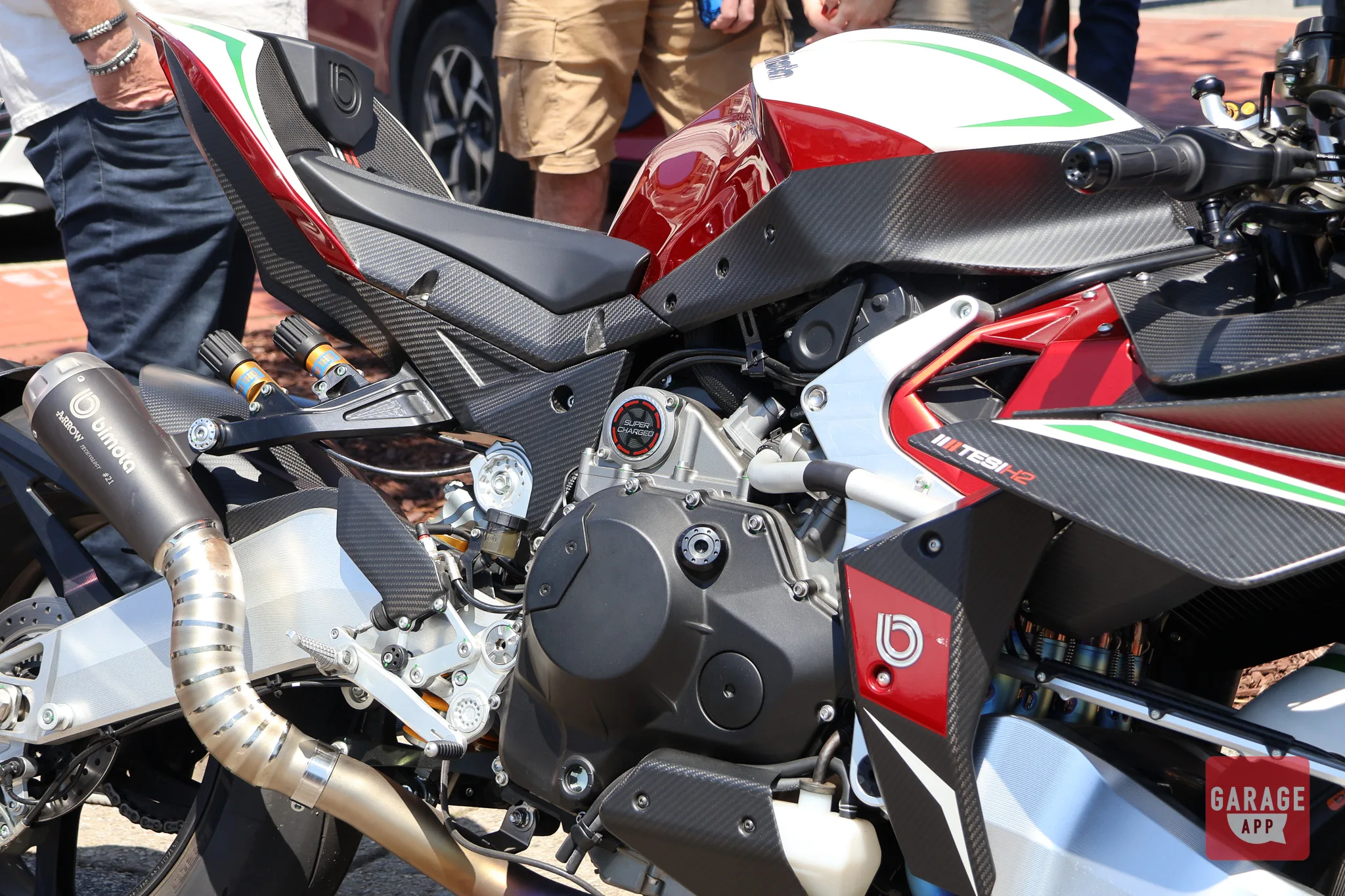
Here is the part that separates the Tesi from every superbike parked next to it. A conventional bike uses a telescopic fork, two tubes that hold the front wheel and also handle both steering and suspension duties. Under hard braking those tubes compress and the front end dives, changing geometry exactly when you need stability most.
A hub-steered motorcycle separates those jobs. The Tesi H2 uses a front swingarm with a hub at the wheel center, so steering happens through linkages while a separate shock handles suspension. The upshot is that braking forces and suspension movement are largely decoupled.
Why It Matters
- Dramatically reduced brake dive, so the bike stays composed when you trail into a corner
- More consistent geometry, since the front end does not collapse under load
- A different feel through the bars, more mechanical and direct, less about squishing a fork
- A talking point that will absorb an entire cars and coffee morning
The tradeoff is complexity and cost, which is exactly why almost no manufacturer commits to it. Bimota has spent decades refining the concept, and the Tesi H2 is the most powerful expression of it yet.
If you ever get the chance to ride one, do a few progressively harder braking runs on a familiar road first. The absence of dive is genuinely disorienting until your body recalibrates.
Model History and Rarity: A Comeback Story
Bimota has died and come back to life more than once. The brand's history is a rollercoaster of brilliant ideas and shaky finances, which only adds to the mythology. The current chapter began when Kawasaki took an equity stake in Bimota, a partnership that gave the Italian house access to one of the best engines on the planet and gave Kawasaki a halo project dripping with exclusivity.
The result of that Bimota Kawasaki collaboration is a limited production superbike in the truest sense. These are built in tiny numbers, by hand, with a price to match. You do not stumble onto one at a dealership. Production runs are measured in the hundreds across the various Tesi H2 configurations, and many never leave the collectors who ordered them.
That scarcity is central to the appeal. Where a Ferrari or a Porsche has an established owner network and predictable support, the Tesi H2 exists in a much smaller orbit closer to something like the Spyker C8, a machine defined as much by its rarity and story as its specs.
The Riding Experience
Riders who have spent real time on the Tesi H2 tend to describe the same arc. The first few miles are strange, because your instincts are calibrated for a fork. Then the hub-center front end starts to make sense, and the composure under braking becomes addictive.
You can brake deeper and harder into a corner without the nosedive that unsettles a conventional bike, which changes how you approach a set of curves entirely. Combine that with the supercharged surge from the Kawasaki motor and you get a machine that rewards precision and confidence in equal measure. It is not a bike for stop-and-go commuting. It wants a proper road.
This is where planning matters. A bike this special deserves the right tarmac, and GarageApp's AI-generated driving routes help you map out flowing roads that actually let hub-center steering shine, rather than wasting it in traffic. Pair that with CarPlay and Android Auto integration and you can navigate a fresh route without fumbling with your phone at a stoplight.
Hub-center steering pays off most on fast, sweeping roads with hard braking zones. When you are planning a ride, prioritize elevation change and long corners over tight technical hairpins.
Ownership and Collector Value
Owning a Tesi H2 is a different experience from owning almost anything else. Acquisition is difficult, the dealer network is thin, and parts sourcing for a hand-built machine can feel like detective work. The upside is appreciation potential, because genuine limited production superbike status combined with a compelling origin story is exactly what the collector market rewards long term.
The hardest part is not the money. It is the isolation. When you own a bike this rare, the biggest question becomes who do I even ask about maintenance quirks, torque specs, or where to find a specific part. This is precisely where connecting with other owners changes everything.
Solving the Isolation Problem
GarageApp was built for exactly this kind of situation. Using nearby rider and owner search you can discover if any of the handful of other Tesi H2 owners are within reach, which for a bike this rare is a small miracle on its own. From there, direct messaging with owners solves the parts-sourcing and maintenance-verification problem by putting you in touch with someone who has actually lived with the machine.
You can also search by make, model, and trim to filter straight to Bimota owners rather than scrolling through unrelated content, the way generic platforms force you to.
Documenting and Sharing a Bike Most People Will Never See
Part of owning something this obscure is preserving its story. The Virtual Garage showcase lets you catalog the full spec sheet, build history, and provenance of your Tesi H2 in one place, which matters enormously for a machine most people will only ever see in photos. It doubles as a maintenance log and a proof-of-authenticity record that supports future value.
Sharing it is just as rewarding. A location-aware social feed puts your bike in front of the people most likely to appreciate it, and if you want to document the ownership journey properly, our guide to documenting your build online walks through how to grow an audience around a genuinely rare machine.
Community and Enthusiast Connection
Spotting a Tesi H2 in the wild is a genuine event. Because of that, knowing where one will be beats hoping to get lucky. GarageApp's local event and show discovery combined with event attendee visibility flags when a rare bike is confirmed to appear at a show near you, so you can plan around it instead of leaving it to chance.
Beyond the machine itself, the real payoff is community. Joining Bimota and exotic-marque owner groups links you to a small but dedicated global network that also meets locally, and following your local community keeps you plugged into the meets and rides where bikes like this actually turn up. For enthusiasts who love the hunt as much as the ownership, that connection is priceless.
And if you end up becoming the person others turn to for exotic-bike knowledge, GarageApp's referral program rewards you for bringing more like-minded owners into the fold.