

The fastest appreciating classic car under $100K right now is the 1978-1983 Datsun 280ZX. According to Hagerty, a condition #2 example is worth $32,800, up 138% since 2019, which is the kind of swing that turns a car you drive on weekends into a classic car you suddenly want appraised. No other classic, exotic, or collector car on Hagerty's 2025 and 2026 Bull Market Lists comes close to that percentage at this price point, and it's the headline Datsun 280ZX value story that has a lot of Z owners checking their insurance policies for the first time in years.
This list is for two kinds of people. Some of you want to know the best classic cars under 100k to buy before prices climb further. Others have a GTI VR6 or a Bronco II sitting in the garage and want to know if it's worth more than you think. Both questions get answered with real numbers from Hagerty Automotive Intelligence, not guesswork, and if you want to check where your specific model stands, GarageApp's Makes & Models directory is a good place to look it up.
One honest note before the ranking. Only three cars on this list have a cited appreciation percentage. For the other seven, Hagerty points to demand signals like buyer age and scarcity instead of a single growth figure. So #1 through #3 are ranked by hard percentages, and #4 through #10 are ranked by how strong and specific the demand signal looks. We didn't invent numbers to fill the gaps.
| Rank | Car | Value (Cond. #2) | Appreciation or Demand Signal |
|---|---|---|---|
| 1 | 1978-1983 Datsun 280ZX | $32,800 | +138% since 2019 |
| 2 | 1981-1983 DeLorean DMC-12 | $75,100 | +73% since 2019 |
| 3 | 1990-1993 Chevrolet 454 SS | $59,800 | Insured value +57% since 2021 |
| 4 | 1995-1998 Nissan Skyline GT-R | $82,350 | 25-year import exemption demand |
| 5 | 1968-1970 Dodge Charger | $91,450 | 52% of owners Gen X or younger |
| 6 | 2006-2010 BMW M5 | $36,000 | 58% of buyer interest from under-40s |
| 7 | 1995-1998 VW Golf GTI VR6 | $20,000 | 78% of interest from under-50s |
| 8 | 1984-1990 Ford Bronco II | $15,600 | 38% of interest from Gen Z/millennials |
| 9 | 2006-2013 Chevrolet Corvette Z06 | $55,900 | Best performance-per-dollar in class |
| 10 | Early-2000s Mercedes G-Wagen | $53,000-$63,000 | Far below modern G-Wagen pricing |
The 10 Fastest Appreciating Classic Cars Under $100K, Ranked
1. 1978-1983 Datsun 280ZX: $32,800 (+138% Since 2019)
For years the 280ZX was the Z car people apologized for. It was softer and heavier than the 240Z, more grand tourer than sports car, and that reputation kept prices in the basement. That's exactly why the jump has been so dramatic. The 240Z got expensive, buyers looked one generation later, and a car that started from a low base more than doubled. Clean, unmodified examples with the T-tops intact are the ones pulling these numbers.
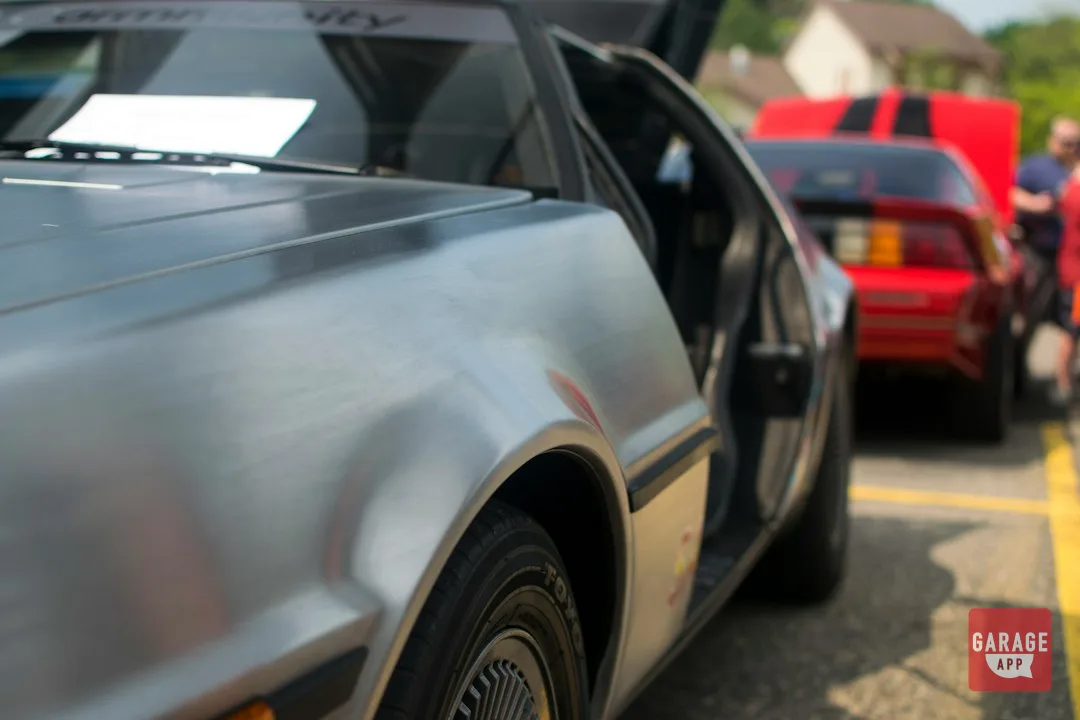
2. 1981-1983 DeLorean DMC-12: $75,100 (+73% Since 2019)
The DeLorean has always been more pop culture artifact than performance car, and honestly that's fine. The stainless body and gullwing doors are instantly recognizable to anyone who grew up with Back to the Future, and those kids now have real money. Production was short and the company famously collapsed, so supply isn't growing. The PRV V6 was never quick, but nobody buying one at $75,100 cares about quarter-mile times.
3. 1990-1993 Chevrolet 454 SS: $59,800 (Insured Value +57% Since 2021)
A big-block C1500 pickup with a monochrome paint job sounds like a strange collector car until you remember who wanted one in 1990. It was the muscle truck for a generation that missed the original muscle car era. The 57% figure tracks insured value since 2021, which is a meaningful signal because it reflects what owners are willing to pay to protect these trucks. Unmolested, low-mile examples are getting harder to find as most were used as actual trucks.
If you own anything on this list, check your agreed-value insurance policy. A car that has gained 57% or more since your last update could leave you badly underinsured after a total loss.
4. 1995-1998 Nissan Skyline GT-R: $82,350 (25-Year Import Demand)
The R33 generation is the clearest example of how the 25-year federal import exemption shapes this market. Each model year that crosses the threshold unlocks a wave of American buyers who spent their teens driving these cars in Gran Turismo. The RB26 twin-turbo inline-six and ATTESA all-wheel drive are legendary, but the real driver is pent-up legal demand. Expect clean, well-documented R33s to keep pressure on the $100K ceiling.
5. 1968-1970 Dodge Charger: $91,450 (52% of Owners Gen X or Younger)
This is the most expensive car on the list and the most traditional pick, yet its demand data is surprisingly young. More than half of owners are Gen X or younger, which means the second-gen Charger isn't just a boomer car getting passed around a shrinking pool of buyers. Bullitt and The Dukes of Hazzard gave it cross-generational pull. At $91,450, it sits closest to the $100K line, so there's less room for bargain hunting here.
6. 2006-2010 BMW M5: $36,000 (58% of Buyer Interest From Under-40s)
The E60 M5 has a V10 that revs past 8,000 rpm and a reputation for expensive repairs, and both of those facts are baked into the price. Under-40 buyers account for 58% of interest, which tells you this car is being chased by people who remember it as a poster car. Rod bearings and the SMG gearbox scare off cautious shoppers. We think that fear is the opportunity, as long as you buy one with records.
7. 1995-1998 VW Golf GTI VR6: $20,000 (78% of Interest From Under-50s)
The Mk3 GTI VR6 is the cheapest way into this list besides the Bronco II, and the demand skews heavily young. Hagerty shows 78% of interest coming from under-50 buyers, the people who modified these cars in the late '90s. The problem is that most of them got modified to death. A stock, rust free VR6 is legitimately rare now, and that scarcity is what props up the $20,000 figure.
8. 1984-1990 Ford Bronco II: $15,600 (38% of Interest From Gen Z/Millennials)
The Bronco II got overshadowed by its full-size sibling and later by the new Bronco, but that halo is now working in its favor. Gen Z and millennial buyers account for 38% of interest, and they're drawn to compact, analog off-roaders they can actually afford. It's a Ranger-based trail toy with honest mechanicals. For under $16,000 in excellent condition, it's the most accessible entry into classic car investment under 100k on this list.
9. 2006-2013 Chevrolet Corvette Z06: $55,900 (Best Performance-Per-Dollar in Class)
The C6 Z06 made 505 horsepower from a 7.0-liter LS7 and still embarrasses much newer cars. Hagerty calls it the best performance-per-dollar in its class, and that's the whole pitch. The known valve guide issue on the LS7 keeps some buyers away, so a car with documented head work commands a premium. If you want a modern-feeling collector car you can drive hard, this is our favorite pick on the list.
10. Early-2000s Mercedes G-Wagen: $53,000-$63,000 (Far Below Modern Pricing)
A new G-Wagen carries a six-figure sticker, so an early-2000s example in the $53,000 to $63,000 range looks almost reasonable by comparison. The boxy shape barely changed for decades, which means an older one delivers most of the visual status for much less money. Demand comes from buyers who want the look without the modern price. Budget carefully for maintenance, since these trucks reward owners who stay ahead of problems.
Log your service records, receipts, and photos as you go. A digital garage in GarageApp makes it easy to hand a buyer a complete history later, which directly affects what your car sells for.
What's Driving These Increases?
Look at the demand column in that table and a pattern jumps out. The buyers pushing these cars up aren't the traditional collector demographic. Under-40s make up 58% of E60 M5 interest. Under-50s account for 78% of GTI VR6 interest. Even the Charger, a car you'd expect to belong to retirees, has 52% of its owners in Gen X or younger.
Gen X and millennials are hitting their peak earning years, and they're buying the cars they wanted as teenagers. That's always been how the collector market works. Boomers drove up muscle car prices in the 2000s for the same reason. What's different now is which cars count as nostalgic. A 280ZX, a Bronco II, and a Mk3 GTI weren't considered collectible 15 years ago. Now they're the posters on the bedroom wall that people can finally afford.
Import law adds a second force. The 25-year exemption drip-feeds Japanese cars like the R33 Skyline GT-R into the US market, and every newly eligible year creates a fresh group of buyers at once. If you're trying to predict cars that will increase in value 2026 and beyond, watch which models the next generation grew up wanting, and which ones just became legal to import. If you want a deeper look at spotting these shifts, our guide on reading the collector market breaks down how to interpret auction data.
How These Numbers Are Calculated
Every value in this article is a condition #2, or "excellent," figure from Hagerty's valuation data. That matters a lot, because it's easy to read $82,350 for a Skyline GT-R and assume any R33 is worth that.
Hagerty uses a four-tier scale. Condition #1 is concours, the best car in the world with perfect everything. Condition #2 is a really excellent car that could win a local or regional show but has minor flaws a serious judge might catch. Condition #3 is a good driver with visible wear, and #4 is a runner that needs work. Most cars you see for sale fall into #3 territory.
- Condition #1: Concours quality, rarely driven, trailered to shows
- Condition #2: Excellent, the basis for every figure on this list
- Condition #3: Good driver with honest wear and minor issues
- Condition #4: Functional but needs work, often a project
So these aren't inflated concours prices, but they aren't average-car prices either. A driver-quality example of any car here will usually sell for noticeably less. That gap is also why the jump from #3 to #2 is where restoration money often gets spent, and why knowing how much a restoration really costs is part of any smart buying decision.
Before assuming your car hits these numbers, grade it honestly against condition #2 standards, or better yet, ask an owner from the same model community to look it over. Owners are brutally honest about flaws.
Should You Buy Now or Sell Now?
Our take: buy the car you'd be happy owning even if it went flat for five years. The 280ZX's 138% run has already happened, and chasing it as a pure financial play is how people end up holding a car they don't love at the top of a cycle. The cars with young demand and low entry prices, like the Bronco II and GTI VR6, look like better value bets than the ones already brushing against $100K.
If you're a seller, the demand data is on your side, but the market rewards documentation and originality above everything else. Whichever side you're on, deciding whether you're a driver or an investment collector will shape which car makes sense. Connecting with other owners on GarageApp is also one of the quickest ways to get a real-world read on what clean examples of your model are actually going for.