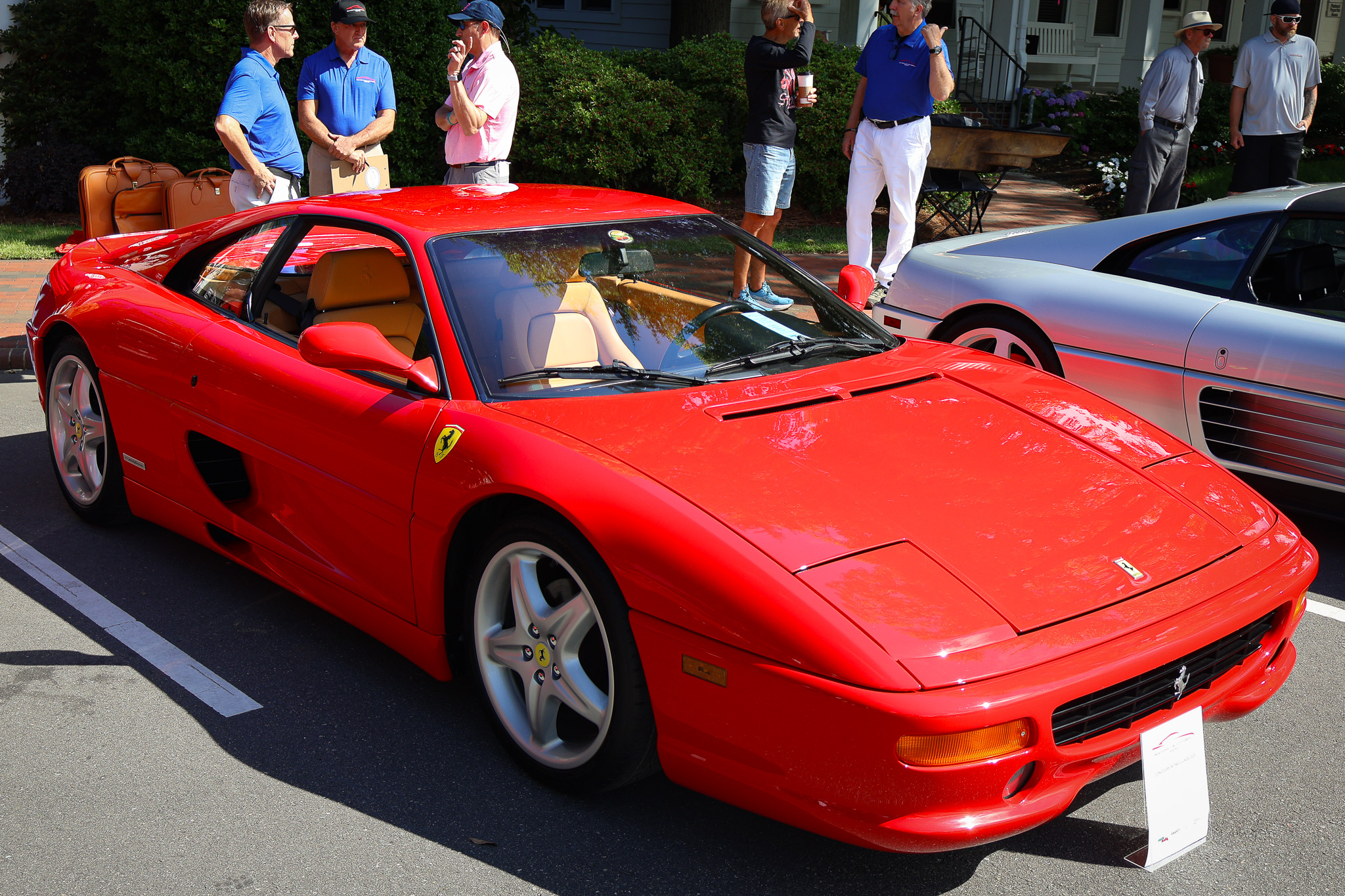

Why the Ferrari F355 Still Stops Traffic
There is a specific moment that sells you on the Ferrari F355. It happens when the cold start settles, the idle drops into a hollow flutter, and you realize the whole car is vibrating with intent before you have even moved. Introduced in 1994 to replace the 348, the F355 arrived as the last of the truly hydraulic, unassisted, gated-manual Ferraris. No electronic throttle nannying, no drive modes, no synthesized noise. Just a screaming flat-plane V8 mounted a few inches behind your shoulders.
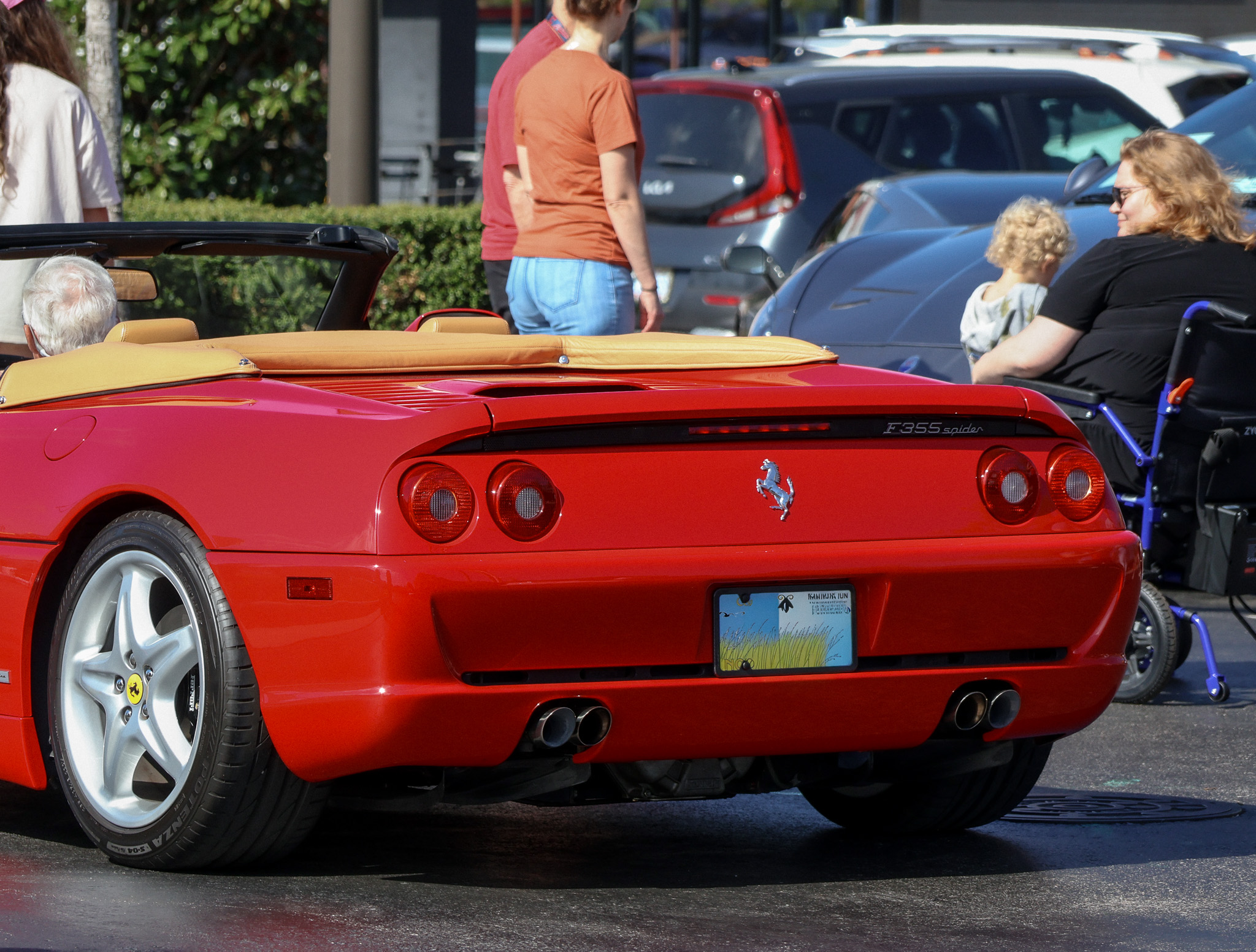
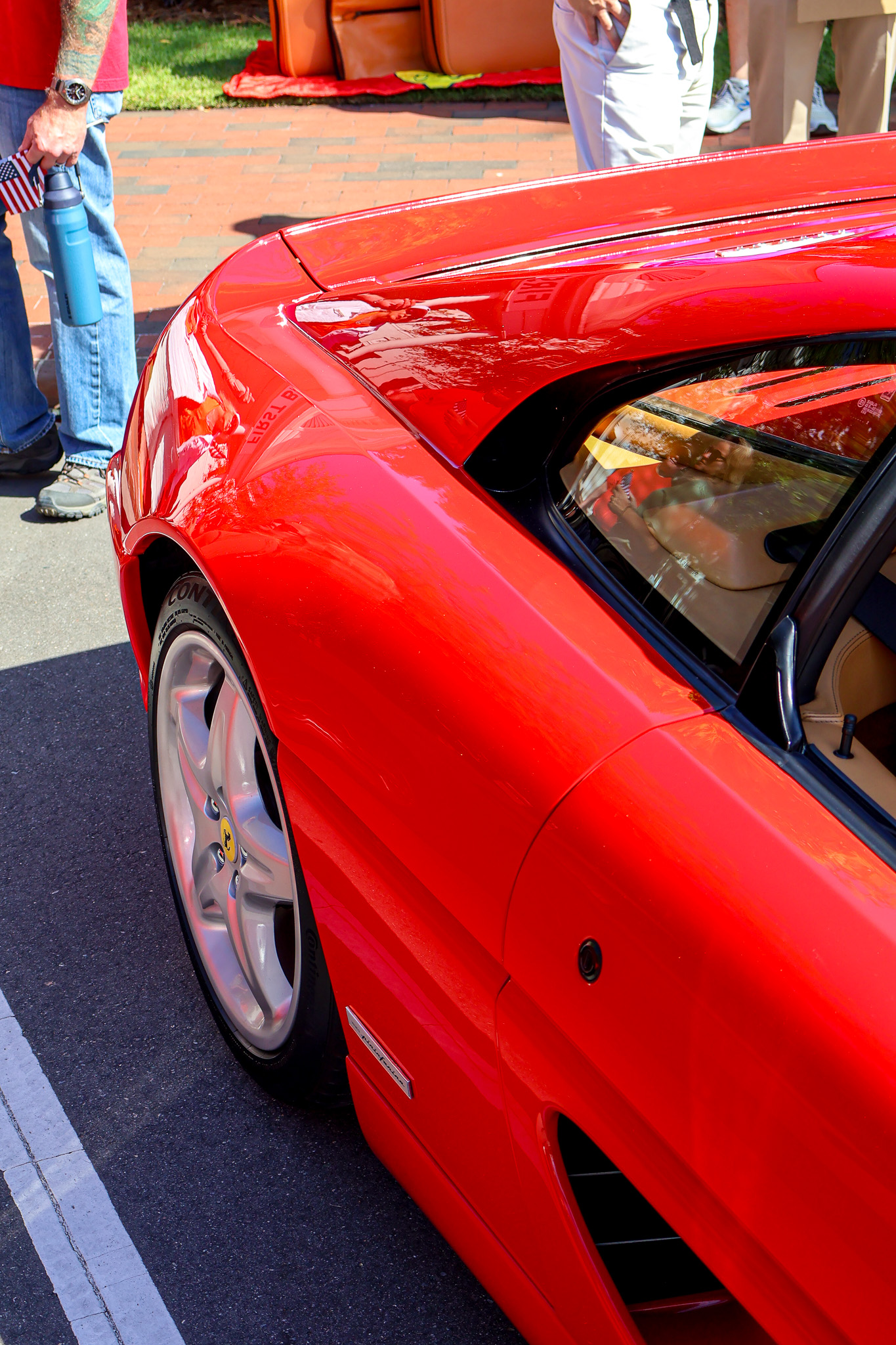
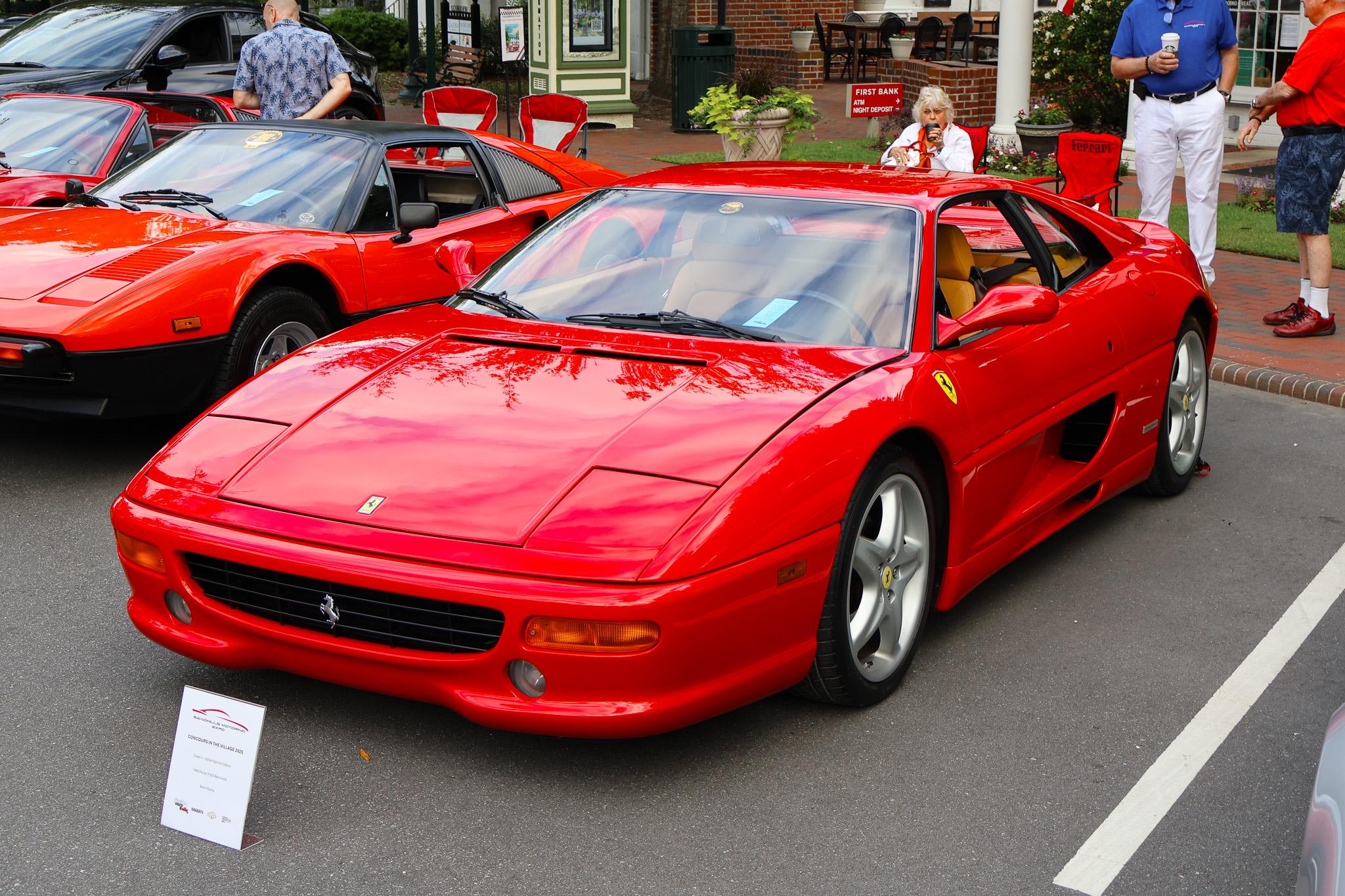
In a red 1995 example, the Rosso Corsa over tan or black cabin looks exactly right, because Pininfarina designed the body to wear that color the way the 288 GTO and F40 did before it. The proportions are compact by modern standards, the surfacing is clean, and the flat underbody with rear diffuser was a genuine aerodynamic leap over the 348.
The F129 3.5-Liter Ferrari V8 and the 8,500 RPM Redline
The heart of the car is the Ferrari V8 known internally as the F129B. It displaces 3,496cc, hence the 355 name, which combines the 3.5-liter capacity with the five valves per cylinder. That five-valve head layout was lifted straight from Ferrari's Formula 1 thinking of the era, using three intake valves and two exhaust valves to improve breathing at high rpm.
The result was 375 horsepower from a naturally aspirated 3.5, a specific output of roughly 107 horsepower per liter that embarrassed most exotics of the mid-nineties. But the number that defines the F355 is not power, it is the 8,500 rpm redline. Most of the drama, the noise, and the shove live in the top third of the tach.
Why the Redline Changes How You Drive
Below 4,000 rpm the F355 feels quick but civilized, almost polite. Push past 5,500 and the engine transforms. The induction hardens, the exhaust note splits open into that unmistakable Ferrari wail, and the last 3,000 rpm arrive in a rush that pins your attention to the road. You learn to chase the redline because the car rewards you for living up there. It is a completely different personality from a modern turbo Ferrari, where torque arrives early and everything is over by 6,500.
If you test drive an F355, do it with a warm engine and take it to at least 7,000 rpm in second gear on a safe road. Anything below that and you have not actually met the car.
The Gated Manual: Why Enthusiasts Chase It
The F355 was offered with two transmissions. The classic six-speed gated manual and the F1 paddle-shift automated manual that debuted late in the production run and previewed the future of Ferrari. The F1 box was a landmark piece of technology, but among collectors and drivers the Ferrari F355 manual is the one everyone wants.
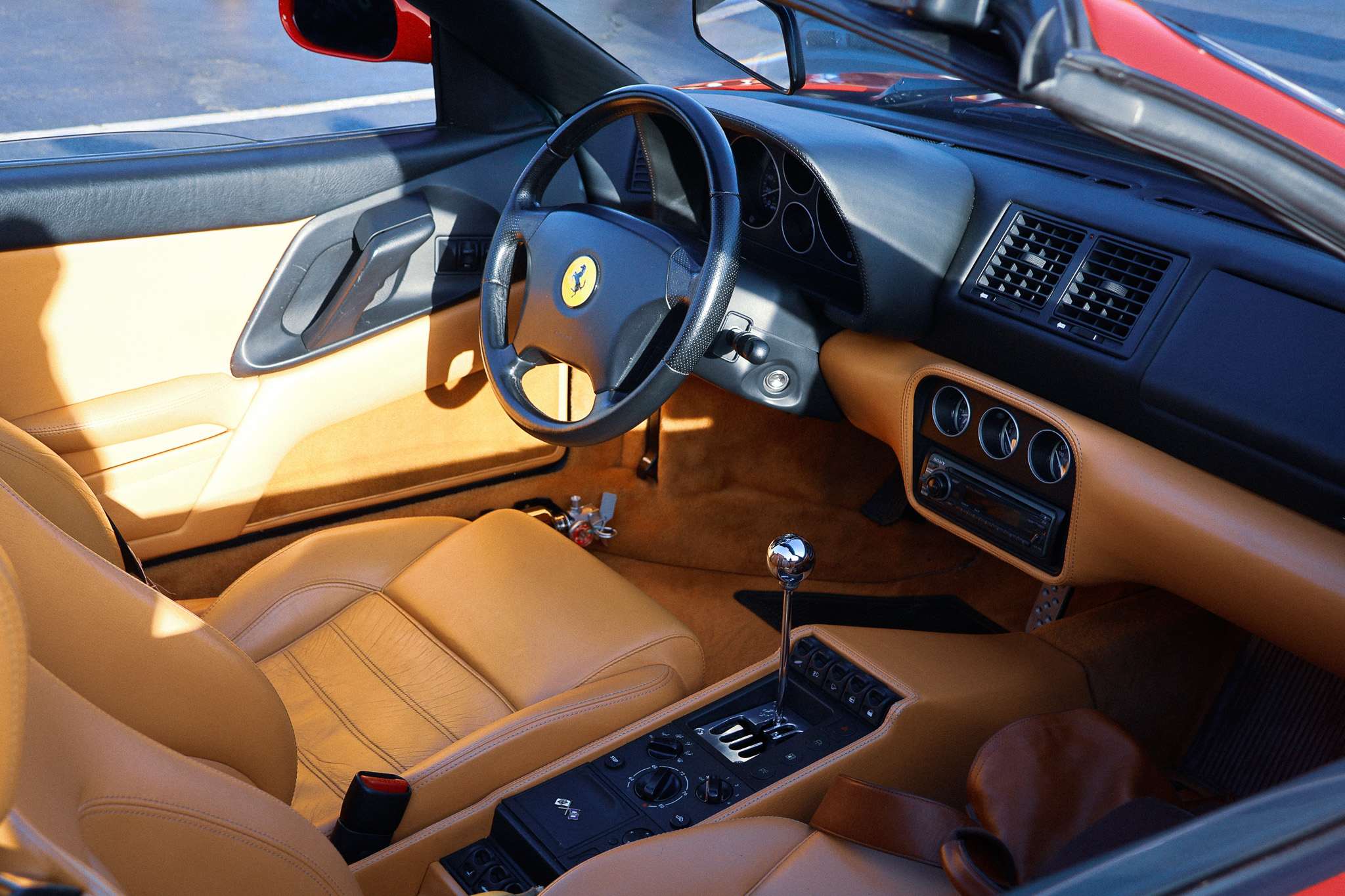
The reason is tactile. That polished aluminum gate with its exposed metal fingers demands deliberate, mechanical inputs. The shift action is heavy and precise, especially the cold second-gear reluctance that every owner learns to work around. Rev-match a downshift into third and the lever clicks across the gate with a metallic snick that no paddle can replicate. It is one of the great driving rituals, and it is a big part of why the gated manual Ferrari has become a defining collectible trait.
You do not just drive a gated Ferrari, you conduct it. Every gear change is a small ceremony you perform with your right hand.
A longtime F355 owner
Clutch, Pedals, and Steering Feel
The clutch engagement is firm with a clear bite point once you learn it. The pedals are aluminum and drilled, spaced for heel-and-toe work as if the factory assumed you would use them that way. The hydraulic steering is the crown jewel. It is quick, honest, and constantly feeding your palms information about the front tires. There is no electric assist filtering the road out. The chassis balance sits right in the middle, neutral and adjustable, willing to rotate on the throttle without ever feeling nervous. This is the analog conversation that newer cars, for all their speed, simply cannot have.
What the Ferrari V8 Sounds Like
The sound deserves its own section because it is the reason people keep filming these cars decades later. At cold idle the flat-plane crank gives the F355 a slightly uneven, mechanical chatter, more raw than refined. Warm it up and the idle smooths into a busy hum with a metallic edge.
- At idle: a hollow, mechanical flutter that hints at what is coming.
- Mid-range: a hardening rasp between 4,000 and 6,000 rpm as the valves open up.
- Full throttle near redline: a tearing, F1-adjacent shriek that seems to come from everywhere at once.
Many owners upgrade the exhaust, and a good aftermarket system such as a Tubi or Capristo transforms the top end into something genuinely spine-tingling. It is one of the few mods that enthusiasts almost universally endorse, though purists chasing originality often keep the factory system boxed for resale.
Berlinetta, GTS, and Spider: Which F355 to Buy
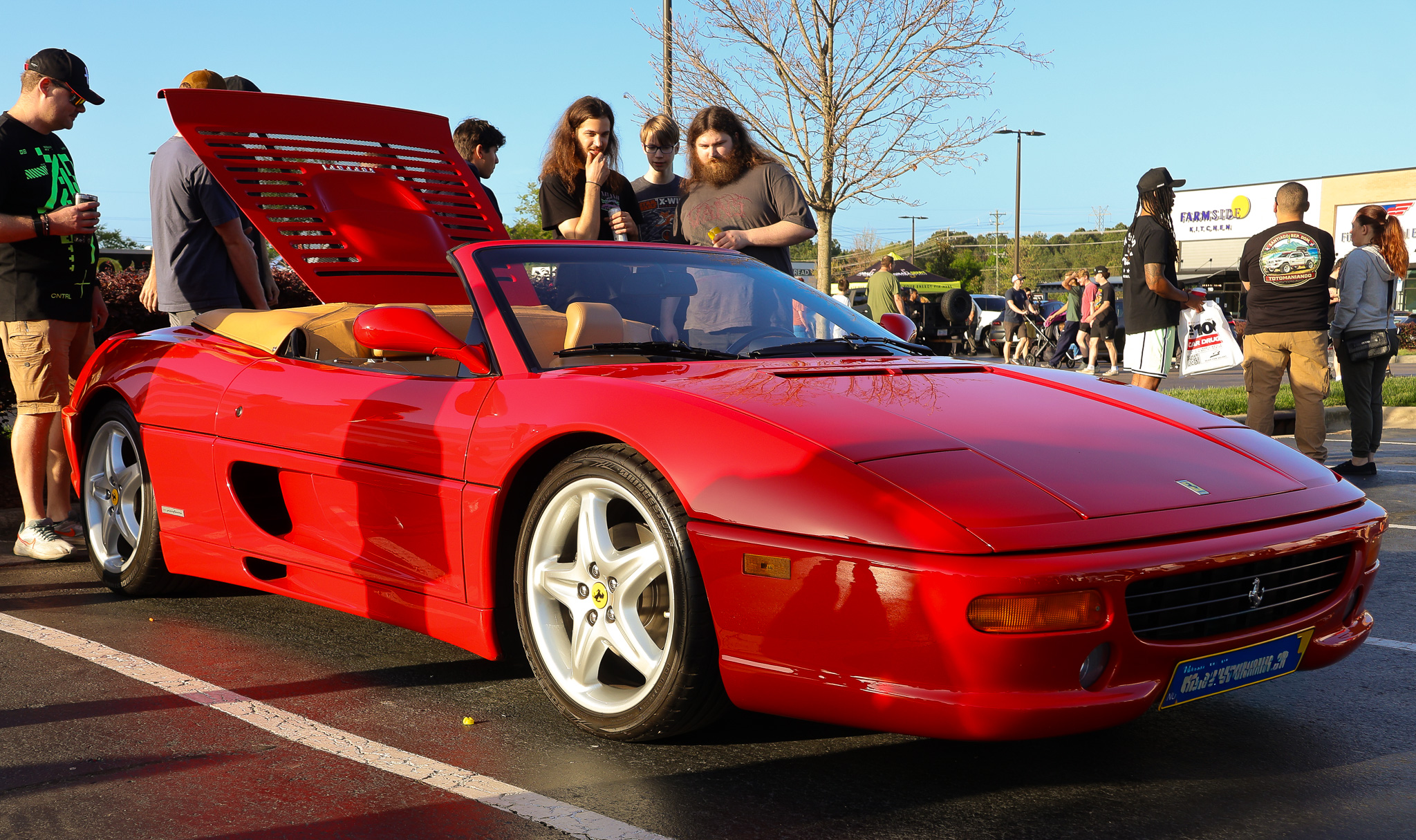
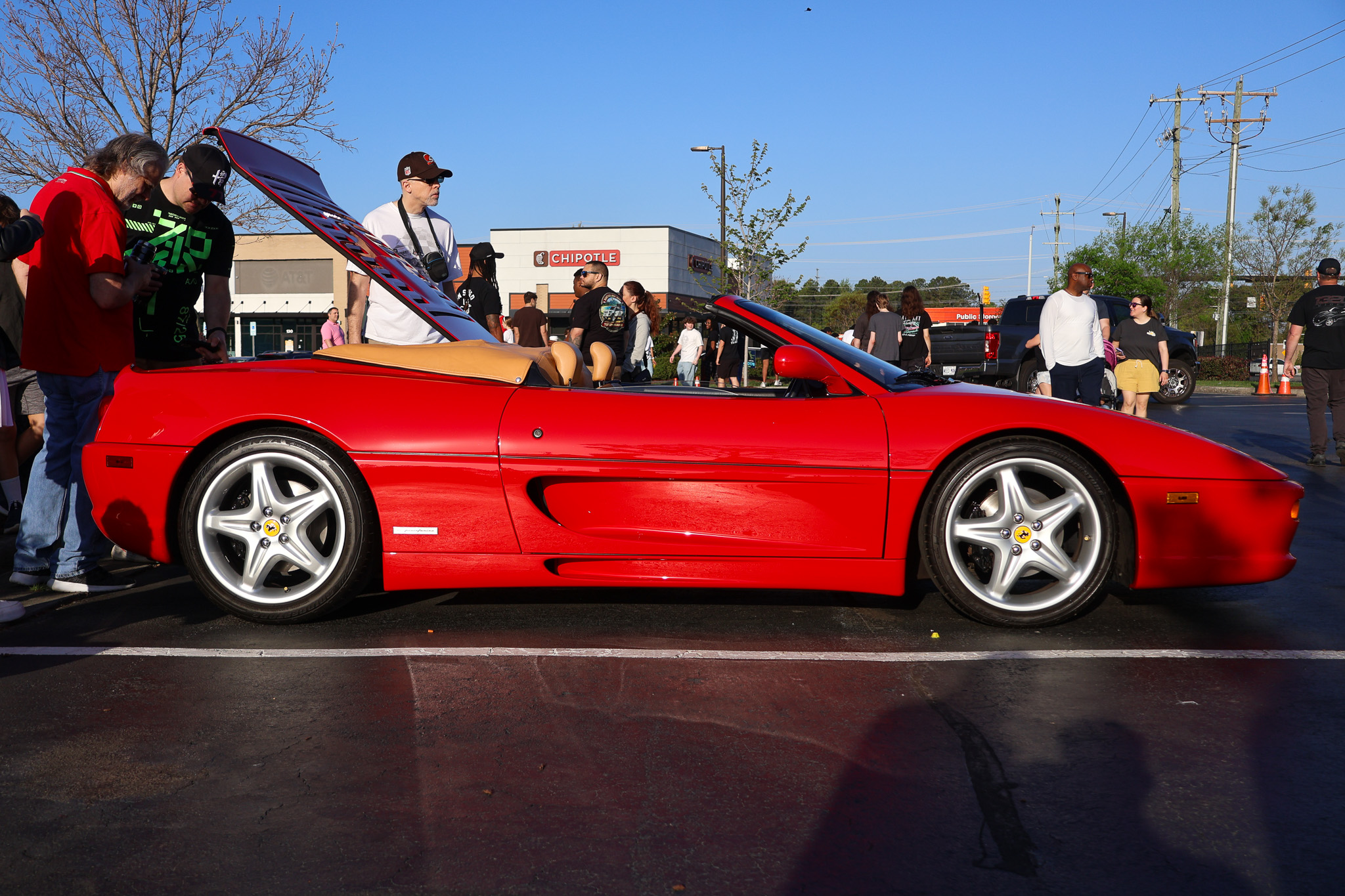
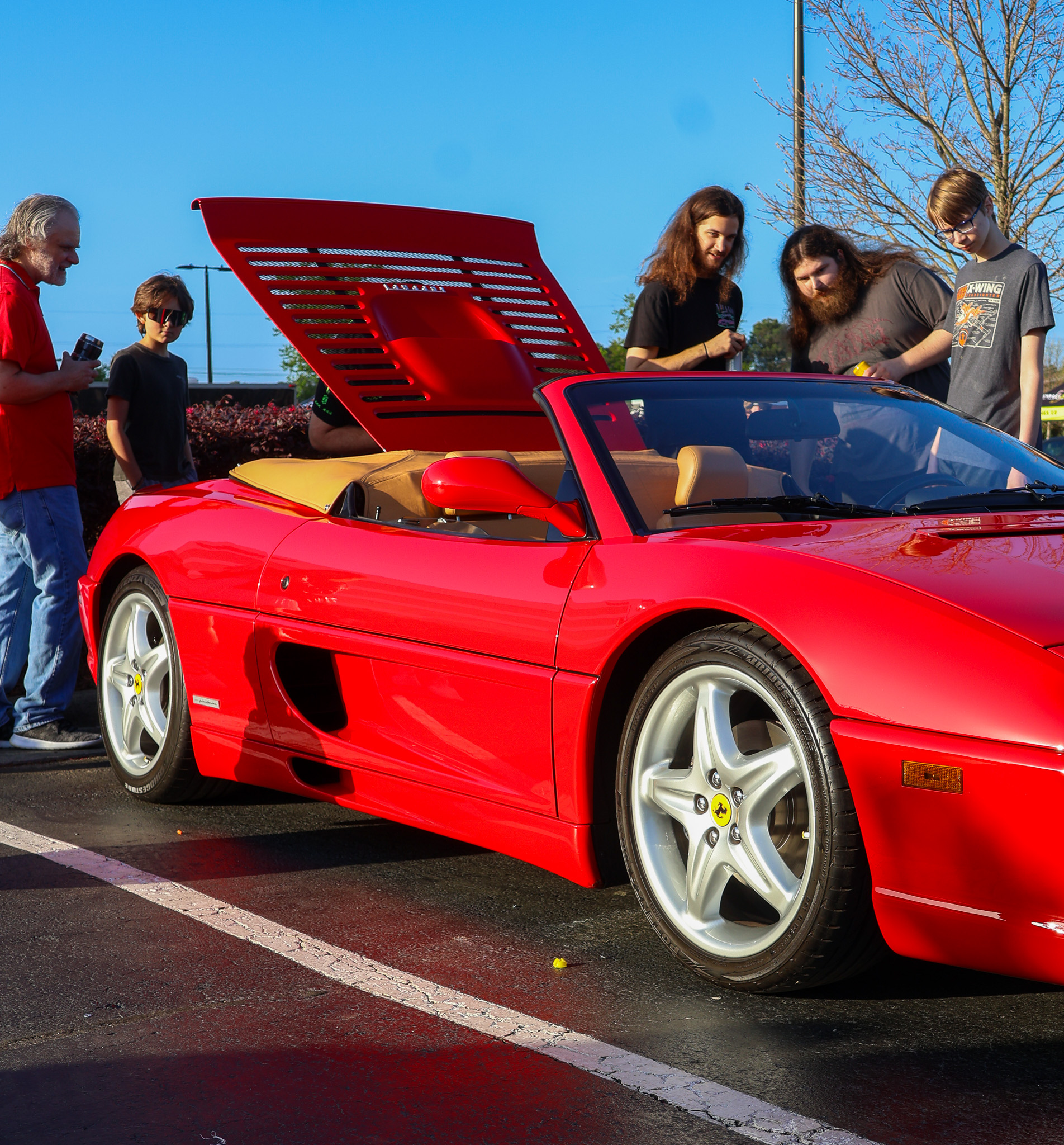
The F355 came in three body styles, and each has its own following. The Ferrari F355 Berlinetta is the fixed-roof coupe, the purest shape and the stiffest chassis. The Ferrari F355 GTS uses a removable targa panel that stows behind the seats, offering open-air driving with most of the coupe's rigidity. The Ferrari F355 Spider is the full convertible with a power soft top, the most social and the most dramatic to look at with the roof down.
- Berlinetta: purist's choice, tightest structure, often the top values in manual form.
- GTS: the flexible middle ground, targa top plus coupe stiffness.
- Spider: best for open-air drama, slightly heavier, hugely popular in warm climates.
For a Ferrari collector car buyer prioritizing values and originality, a manual Berlinetta tends to be the blue chip. But there is no wrong answer here, and a well-kept manual Spider in Rosso Corsa is a magnificent thing to own.
F355 vs 348 vs 360: Where It Sits
Understanding the F355 means placing it between the car it replaced and the car that followed. The 348 shared a family resemblance but felt heavier in its responses and less resolved at the limit. The F355 sharpened everything, added the five-valve heads, improved the aerodynamics, and gained the six-speed gearbox. It was a genuine generational leap rather than a facelift.
The Ferrari 360 that arrived in 1999 went bigger, added an aluminum spaceframe, and moved the styling toward the smoother, more modern look Ferrari has followed ever since. The 360 is faster and easier to live with, but many enthusiasts feel it traded away some of the raw intimacy of the F355. That is exactly why the F355 gets called the last classic analog Ferrari. It is the final mid-engine V8 that still feels like an old-school driver's car rather than a technology showcase.
If you are cross-shopping mid-engine Ferraris, drive a 348 and a 360 back to back with the F355. The differences in steering weight and engine character are obvious within a mile, and they explain the F355's cult status.
Is the Ferrari F355 Reliable? Ownership Costs and Common Issues
Here is the honest part of any Ferrari F355 buying guide. The F355 is reliable when maintained by someone who knows the car, and expensive when it is not. The single biggest topic is the major service. The F355 requires an engine-out service to replace the timing belts, and depending on the shop that job can run into serious money because the engine and gearbox come out as a unit.
- Belt service: engine-out major service on a recommended interval, the defining ownership cost.
- Exhaust manifolds: early cars used manifolds prone to cracking, later steel units are more robust.
- Valve guides: high-rpm engines can wear guides, watch for smoke on startup.
- Electrical and switchgear: sticky buttons and aging connectors are common on nineties Ferraris.
- Clutch wear: manual clutches wear based on how the car is driven, budget accordingly.
None of this should scare off a serious buyer. It just means Ferrari maintenance history is everything. A car with a thick folder of receipts and a recent engine-out service is worth far more than a cheap example with a mystery past. Documented Ferrari ownership turns a gamble into a pleasure.
Keeping Track of a Complex Car
The reality of exotic ownership is that service history sells the car. Logging every belt service, every fluid change, and every receipt is how you protect Ferrari F355 values over the long run. Plenty of owners keep a running digital record now, and building a proper profile in your digital garage makes handing over that history at sale time painless. It also earns instant credibility at a meet when someone asks about the car's history.
It also helps to see the F355 in the context of the wider bloodline, because understanding where it fits sharpens what you are buying. The five-valve V8 and gated manual place it at a very specific moment in Ferrari's mid-engine story, right before the 360 pushed everything toward aluminum construction and digital polish. If you want to trace that evolution and compare the F355 against its siblings across the decades, the full Ferrari model lineup lays out the makes and generations side by side. Seeing the family tree makes the F355's analog character stand out even more clearly. It is the kind of context that turns a casual buyer into a confident one.
Ferrari F355 Values and Why Manuals Keep Appreciating
For years the F355 was the affordable analog Ferrari. Those days are gone. Well-maintained manual examples have appreciated steadily, and the gap between manual and F1-transmission cars has widened dramatically. The market has decided the gated experience is worth a real premium, and that trend shows no sign of reversing.
Originality drives the top values. Numbers-matching engines, factory colors, unmolested interiors, and complete tool kits and books all matter. A documented, low-owner Rosso Corsa Berlinetta with a fresh service will always outrun a modified example on the auction block. If you view the F355 as a Ferrari collector car, buy the best-preserved example you can afford rather than the cheapest one that runs.
- Manual gearbox: the single biggest value driver.
- Documented service history: especially a recent engine-out belt service.
- Original paint and interior: factory colors like Rosso Corsa, Giallo Modena, and Blu Pozzi.
- Low, honest mileage with proof: better than deferred maintenance on a low-mile car.
The Ferrari F355 Ownership Experience on Real Roads
On a back road the F355 is in its element. The steering loads up beautifully through a corner, the mid-engine balance lets you feel the car pivot, and the top-end rush gives you a reason to work the gearbox hard. On the highway it settles into a firm, focused cruise, more intense than a modern GT but never punishing over a few hours.
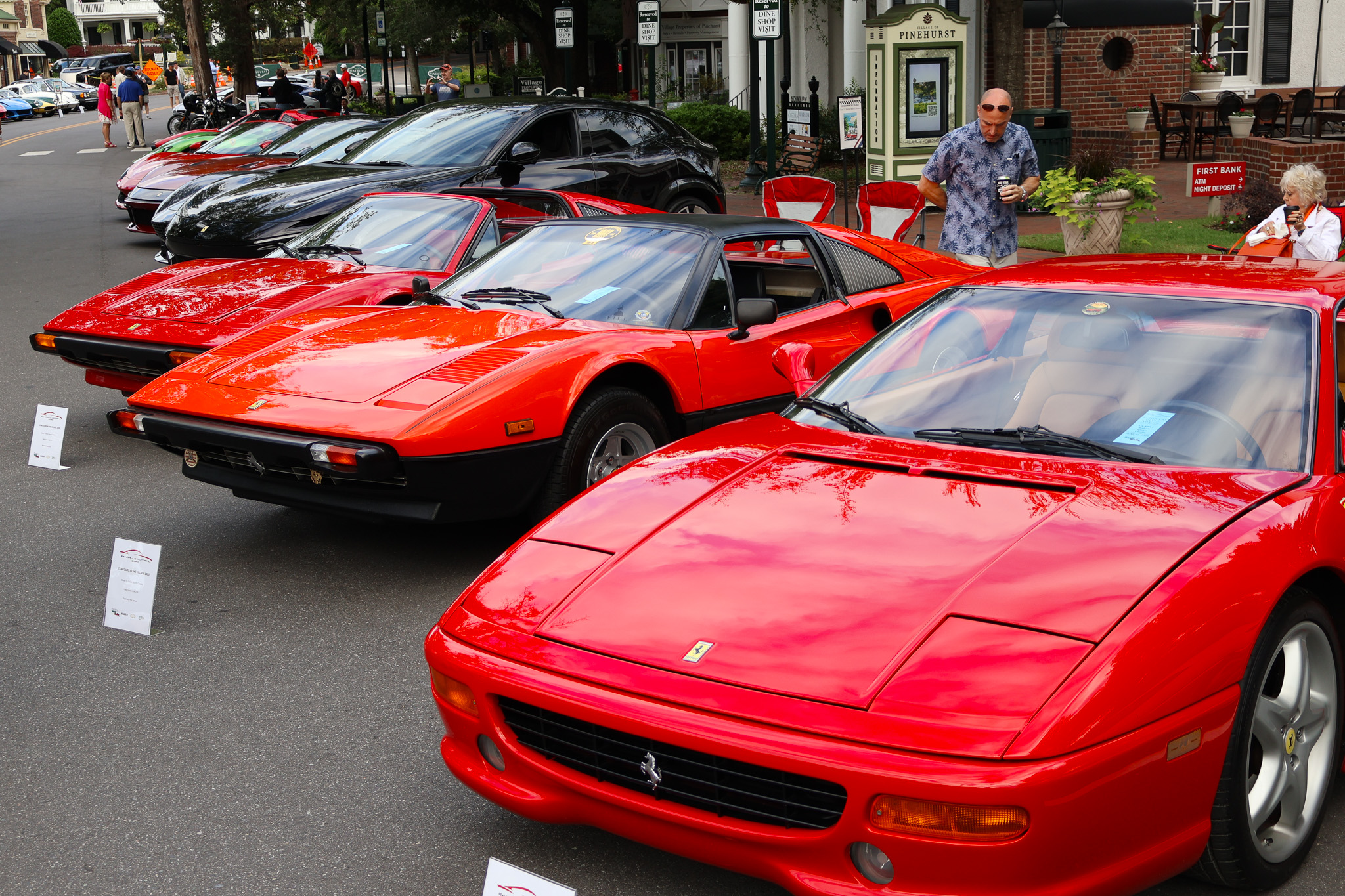
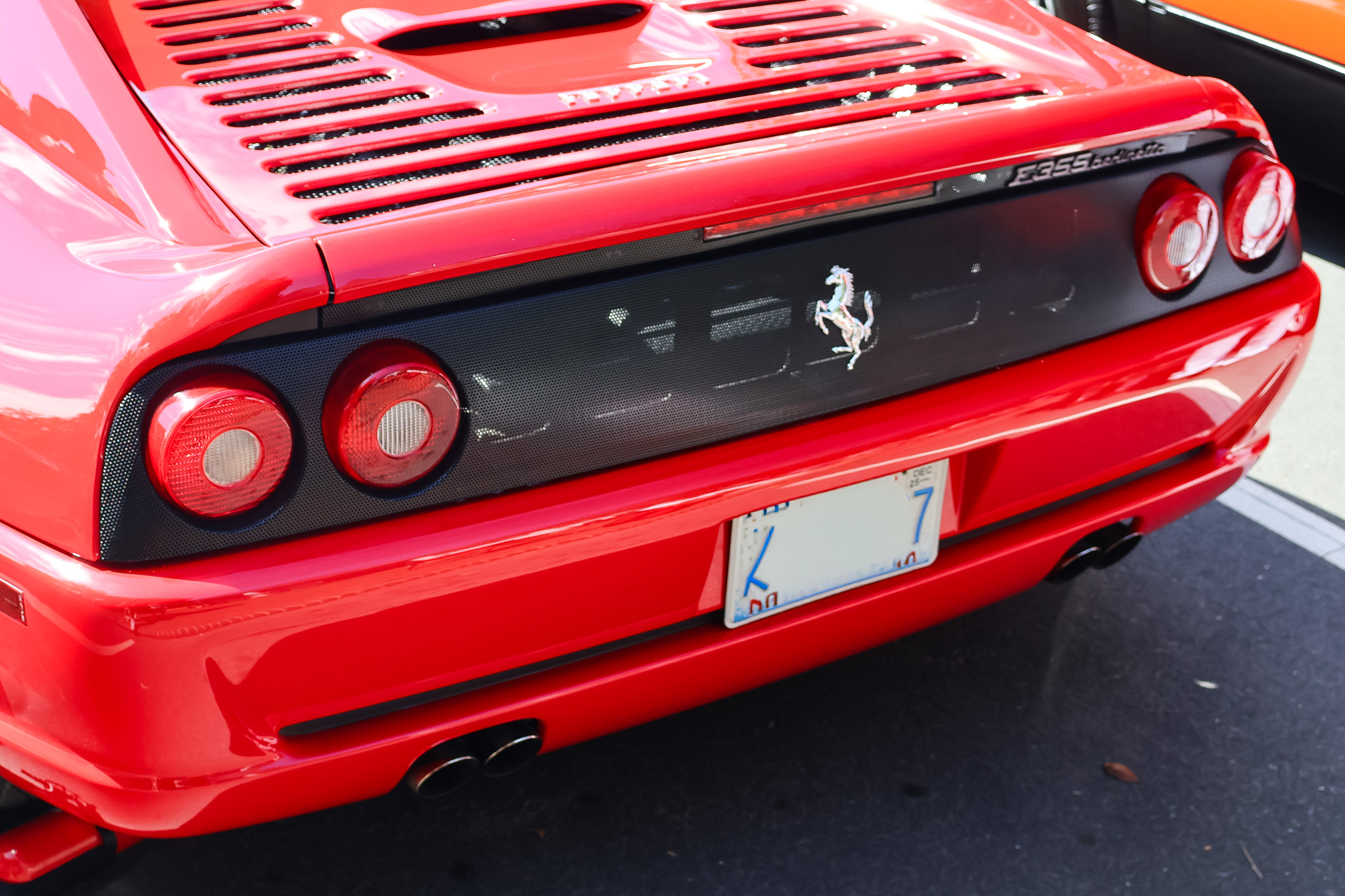
At a car meet it is a magnet. Enthusiasts gather around the engine bay, and someone always asks for a cold start. Photographers still document the F355 constantly because the shape photographs from every angle and the color pops in any light. If you are getting into this world, the cars and coffee scene is where you will meet other owners and learn which local shops actually know these cars.
Why Younger Enthusiasts Are Discovering the F355
A new generation raised on video games and turbocharged hybrids is finding the F355 and falling hard for it. The appeal is exactly what modern hypercars lack: mechanical honesty, a manual you have to master, and a naturally aspirated engine that makes you earn its best moments. It is analog in a digital age, and that scarcity of feel is precisely what makes it desirable. The same instinct that drives interest in air-cooled Porsches and cars like the 2019 Porsche Speedster is fueling the F355's rise.
The Verdict: The Last Truly Analog Ferrari V8
The Ferrari F355 sits at a perfect crossroads. It has enough performance to thrill on any road, styling that Pininfarina got exactly right, and a driving experience defined by that 8,500 rpm Ferrari V8 and the ritual of the gated manual. It is fast enough to be exciting and old enough to be pure. For anyone who cares about how a car feels rather than just how quickly it accelerates, the F355 remains one of the greatest analog Ferraris ever built, and a genuine emotional machine in a world drifting toward the numb and the digital.
In the end the F355 earns its reputation not through raw numbers but through feel, the kind of mechanical honesty that gets harder to find every year. It is a car you drive with your hands and ears as much as your right foot, and that is exactly why it endures. If it has you curious about where it sits in the broader story, browse the rest of the Ferrari lineup and see how the analog era gave way to everything that followed.