

A Name That Says Everything
Ferrari has never been shy about badging its cars with numbers, but the 2025 Ferrari 12Cilindri takes a different approach. Instead of hiding behind a code or borrowing a place name, Ferrari simply spelled out twelve cylinders in Italian. It reads like a statement of intent. In an era where most manufacturers have quietly walked away from large-displacement engines, Maranello built a front-engine grand tourer and named it after the very thing everyone else abandoned.
The 12Cilindri arrives as the Ferrari 812 Superfast successor, and it carries a heavy responsibility. This is the car that keeps the twelve-cylinder flame burning at a time when regulations, emissions targets, and electrification pressure make that increasingly difficult. Ferrari knows exactly what it has on its hands, and so do the collectors already lining up for build slots.
Spend a few minutes near one in person and the abstract idea of heritage becomes something you can hear and feel. That is really the whole point of this machine.
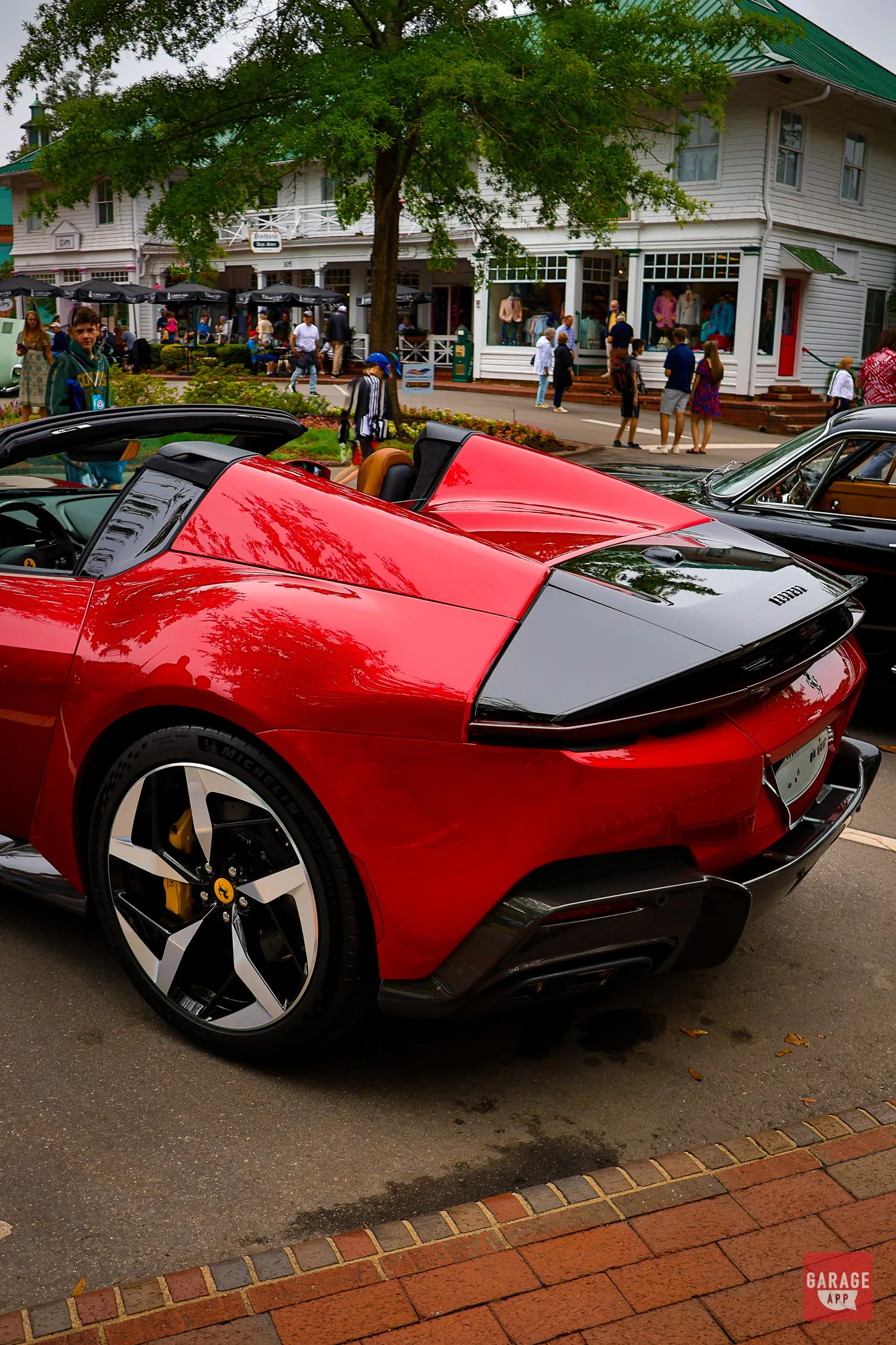
The Front-Engine V12 Bloodline
To understand the 12Cilindri, you have to go back to the beginning. Ferrari's story literally starts with a twelve. The 125 S of 1947, the first car to wear the prancing horse, used a 1.5-liter V12 designed by Gioacchino Colombo. From that moment on, the twelve-cylinder engine became the emotional core of the brand, even as Ferrari branched into smaller and mid-engine layouts.
The front-engine V12 grand tourer became its own distinct lineage. The 365 GTB/4 Daytona of the late 1960s set the template for a long-hood, muscular GT capable of demolishing continents at high speed. Decades later the 550 Maranello revived that front-engine V12 formula after years of the Testarossa-style mid-engine flagships, and it proved Ferrari still believed in the classic layout.
- 125 S, the 1947 car that started everything with a Colombo V12.
- 365 GTB/4 Daytona, the definitive long-hood front-engine GT.
- 550 Maranello, the model that brought the front V12 flagship back in 1996.
- 599 GTB Fiorano, which pushed the recipe into the modern performance era.
- F12berlinetta, sharper and more aggressive than anything before it.
- 812 Superfast, the naturally aspirated peak just before the 12Cilindri.
Each of these cars refined the same idea. A big engine up front, the driver sitting well back, and a shape built around the hardware. The Ferrari 12Cilindri is simply the latest chapter, and it wears that history openly rather than trying to reinvent itself. If you enjoy tracing these connections, the older grand tourers like the 612 Scaglietti show how the front-engine V12 idea evolved through the 2000s.
Ferrari has built many kinds of cars, but the front-engine V12 grand tourer is the one that most directly connects the modern brand to its 1947 origins.
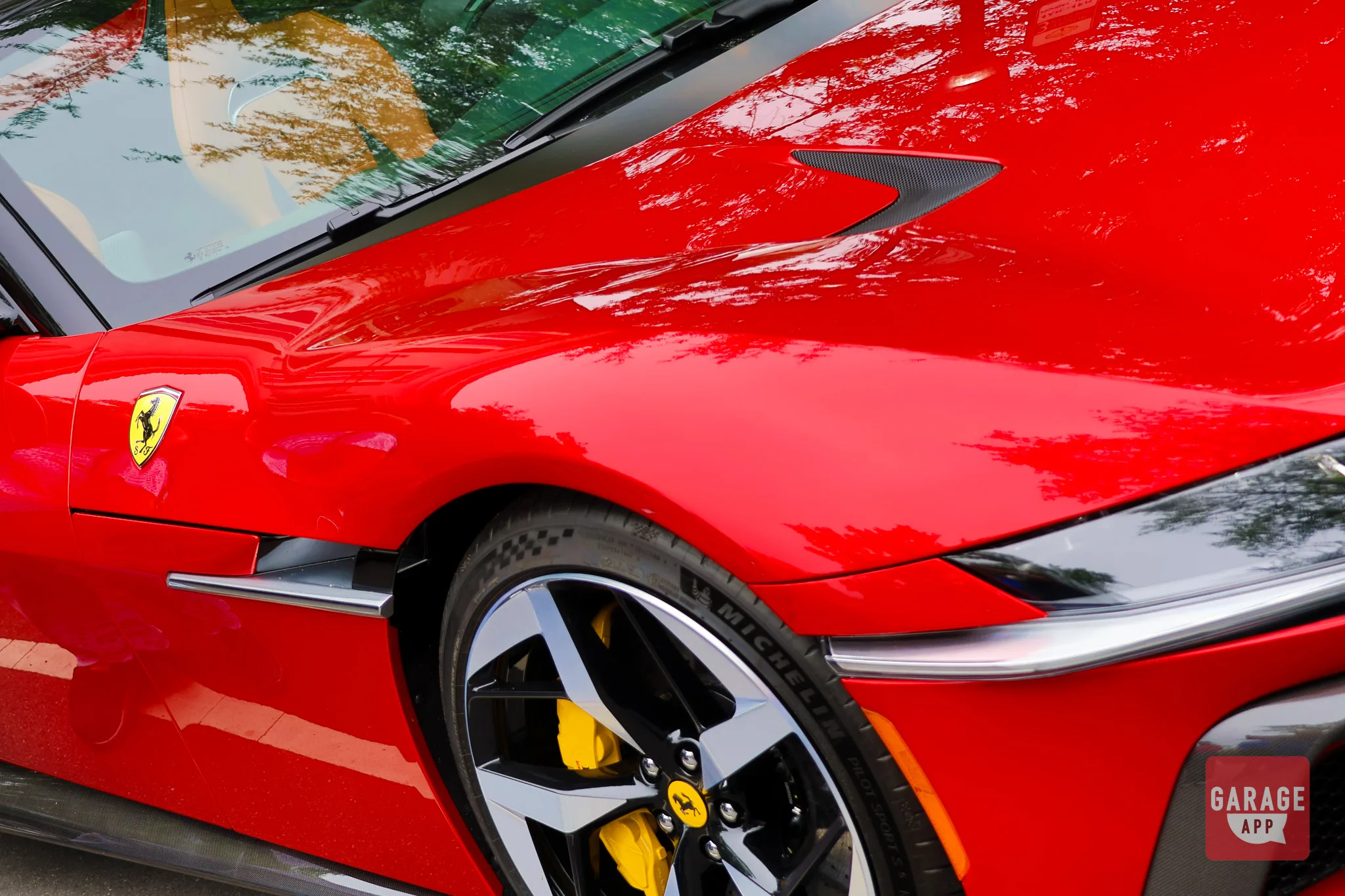
Design Rooted in the Daytona
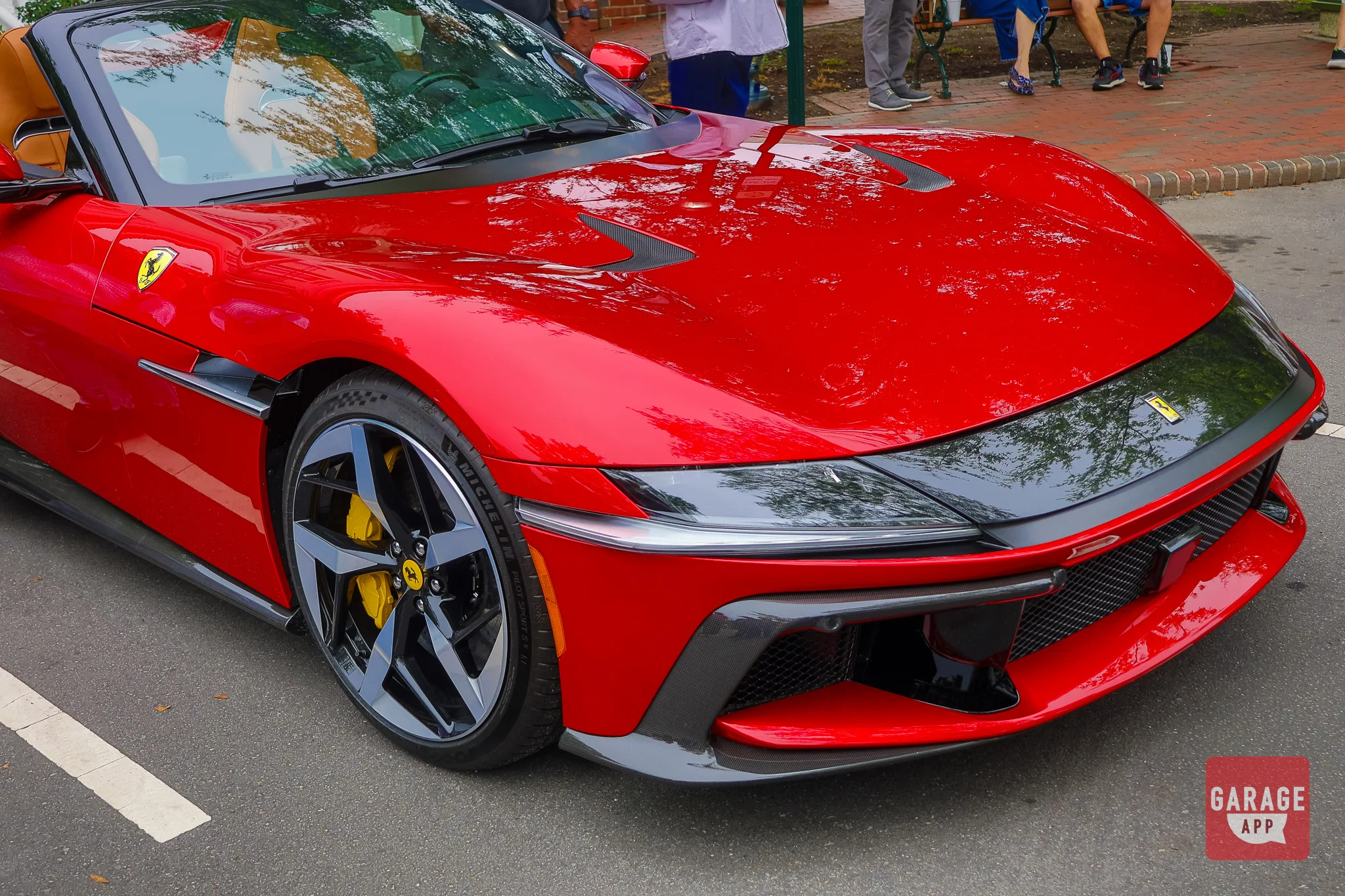
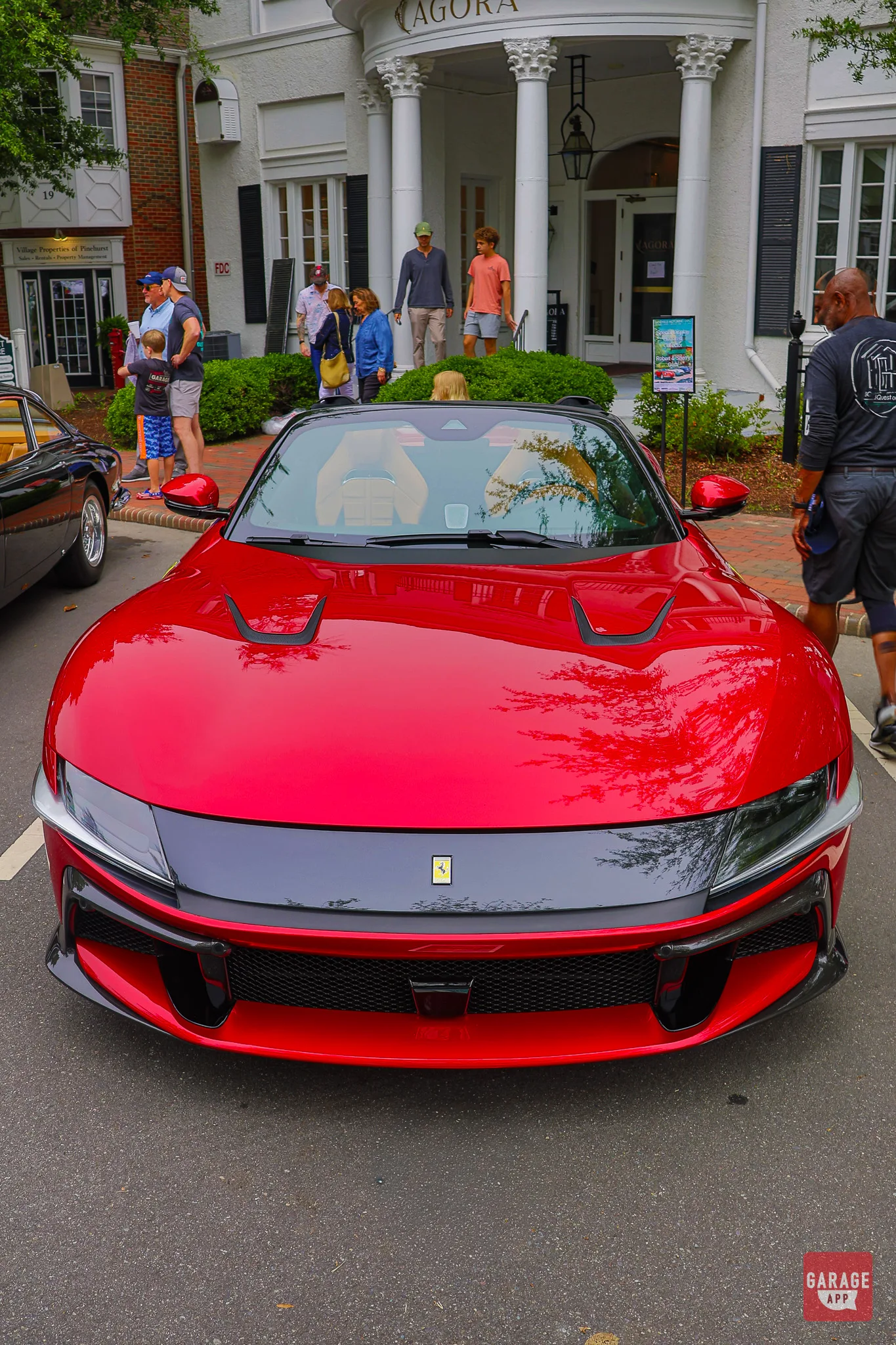
The most talked about element of the 12Cilindri is its face. The Ferrari Daytona inspiration is impossible to miss. Ferrari took the black band that ran across the nose of the 365 GTB/4 and reinterpreted it as a full-width visor, integrating the slim headlights into that dark horizontal element. It is a clever bit of design that feels both retro and genuinely futuristic depending on the light.
The proportions are pure front-engine Ferrari. A long hood stretches out ahead of a cabin pushed far back toward the rear axle, giving the car that dramatic cab-rearward stance. Flying buttresses flow from the roof into the tail, echoing classic Ferrari fastbacks while cleaning up airflow. There is active aerodynamics working here too, with movable flaps at the rear that deploy under braking and at speed to balance downforce without ruining the clean surfacing.
Photos genuinely do not capture it. In person the 12Cilindri looks lower, wider, and far more theatrical than any image suggests. The surfaces have a tension to them that the camera flattens. It is one of those cars you have to walk around slowly.
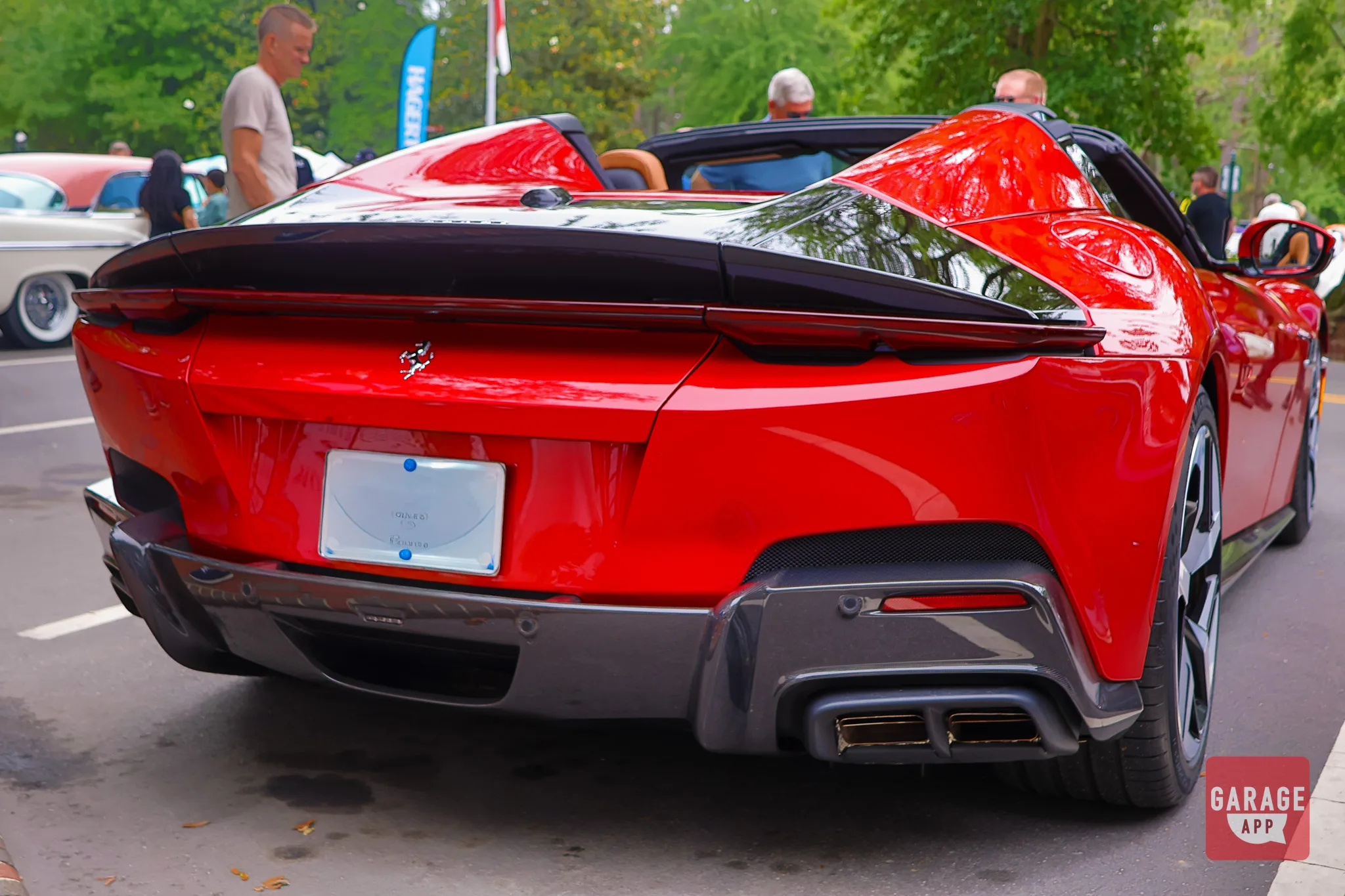
This Featured Example
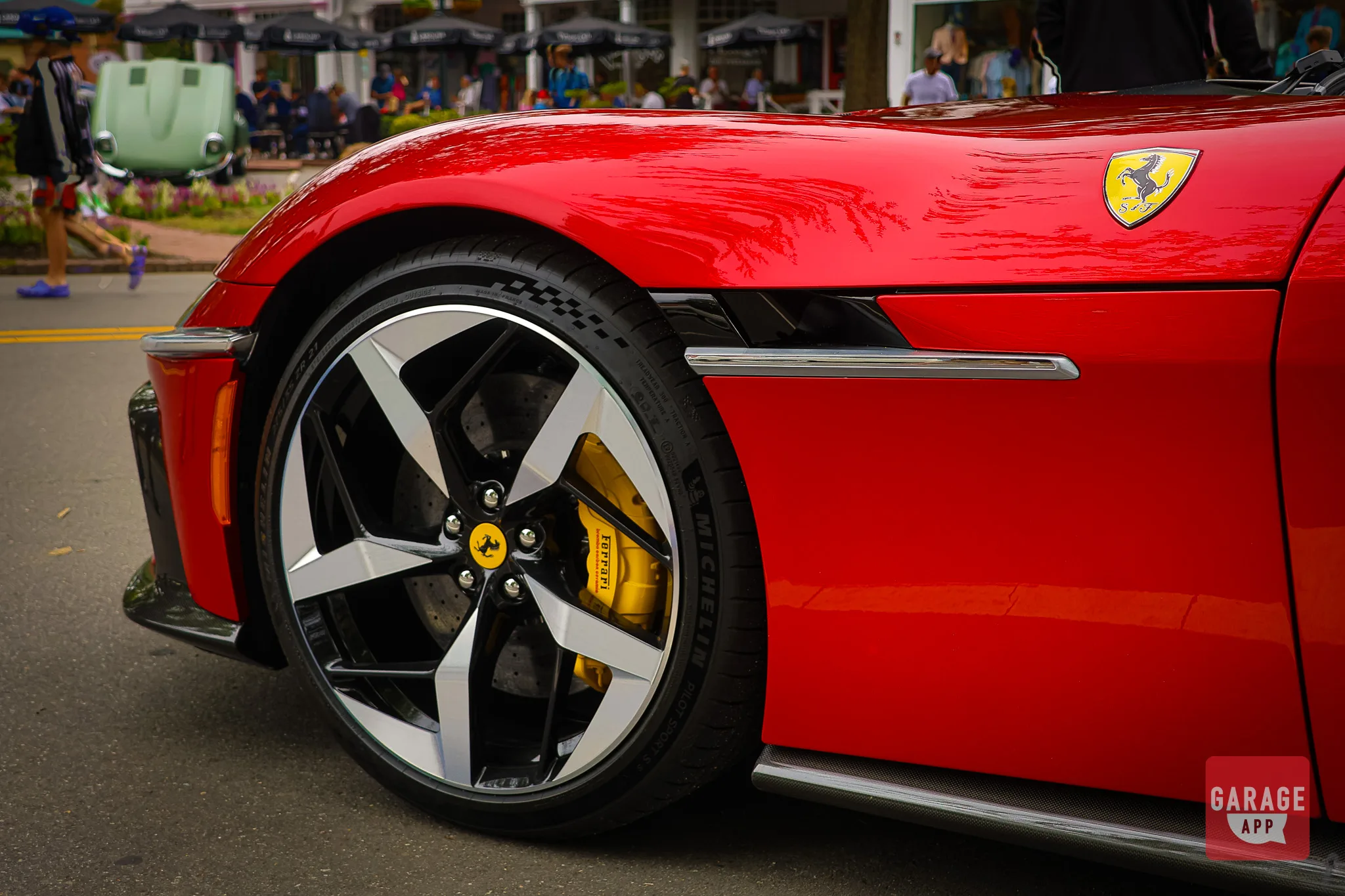
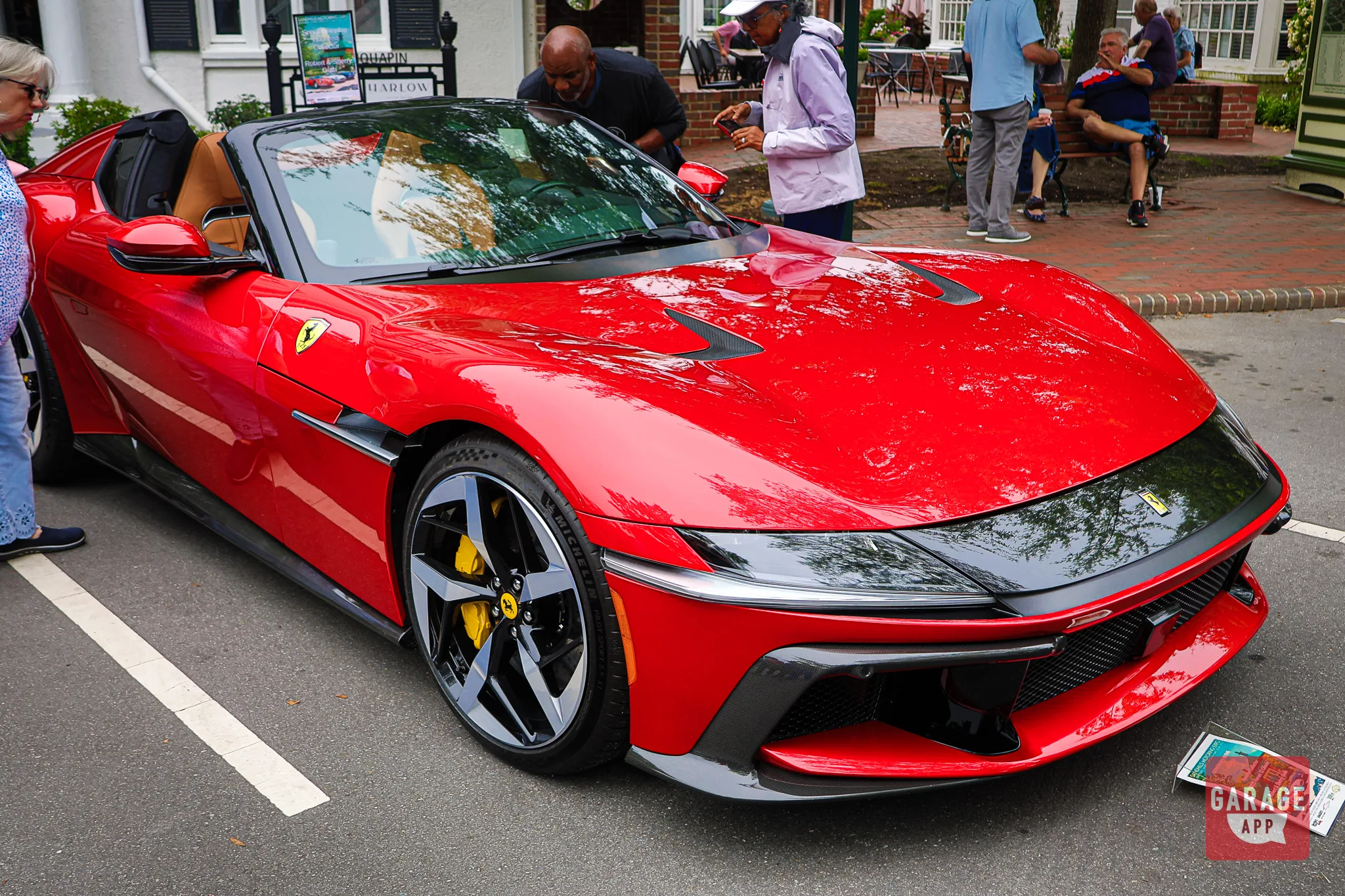
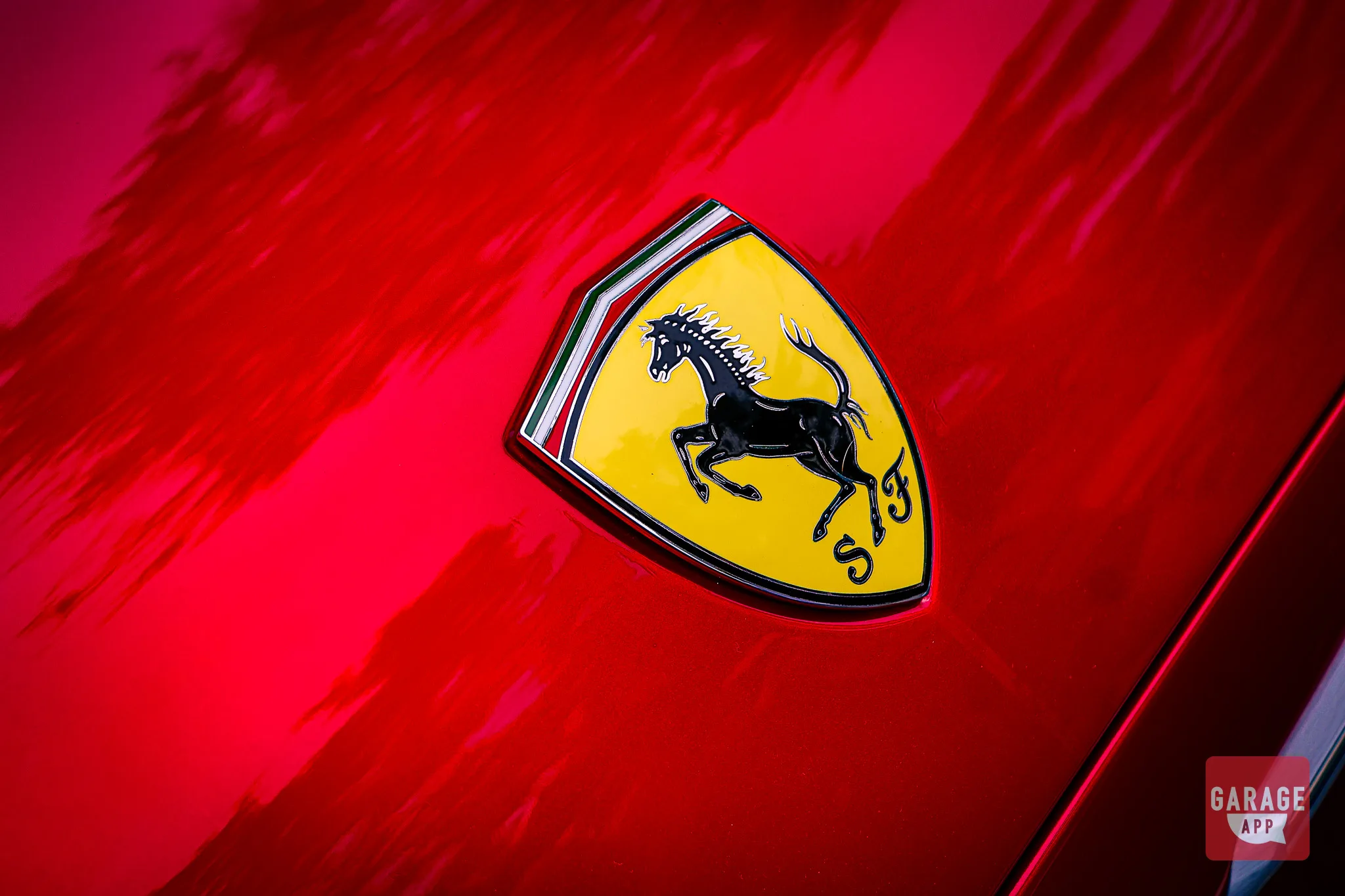
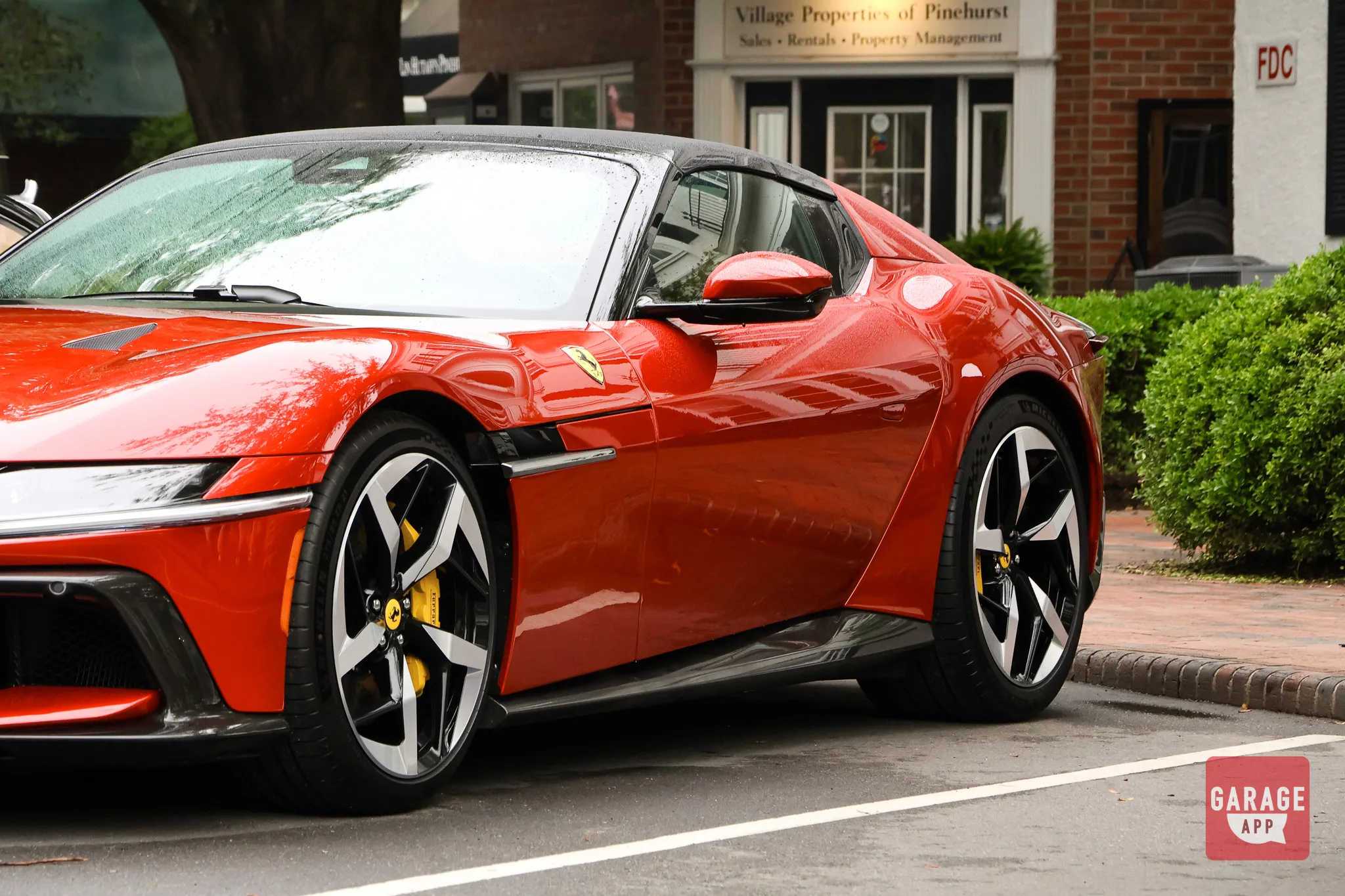
The car photographed here wears Rosso Corsa, the classic Ferrari racing red, and it is exactly the color this design deserves. The black roof elements tie into the Daytona nose band, while exposed carbon fiber details add texture around the lower body. Yellow brake calipers peek through the wheels, a subtle nod to the Modena crest, and inside there is a warm tan leather interior that softens all that aggression. It is a tasteful spec, the kind that will still look right in twenty years.
When you spot a 12Cilindri at a meet, look at the rear buttresses in profile. That fastback silhouette is a direct callback to the Daytona and 365 GTC/4, and it changes completely depending on your viewing angle.
The Numbers Behind the Legend
The heart of the car is a 6.5-liter naturally aspirated Ferrari V12. No turbos, no hybrid assistance in the base cars, just twelve cylinders breathing on their own. The Ferrari specifications read like a farewell to an entire engineering philosophy, and they are worth stating plainly.
- 6.5-liter naturally aspirated V12.
- 819 horsepower, the most power ever from a naturally aspirated Ferrari road car engine.
- Redline of 9,500 rpm, remarkable for an engine this large.
- Top speed of over 211 mph.
- 0-60 mph in approximately 2.9 seconds.
- Eight-speed dual-clutch transmission driving the rear wheels.
That 9,500 rpm figure is the one that should stop you. A 6.5-liter engine spinning that high is a feat of engineering that took Ferrari decades to reach. The Ferrari V12 here is an evolution of the unit that powered the 812, refined with new sliding titanium finger followers, revised cams, and a lighter reciprocating assembly to chase revs without sacrificing reliability.
The Ferrari performance story is not just about the headline numbers. It is about how the car delivers them. Rear-wheel steering, a low center of mass, and Ferrari's latest stability software make a 819-horsepower front-engine GT far more usable than the spec sheet implies.
Why Naturally Aspirated Still Matters
Naturally aspirated V12 engines have become genuinely rare. Turbocharging boosts efficiency and torque while helping manufacturers meet emissions rules, so almost everyone made the switch. Aston Martin, Lamborghini, and even Ferrari's own smaller engines have gone turbo or hybrid. That makes the 12Cilindri's setup something close to an endangered species.
Ferrari continues to preserve the naturally aspirated V12 because it delivers something forced induction cannot fully replicate. There is no turbo lag, no waiting for boost to build. Throttle response is instant, and the power arrives in a long, linear climb that rewards you for chasing the redline. You feel connected to the engine in a way that turbocharged cars, for all their pace, tend to muffle.
The Sound
Then there is the Ferrari exhaust sound. A turbo V8 can be loud and dramatic, but a naturally aspirated V12 at 9,000 rpm produces a layered, metallic shriek that turbos physically cannot make. The intake and exhaust harmonics stack on top of each other as the revs climb, and the sound keeps intensifying right up to the limiter. It is the audio signature that has defined Ferrari for generations, and the 12Cilindri protects it.
Turbochargers make cars faster. Naturally aspirated V12s make them unforgettable.
If you want to log the details that make cars like this special, from spec differences to the exact color and options, keeping a proper record in GarageApp helps you track what you have seen and what you are chasing.
Inside the Cabin
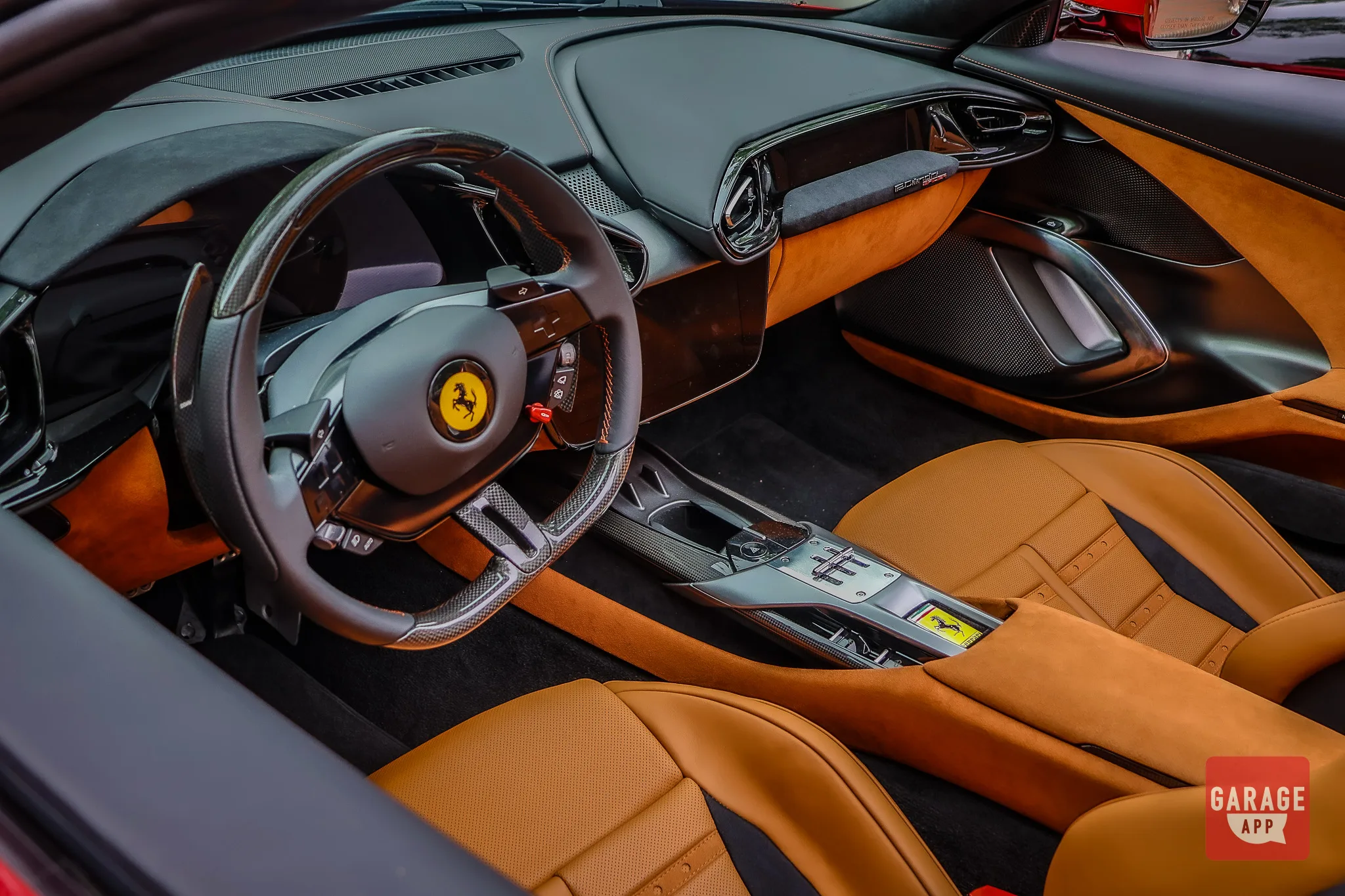
The Ferrari interior balances two goals that often fight each other. It has to feel special enough to justify the price, and comfortable enough to work as a real grand tourer over long distances. The 12Cilindri manages both. The tan leather in this example runs across the dash, doors, and seats, giving the cabin a warmth that offsets the technical hardware.
The layout centers on a driver-focused digital instrument cluster, with a matching passenger display that lets your co-pilot follow the drama. Ferrari kept some physical controls too, including a return to real buttons on the steering wheel after years of touch-sensitive complaints. The materials feel appropriately expensive, with carbon fiber, machined aluminum, and stitched leather everywhere your hands land.
As a Ferrari grand tourer, it delivers the long-distance comfort the badge implies. The seats support you through hard cornering but stay comfortable for hours. There is real luggage space behind the seats, and the ride, while firm, never becomes punishing. This is a car you could genuinely drive across a continent, which has always been the point of a front V12 Ferrari.
The 12Cilindri Spider
For buyers who want the full sensory experience, Ferrari offers the Ferrari 12Cilindri Spider. It uses a retractable hardtop that folds in around fourteen seconds, preserving the coupe's proportions when raised while opening the cabin to the sky when lowered. The engineering keeps the structure rigid, so the Spider does not feel like a compromised version of the coupe.
With the roof down, the naturally aspirated V12 fills the cabin with unfiltered sound, and that alone justifies the Spider for many buyers. It slots neatly into Ferrari's modern grand touring lineup alongside cars like the more relaxed Portofino, but the 12Cilindri Spider sits at the top of that hierarchy in terms of drama and outright pace.
How It Stands Against Rivals
There are other exceptional grand tourers on the market, and each has its own character. But the 12Cilindri competes on a different axis entirely. Its rivals lean on turbochargers or hybrid systems to chase performance figures, while Ferrari leans on heritage and the irreplaceable feel of a high-revving twelve. If you want a comparison in feel rather than category, something like the Lexus LC 500 shows how much emotion a naturally aspirated engine can add to a GT, even at a very different price point.
The 12Cilindri's identity is inseparable from Ferrari's history. That is not marketing. It is baked into the engine, the layout, and the shape. No competitor can borrow seventy-plus years of front-engine V12 lineage, which is exactly why this car occupies a space no rival can truly reach.
A Possible Last of Its Kind
Here is the part that has enthusiasts paying attention. The 12Cilindri may represent one of the final purely naturally aspirated V12 Ferraris before deeper electrification arrives. Ferrari has committed to hybrids and electric models across much of its range, and while the company insists the V12 has a future, nobody can promise how long a version without electric assistance will survive.
That uncertainty is why collectors already treat the 12Cilindri as historically significant. It sits at the end of a line that runs from the 125 S through the Daytona, the 550, the 599, the F12, and the 812 Superfast. If the pure V12 does fade, this car becomes a bookend to one of the greatest engine stories in automotive history.
Whether you are lucky enough to own one or you simply want to admire it at a show, the 12Cilindri deserves to be understood, not just photographed. It is a car built to preserve Ferrari heritage at a moment when preserving it is genuinely hard, and that alone makes it special.
It is worth remembering that Ferrari's history is not only a story of twelve cylinders. The Dino 246 GT proved decades ago that a smaller, high-revving engine could still deliver a pure Ferrari experience, and it opened the door to the mid-engine and downsized cars that followed. Seen against that backdrop, the 12Cilindri feels like the counterweight to the Dino's legacy. Where the Dino showed Ferrari could evolve beyond the V12, the 12Cilindri exists to protect the V12 for as long as possible. Together they frame the full range of what a Ferrari can be, and that is exactly why both matter.