

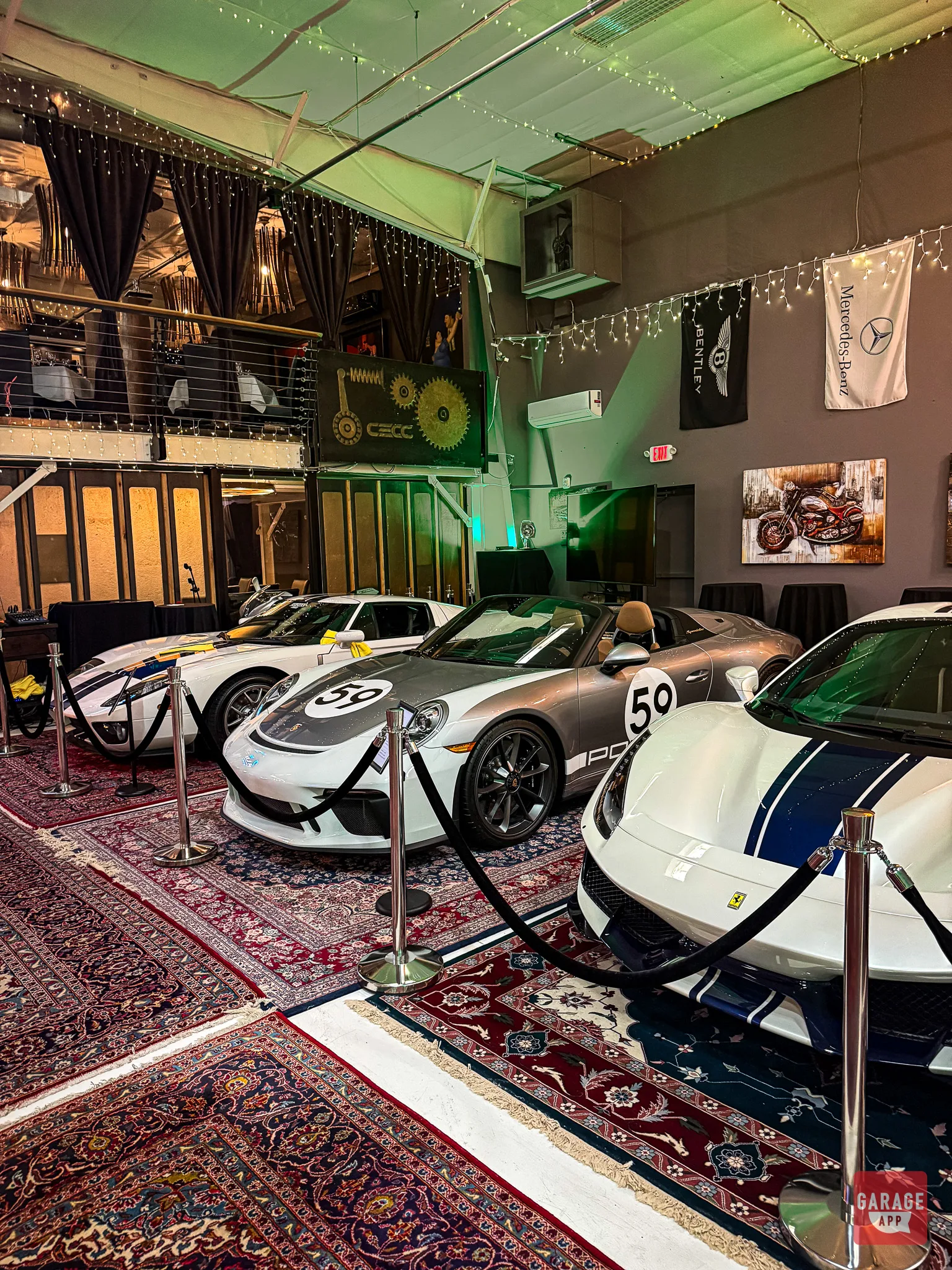
Ask ten people in a club parking lot why they joined and you will get ten answers, but they collapse into about four real motivations. Somebody wanted friends. Somebody wanted a track day. Somebody wanted to keep a 40-year-old model from disappearing into scrapyards. And somebody got tired of waiting for a club that fit and built one instead.
Those four motivations were first laid out in the Why People Join, Start, or Lead a Club section of our guide to what actually makes a car or motorcycle club. This post takes them apart properly, because the motivation you show up with shapes everything: which club suits you, how long you stay, and whether you end up running the thing three years later.
Community, and the Isolation It Actually Solves
Non-enthusiasts underestimate how lonely a specific kind of ownership gets. If you drive a Miata, plenty of people around you understand. If you own an air-cooled 911 with a stuck oil thermostat, or a Bimota with hub steering, or a carbureted Norton that starts on the fourth kick when the weather cooperates, the number of people who can hold a real conversation about it drops to nearly zero in most social circles. You start editing yourself out of your own hobby. You stop mentioning the weekend you spent chasing a vacuum leak because you can see the eyes glaze.
That is the isolation clubs solve, and the fix is closer to belonging than to networking. Nobody joins a marque club hoping to expand their professional contacts. They join because they want to say "the second gear synchro is going" and have three people nod and one person say they have a spare.
The catch is that this motivation gets tested hardest at the very beginning, usually at a meet where you know absolutely nobody. That walk from your parking spot to the crowd is the whole barrier, and it is worth reading about the mental side of walking into your first car meet alone before you talk yourself out of going. The psychology behind why we bond over cars explains why it works once you push through it. Shared object, shared vocabulary, instant common ground with someone whose politics or job you know nothing about.
If community is your driver, judge a club by its off-season activity, not its big annual show. Groups that keep talking through January are the ones with real bonds.
Access, and What Membership Actually Unlocks
Some people join for reasons that have nothing to do with friendship, and there is nothing cynical about it. Membership is a key. Plenty of track days at private circuits require you to run under a club's insurance and instruction program, which means the club card is the price of entry. Vendor partnerships knock real money off parts, and on a car where a set of pads and rotors runs four figures, a discount pays the dues back in one order. Concours judging eligibility often runs through the marque club too, along with the judging standards themselves.
Picture a new 911 GT3 owner who wants seat time at Road Atlanta and a competent instructor in the right seat. Joining the regional Porsche club is not a social decision, it is logistics. Six months later that same owner knows twelve people by name and shows up to the tech session in February, but that was a side effect, not the plan. If that path sounds like yours, our guide on how Porsche owners find enthusiasts near them covers where the track-privilege side of the community actually lives.
Nobody regrets joining for the track day. Plenty of people are surprised they stayed for the people.
A common story at regional club tech sessions
Legacy, and the Quiet Work of Preservation
Clubs built around older or discontinued models often turn into informal historical societies without ever calling themselves that. They maintain chassis registries. They archive factory build sheets and dealer literature. They keep a list of which member has the correct tooling for a job that three shops in the country will still attempt. When a model goes out of production and the factory closes the parts window, this knowledge either lives in a club or it evaporates.
Preservation-driven members tend to be the most committed people in any organization. They are not there for the coffee. They are there because they believe a specific machine deserves to exist in 2060, and that belief does not fade when the weather turns or a job gets busy. Registries in particular are long-term work, decades of chasing VINs and correcting bad data, which pairs closely with proving what you have through provenance and documentation.
Passed Down Through Family
There is a version of legacy that has nothing to do with preservation instinct. The car came from a father, a grandmother, an uncle who let a teenager drive it once and never stopped hearing about it. Sometimes the club membership was handed over alongside the keys, still in the same name, dues paid by someone who is no longer around to attend.
These members arrive with an inherited connection rather than a technical mission. They may not know much about the car yet. What they have is a reason to care that predates their own interest, and clubs that welcome that thread tend to survive their own founders. The alternative is a membership roster that ages in place, average attendee age climbing a year every year until the last chapter meeting is four people in a diner.
Smart clubs make room for the 24-year-old who inherited a rough 1972 something and cannot afford a proper restoration yet. That person is the next 30 years of the organization. Some of the strongest generational clubs do this without any formal program, just older members who spend a Saturday helping instead of critiquing.
Leadership as a Different Motivation Entirely
Running a club looks nothing like enjoying a car. It is closer to event planning with an automotive theme. Venue calls, insurance certificates, a group chat that needs moderating at 11pm, three people who volunteered and one who follows through. Founders spend a lot of their own driving time not driving.
So why do people do it? Almost always frustration. They looked around, found meets that were too loud or too exclusive or too far, found existing clubs that treated newer members as tourists, and decided building was less painful than waiting. Leadership as a motivation is really impatience with a specific gap.
If that describes you, the practical walkthrough lives in our step-by-step guide to starting a car club, which covers naming, bylaws, insurance, and the first six months where everything depends on you showing up. If you would rather plug into an existing structure than invent one, look at how national clubs run locally through the chapter model. Chartering a chapter gives you name recognition, insurance, and an event template on day one, at the cost of some autonomy.
Before founding anything, run three informal meets with no name and no dues. If people come back a third time, you have a club. If they do not, you saved yourself a year of paperwork.
Matching Motivation to the Right Kind of Club
Here is the practical payoff of all this self-examination. Once you can name your own motivation, the search gets dramatically shorter, because you stop auditioning clubs that were never going to fit. An access-driven owner does not need the friendliest group in the county, they need the one with track credentials. A community-driven owner joining a club that mostly emails newsletters and holds one concours a year will quietly drift away within eight months, and will probably blame themselves rather than the mismatch.
This is also where geography stops being a guessing game. GarageApp is built location-first, so an access-driven reader can search for nearby owners by make, model, year, and trim and see who is actually running the same platform within driving distance, while a community-driven reader can create or join a group centered on a brand, a model, a club, or just a local scene. Cars and motorcycles sit in the same place, which matters if your garage holds both.
- Community-first: start with local meets and casual groups, not formal membership. Show up three times before paying anything. Our guide to finding car events and meets near you is the fastest entry point.
- Access-driven: go straight to marque clubs with track programs, HPDE partnerships, and vendor discount agreements. Read the member benefits page before the about page.
- Legacy-driven: look for clubs that publish registries, archives, or technical libraries. Ask who maintains the registry and how many entries it holds.
- Family-inherited: find a club with visible age range and a mentorship habit. Ask whether anyone will help you sort the car, not just judge it.
- Leadership-minded: start informally, then decide between independent club and chartered chapter once attendance is repeatable.
Two riders on the same road deserve the same treatment, so if bikes are your side of the hobby, finding motorcycle riders and groups near you follows the same logic. And if you are torn between a brand-specific group and a mixed one, single-marque versus multi-marque clubs breaks down which suits which motivation.
Motivation Gets You In, Mechanics Keep You There
Every motivation on this list explains why someone joins. None of them explain why someone stays five years. That comes down to how the club is actually run: dues that make sense, an event calendar people can plan around, leadership that rotates instead of burning out, communication that does not vanish for two months. The practical mechanics section of our guide to what makes a car or motorcycle club covers that side in detail.
Figure out your reason first. Then judge the club on whether it can deliver it repeatedly, month after month, without you being the only one holding it together.