

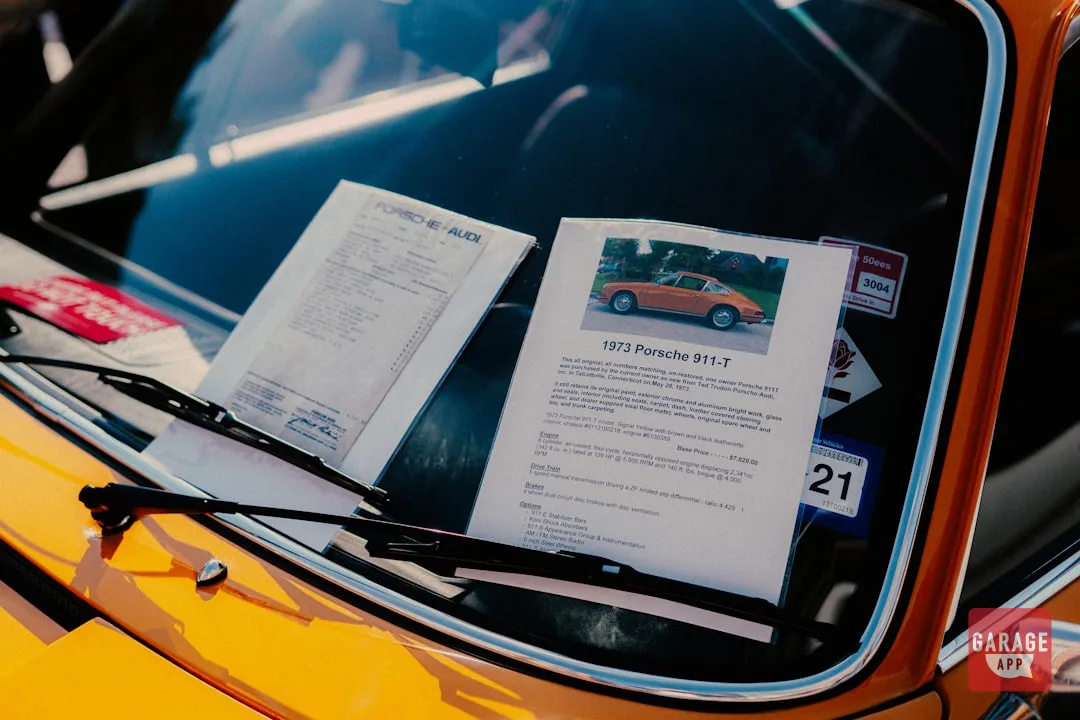
There is a real difference between a car with a story and a car with a claim. Anyone can say their coupe was a factory demonstrator or that the numbers still match, but a serious buyer or appraiser wants to see it on paper. Provenance is the evidence trail that turns a good story into a fact, and it can swing value by tens of thousands of dollars on the same physical vehicle. This piece expands on the Provenance section of our Classic, Exotic & Collector cornerstone, breaking the topic into ten concrete things to look for. Whether you are buying, selling, or just organizing what you already own, treat these as a checklist. The car in the driveway is only half of what you are actually trading. The folder that comes with it carries the rest.
The 10 Things to Look For
1. Original title and registration history
The title chain is your foundation. A clean line of ownership from the original buyer forward tells you the car has not been stolen, salvaged, or quietly rebranded across state lines. Old registration cards, even faded ones, are gold because they date the car to specific owners and places. Gaps here are not always deal breakers, but they demand explanation.
2. Factory build sheet or window sticker
This is the birth certificate. A build sheet or original window sticker confirms what the car left the factory with, from paint code to optional equipment to the exact trim. It matters enormously because a car optioned rare from new is worth more than the same model loaded up later. Many muscle cars hid their build sheets under seats or above the gas tank, so ask if the original was ever recovered.
3. Numbers-matching engine and drivetrain confirmation
Numbers-matching means the engine, transmission, and often the rear end still carry the stampings that tie them to this specific chassis. For collectors this is one of the biggest single value drivers, sometimes worth a 30 to 50 percent premium. Verify the stamps in person or through a marque expert rather than trusting a listing photo. Restamped and replacement units exist, and telling them apart takes a trained eye.
4. Service records across ownership
A thick service file is proof the car was cared for, not just stored and forgotten. What you really want is continuity, records that follow the car through multiple owners rather than a single recent invoice. A complete service record should actually contain a few specific things.
- Dated invoices showing mileage at each visit, so you can spot odometer inconsistencies
- Parts and fluids used, including part numbers for major components like water pumps, clutches, or belts
- The name of the shop or specialist, ideally a marque expert whose reputation you can check
- Major milestone work such as engine rebuilds, timing service, or full brake overhauls with supporting photos
Scan every paper invoice the day it comes back from the shop. Ink fades, thermal receipts vanish in a year, and a digital copy is the only version that survives a decade of storage.
5. Restoration documentation and receipts
A restoration without paperwork is just a paint job you have to take on faith. Detailed receipts, before-and-after photos, and a log of who did the work tell you how deep the restoration actually went and whether correct materials were used. Concours judges and serious buyers scrutinize this, since a body-off restoration with documented correct finishes outvalues a driver-quality respray by a wide margin. Keep the restorer's notes on any deviations from factory spec too.
6. Period photographs and ownership timeline
Photos of the car when it was new, or during a specific owner's tenure, do something no invoice can. They visually confirm color, configuration, and condition at a moment in time. A shot of the car outside a known dealership or at a period event can anchor the whole timeline. Even casual family snapshots become evidence when they place the car in a decade and a place.
A photograph does not lie about what the car looked like the day the shutter clicked.
A common refrain among concours judges
7. Prior appraisals or authentication letters
Formal appraisals and authentication letters from recognized experts carry weight because someone put their name and reputation behind the claim. A letter from a marque authority confirming a numbers-matching engine or a rare factory option is far stronger than a seller's word. These documents also help you understand how value has moved over time. Check that the author is genuinely respected in that specific marque, not just a general appraiser.
8. Club or marque registry verification
Many marques maintain registries that track individual chassis by VIN, and getting your car logged is one of the strongest forms of third-party proof available. Registry experts often hold factory records that can confirm original delivery details you cannot find anywhere else. This is exactly why plugging into the community pays off, and our marque club spotlight spoke covers how these groups operate and why membership matters for owners of collectible cars. If your car qualifies for classic or exotic status, and our classification breakdown explains where those lines fall, a registry listing adds a layer of legitimacy that survives every future sale.
9. Auction history and prior sale records
A documented sale at a reputable auction creates a public, verifiable data point in the car's life. Catalog descriptions, lot numbers, and hammer prices help confirm both ownership and how the market has valued the car before. This history also feeds directly into whether you treat the car as a keeper or a position, a decision our guide on driver versus investment collector cars walks through in detail. Save the full catalog entry, not just a screenshot of the result, because the description often contains provenance notes you will want later.
10. Chain-of-custody gaps and how to address them
Almost every older car has a gap somewhere, a decade where the paper trail goes quiet. The goal is not perfection, it is honesty about where the holes are and a plan to fill them. Gaps matter beyond resale too, since they can complicate agreed-value coverage, a point worth reading up on in our insurance and storage spoke. Track down former owners, request state title histories, or lean on registry records to bridge the missing years. A documented attempt to close a gap is itself part of the provenance story.
When you buy, ask the seller to sign and date a simple ownership statement covering their years with the car. It costs nothing and adds a fresh, verifiable link to the chain.
Documentation Is a Habit, Not a Task
The mistake most owners make is treating documentation as a one-time scramble before a sale. Provenance is built slowly, one saved invoice and one dated photo at a time, over the entire life you share with the car. The owners who get top dollar are the ones who never had to reconstruct anything because they captured it as it happened. Provenance is only one piece of the bigger ownership picture, and if you want to see how it fits alongside buying, maintaining, insuring, and enjoying a collectible, our complete owner's guide ties the whole subject together. This is where keeping everything in one place earns its value. GarageApp is a geo-location-first social network for car and motorcycle enthusiasts, and its Virtual Garage lets you store a vehicle's photos, specs, and documentation together, find nearby owners by make, model, and year, and discover local events and meets. Start the folder now, and the story writes itself.