

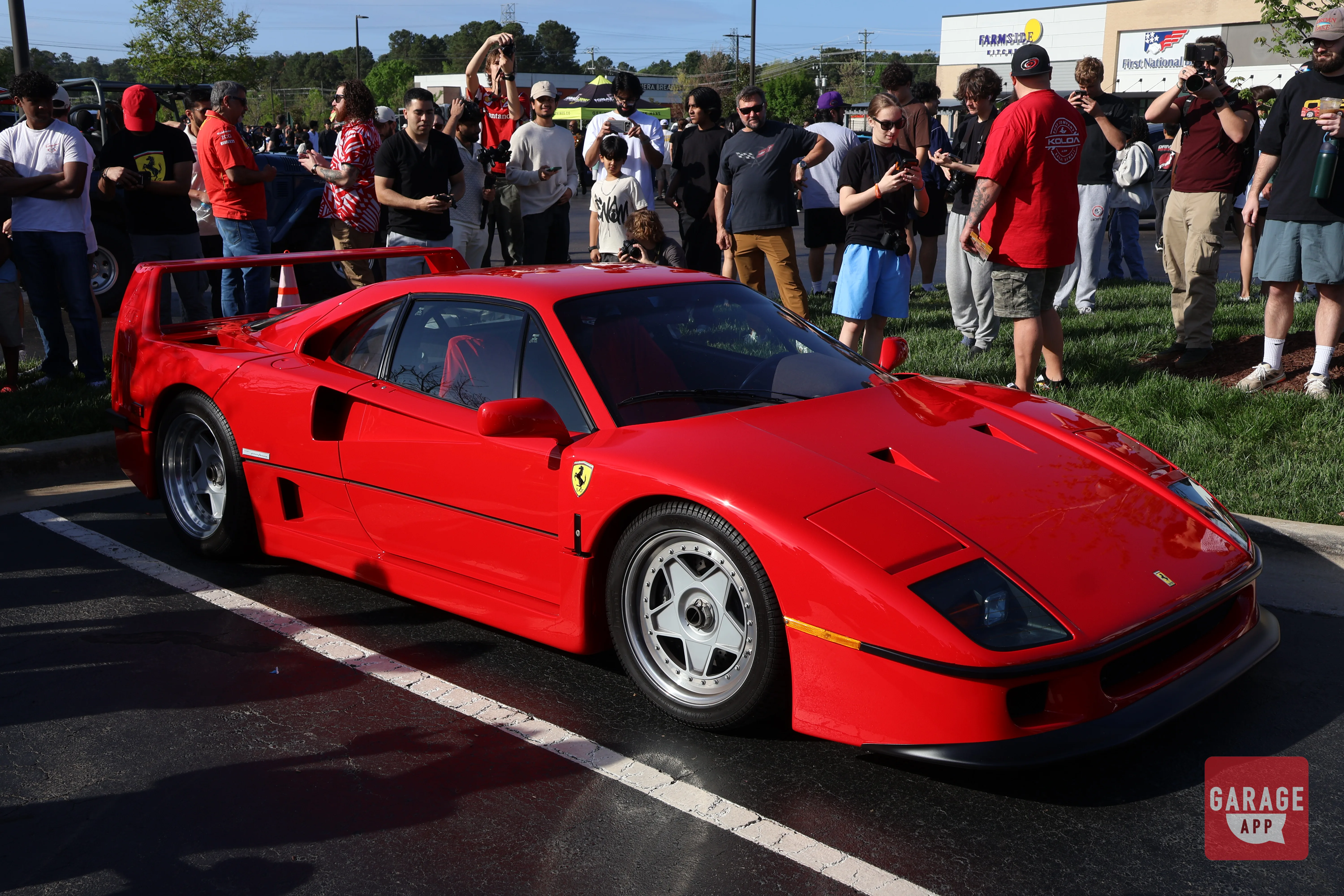
You can walk up to a total stranger in a parking lot, point at their car, and within thirty seconds you are deep in conversation about suspension setups, that one shop that ruined your alignment, and where the good roads are. No small talk needed. Try that at a coffee shop about anything else and see how far you get. There is something almost magnetic about car culture, a shared language that dissolves the usual social barriers. So why do we bond so hard over machines made of metal, rubber, and stubborn electrical gremlins?
The short answer is that cars are never just cars. They are identity, memory, mastery, and belonging wrapped into one object you can drive. Let's break down why automotive passion pulls people together so tightly, and why car communities so often end up feeling like a second family.
Your Car Is an Extension of Who You Are
Psychologists have a term for this: the extended self. The idea, popularized by researcher Russell Belk, is that the things we own become part of how we define ourselves, and few objects carry that weight like a car. It is expensive, chosen, public, and you spend hours inside it. When someone says they drive an E46 M3 or a first-gen Miata, they are not just describing transportation. They are telling you about their values, their taste, and often their tribe.
This is why the make and model debate gets so heated. When you criticize someone's car, part of their brain reads it as criticizing them. It also explains the fierce loyalty inside brand cultures. The person who lives and breathes BMW ownership is expressing something different from the die-hard Porsche enthusiast, and both know it. The badge becomes shorthand for a whole worldview, which is why finding enthusiasts by make and model feels so different from generic social media. You are not just matching a hobby, you are matching a piece of identity.
When you meet someone in a new community, ask about the story behind their build instead of the specs. People bond far faster over the why than the what.
The Power of Shared Identity
Humans are wired to sort themselves into groups. Social identity theory, developed by Henri Tajfel, shows that we naturally form an in-group and feel loyalty toward it. Car culture turns this instinct up to eleven. The moment you identify as a gearhead, a track rat, an overlander, or a JDM guy, you have found your people, and that gives you an instant sense of belonging with people you have never met.
It also creates gentle rivalries that strengthen the whole community. Domestic versus import. Manual versus automatic. Modified versus stock. These arguments never get resolved, and that is the point. They give everyone something to bond over, tease each other about, and rally around at the next meet.
Why Cars Trigger Such Deep Emotion
There is real neuroscience behind why a good engine note gives you chills. Sound, motion, and speed activate the same reward pathways that respond to music and physical thrill. When you hear a naturally aspirated V12 wind out or feel a car load up mid-corner, your brain releases dopamine. That is not marketing hype, that is chemistry, and experiences that produce that kind of reward become memorable and worth repeating with others.
Then there is nostalgia, maybe the single strongest force in car culture. The car you grew up in, the poster on your bedroom wall, the first ride you saved up for. These are wired directly into your emotional memory. It is why the debate around classic versus modern muscle cars never dies. People are not just arguing about horsepower. They are defending a version of themselves and a moment in time that mattered.
We do not fall in love with cars because they are fast. We fall in love with what they made us feel and who we were when we drove them.
A common sentiment among lifelong enthusiasts
The Joy of Mastery
Another huge piece is competence. Learning to heel-toe downshift, nailing a corner at an autocross, or finally diagnosing that intermittent misfire yourself all deliver a hit of genuine accomplishment. Psychologists call this the mastery drive, and cars offer an almost endless supply of skills to chase. That progression keeps people engaged for decades and gives communities a natural mentorship structure. The veteran who teaches a newcomer how to survive their first track day is reliving their own early excitement, and both people walk away more bonded to the group.
What Actually Makes Car Communities So Strong
Plenty of hobbies have passionate fans, but car culture has a stickiness few others match. A handful of specific ingredients make automotive communities unusually tight.
- Shared vulnerability. Wrenching on a car, spending real money, and occasionally making expensive mistakes builds trust fast. People who have helped each other out of a jam stay connected.
- Regular ritual. Weekly meets, monthly drives, and seasonal shows give the community a rhythm. Consistency builds relationships in a way one-off events never can.
- A common enemy. Rust, speed traps, unreasonable HOAs, and people who touch your car without asking. Shared frustrations create solidarity.
- Visible passion. You cannot hide a project car. When people invest visibly, others rally to support the effort.
- A reason to gather in person. Unlike purely online hobbies, cars pull people out of the house and into the same physical space.
That last point matters more than ever. The best communities blend online connection with real-world meetups, which is why the rise of car meet culture keeps accelerating. GarageApp leans into this by being geo-location first, so instead of following faceless accounts across the country, you can find the owners and Cars and Coffee events near you, then go shake hands over an engine bay.
The fastest way to feel like part of a community is to show up twice. Familiar faces beat perfect first impressions every time.
The Family Effect
Ask longtime members of any car club why they stay, and they rarely lead with the cars. They talk about the people. The friend who lent a trailer, the group that showed up when someone got sick, the crew that drove three hours to make a funeral. Car communities frequently evolve into genuine support networks. The shared interest is the doorway, but the relationships are why people stay for life. That is also why networking at car events works so naturally. You are not forcing a connection over business cards, you are building it over a shared obsession, and seeing which owners and vehicles will be at a meet before you arrive even hands you an easy opening line.
How Technology Is Reshaping the Bond
Twenty years ago, finding your people meant stumbling onto the right forum or getting lucky with a local meet. Now the discovery problem is largely solved. Some worry screens dilute real connection, but the evidence suggests the opposite. Online platforms tend to feed in-person gatherings rather than replace them. Someone sees a build in a location-aware feed, follows the progress, then meets the owner at a show with the relationship already halfway formed. If you want to see this playing out on the ground, the way technology is reshaping car meets is a fascinating window into where the culture is headed.
The drive itself is part of the bond, not just the destination. That is why generating a route and rolling out together matters. GarageApp can build driving routes you create and share with the group, then push them to CarPlay and Android Auto for the whole convoy so nobody gets lost and everyone arrives together. The caravan is where a loose group of owners turns into actual friends.
The Digital Garage as Identity
Remember the extended self? A modern car profile is that concept made digital. Cataloging your collection, logging your mods, and telling your build story in a digital garage is self-expression that used to live only in physical photo albums and glovebox folders. Now it is shareable, searchable, and permanent, making it easier than ever to signal who you are and find the people who get it.
Bringing It All Together
Car culture endures because it hits several deep human needs at once. Cars give us identity through the extended self, deliver real emotional and neurological rewards, and offer endless mastery to chase. Most importantly, they hand us a ready-made community and a reason to show up for each other. Strip away the horsepower talk and what remains is one of the more sincere forms of belonging left in modern life. So the next time you talk to a stranger in a parking lot like you have known them for years, know there is real psychology behind that instant connection. The barrier to jumping in has never been lower, so find a local meet, share your build, and let the machines do what they have always done best: bring people together.
Nothing proves this better than a car with a story you cannot fake. Take GarageApp's barn find Spyker, a hand-built Dutch exotic pulled from long slumber and given a second life. Roll something like that into a show and the crowd splits in two: the people who walk right past, and the small knot of enthusiasts who lose their minds over the aviation-inspired cockpit, the exposed shift linkage, and the sheer improbability of it surviving at all. Those are your people. A machine that rare and that soaked in history filters for exactly the folks who appreciate what makes it special, and it becomes a magnet, pulling strangers into the same huddle to trade theories, ask questions, and swap their own tales of forgotten metal. That is the whole thing in miniature. The car is the spark, but the story is what gathers the room, and the friendships are what everyone drives home with.