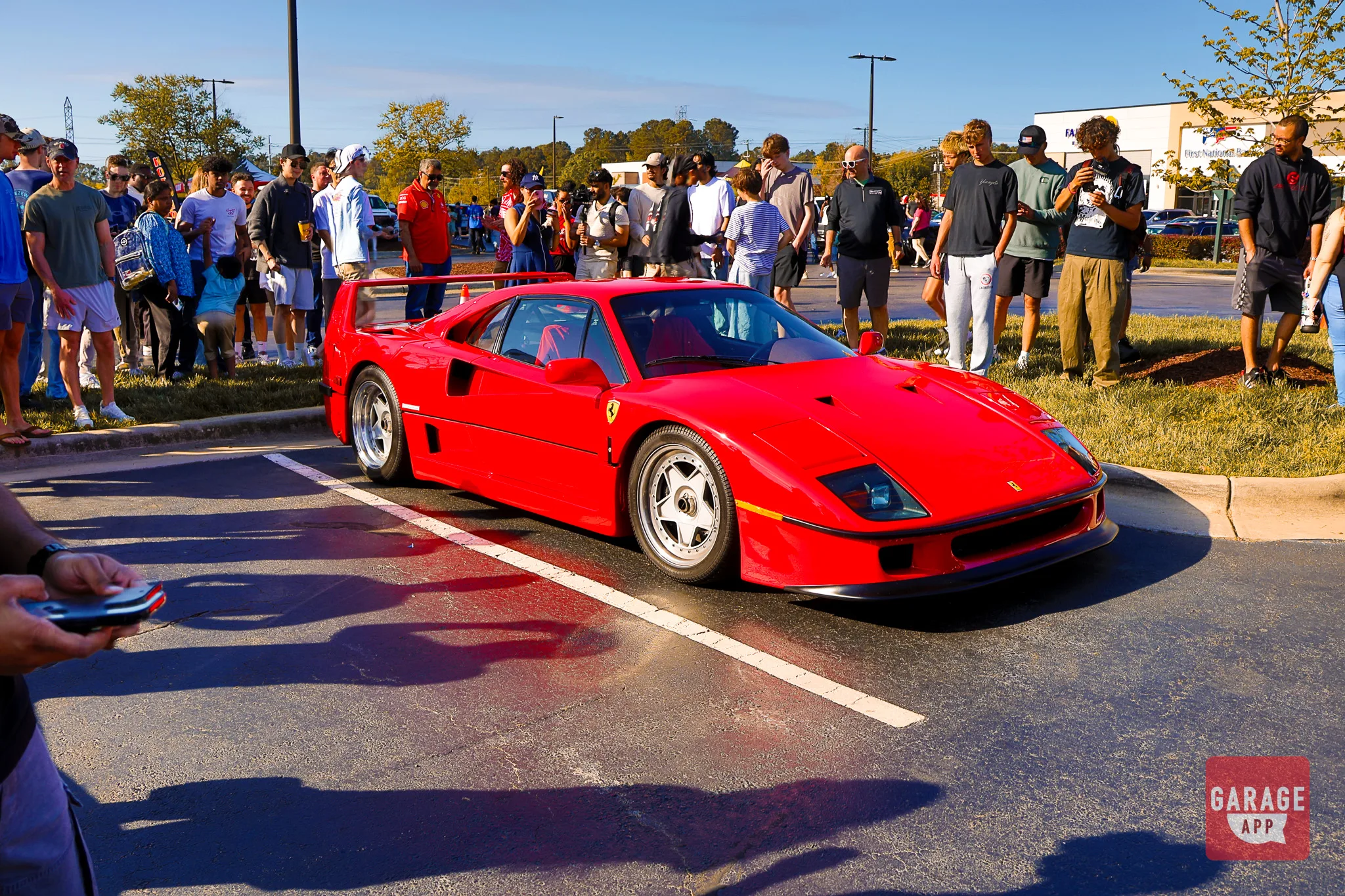

The Ferrari F40 is the car people point to when they want to explain what a supercar felt like before computers softened the edges. It was the last model Enzo Ferrari personally signed off on, a raw, twin-turbo homage to the company's racing DNA built with zero driver aids and one clear goal: speed with nothing in the way. If you have ever wondered what an analog supercar really means, this is the reference point.
This F40 review, specs breakdown, and buyer's guide is written for the enthusiast who cares about the details, not the hype. We will cover the design philosophy, the numbers, the history, the driving character, and what it takes to own one today.
Design & Aesthetics: Function Made Beautiful
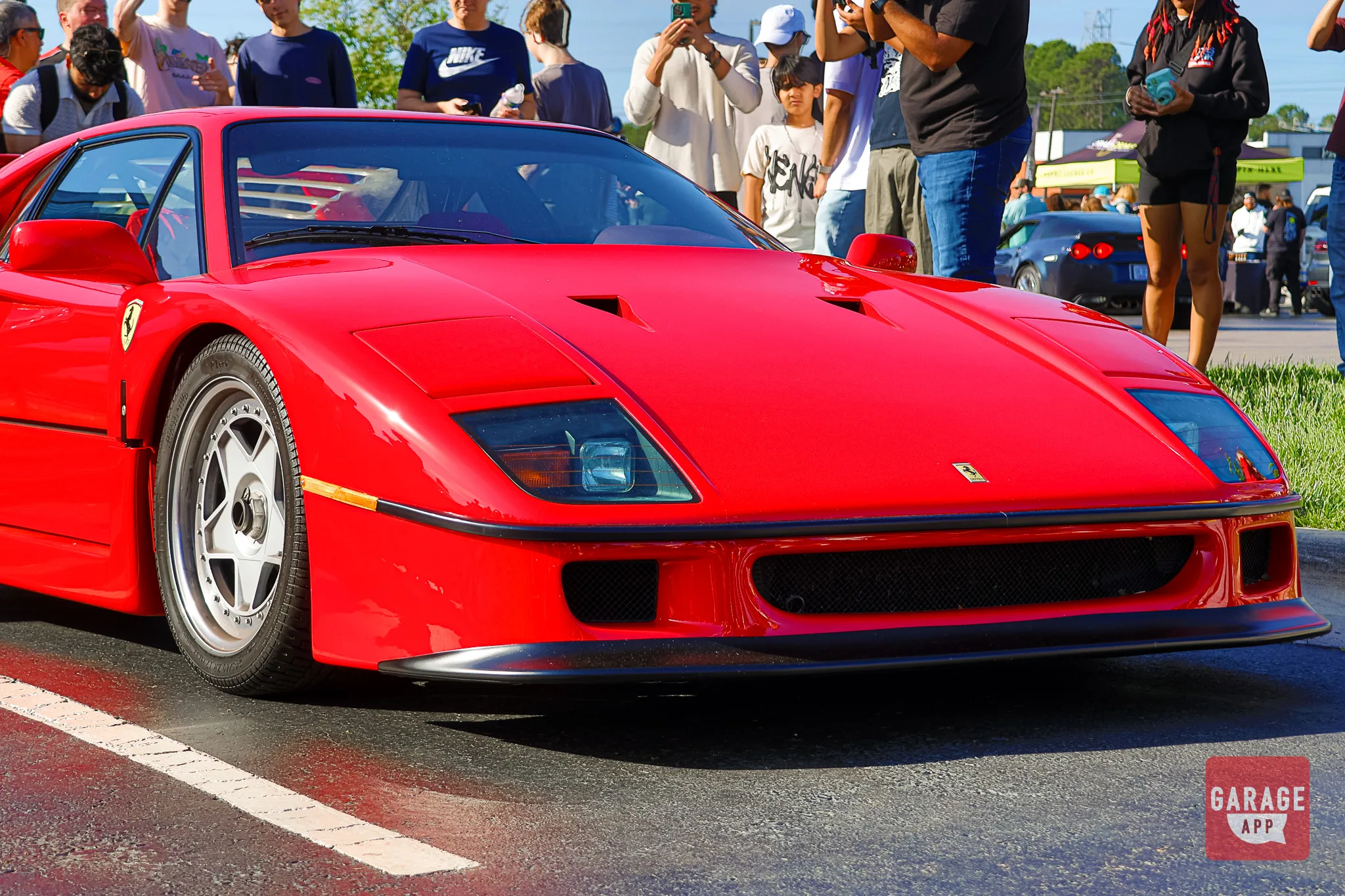
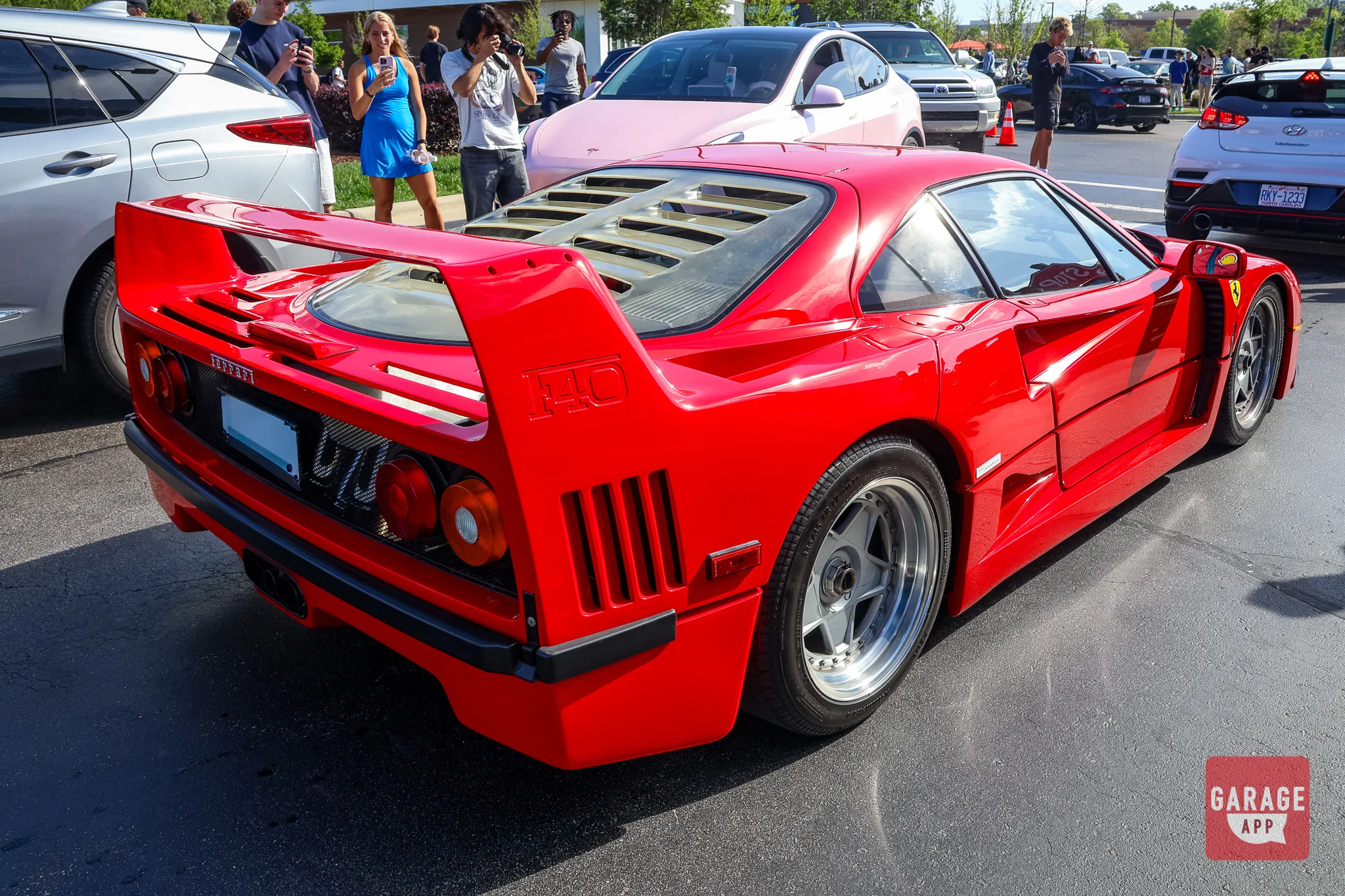
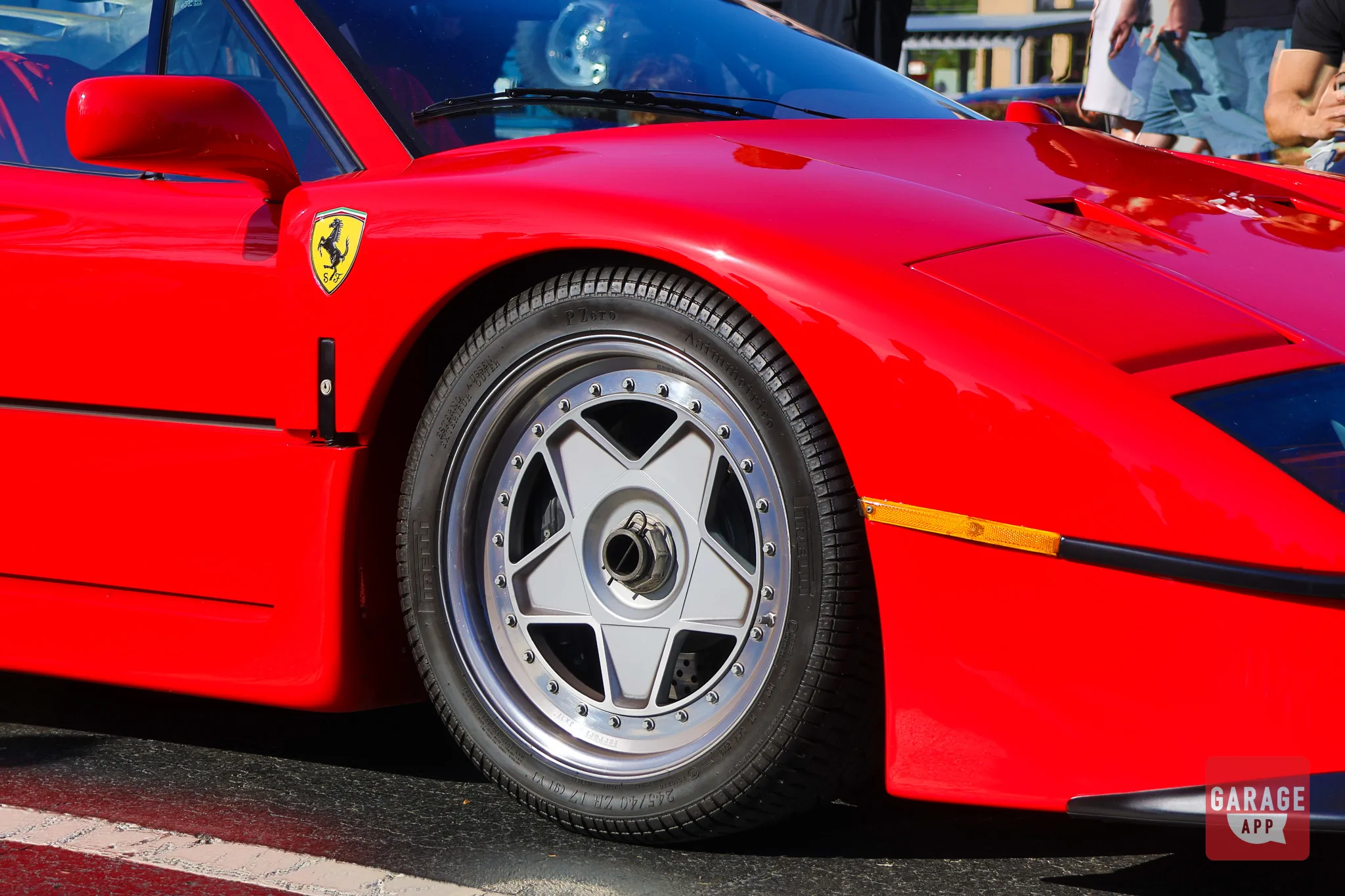
Pininfarina styled the F40, and the shape has aged remarkably well because almost nothing on it is decorative. Every scoop, vent, and duct feeds air to a radiator, a brake, or an intercooler. The enormous rear wing is not there for drama, it is there to plant the car at speed.
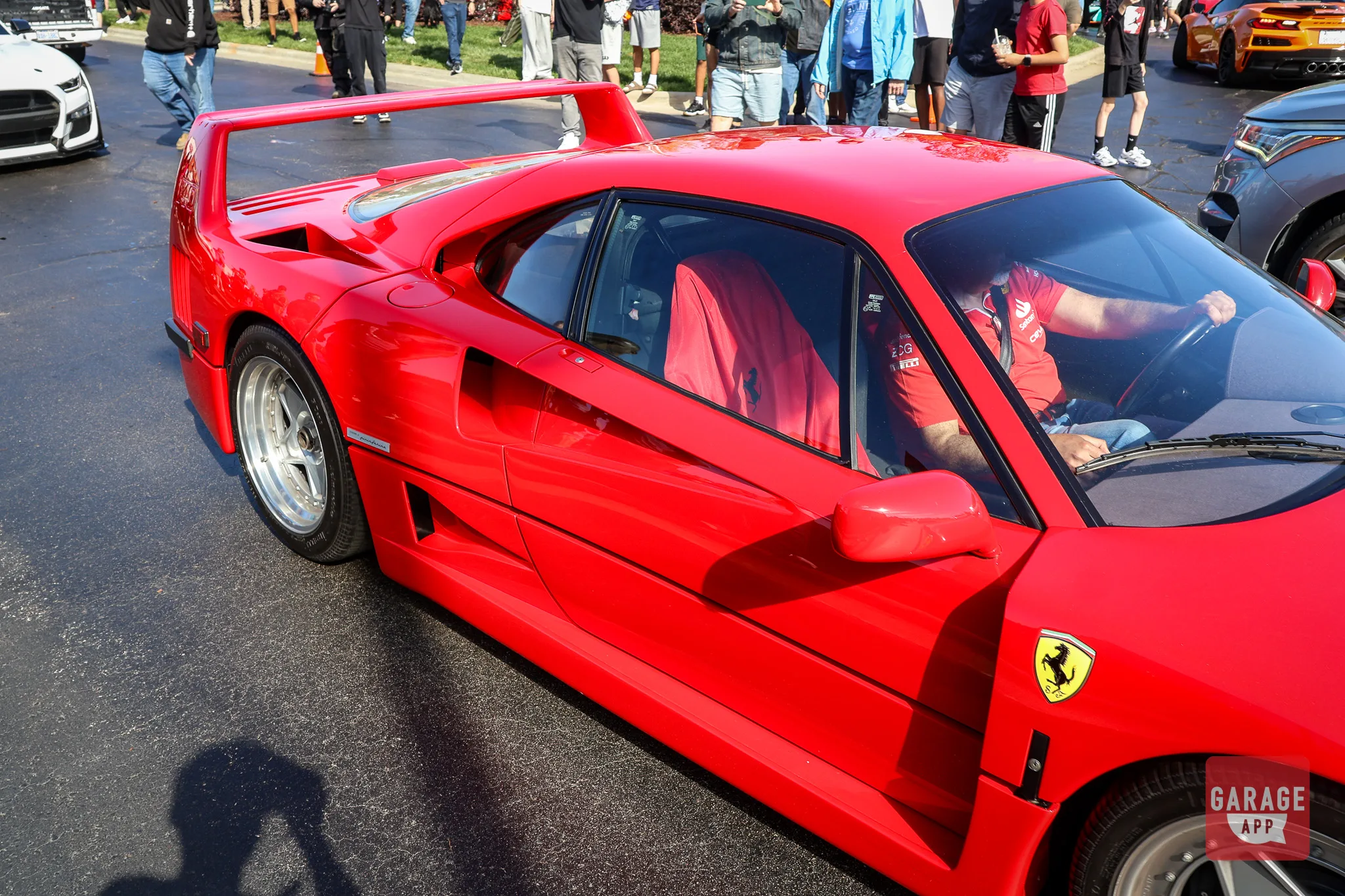
Open a door and the myth becomes obvious. The interior is stripped to the studs: no carpet, no door cards to speak of, pull-cord door releases, and exposed bonded panels. The bodywork is Kevlar and carbon fiber composite, and in early cars you can see the weave and the rivets doing their job without apology.
That honesty is the whole point. Ferrari did not hide the engineering behind luxury, it celebrated it. The result is a car that looks fast standing still and looks purposeful the moment you understand what each surface does.
When you spot an F40 in the wild at a show, look at the tail lights and the sliding plexiglass side windows on early cars. Those details help distinguish the earliest, most collectible examples.
Engine & Performance Specs
At the heart of the F40 sits a longitudinally mounted 2.9-liter twin-turbo V8, a development of the engine that powered the earlier 288 GTO. Two IHI turbochargers force-feed the small-displacement V8 into supercar territory.
- Engine: 2.9L twin-turbocharged V8.
- Output: roughly 471 hp at 7,000 rpm.
- 0-60 mph: around 3.8 seconds.
- Top speed: approximately 201 mph, one of the first road cars to break 200.
- Transmission: 5-speed manual with the classic open-gate shifter.
- Weight: roughly 2,425 lbs (about 1,100 kg).
The magic is in the ratio. A featherweight chassis paired with big turbo power and a mechanical, gated manual makes the F40 feel violent in a way modern cars simply do not. Power arrives with a rush rather than a smooth swell, and that turbo character defines the whole experience.
It was the last car I asked to be built, and it is what I wanted.
Enzo Ferrari, on the F40
Model History & Rarity
The F40 launched in 1987 to celebrate Ferrari's 40th anniversary, hence the name. Enzo commissioned it as a statement, a car built to remind the world what the marque stood for after a period when he felt competitors were catching up. He wanted something ferocious and uncompromising.
It became Enzo Ferrari's last car, the final model he personally approved before his death in 1988. That single fact gives the F40 a weight in Ferrari lore that no spec sheet can capture.
Ferrari originally planned to build around 400 cars. Demand was so intense that production ran through 1992 and totaled roughly 1,311 units. That makes it far from a one-off, but the combination of provenance, performance, and story keeps it firmly among the most desirable collector Ferraris ever made. Enthusiasts who love this chapter of the marque often go on to explore the more attainable Ferrari F355 as a driver's counterpoint.
The Driving Experience
There is no power steering, no ABS, no traction control, and no stability system. The F40 asks the driver to do the work, and it rewards precision while punishing carelessness. This is why owners talk about it with a mix of reverence and respect.
The turbo lag is real. Below the boost threshold the car feels tractable, almost tame. Then the turbos spool and the F40 launches with an intensity that redefines your sense of the car's mood. Managing that transition through corners is the entire art of driving one quickly.
The unassisted steering loads up beautifully and telegraphs every surface change. The brakes require a firm, deliberate foot. Nothing is filtered. If you have driven modern hardware and wondered what got lost along the way, an F40 answers the question in the first mile.
If you are chasing that analog feel on a budget, plan a proper driving route on a quiet, well-surfaced road. GarageApp can generate AI-built driving routes so you spend your seat time on roads worth the effort.
That analog appeal connects the F40 to a lineage of purist machines. Fans of the raw approach often love the same qualities in cars like the Porsche 991 Speedster, where feel matters more than lap times.
Ownership & Collector Value
F40 values have climbed steadily for years, and clean, well-documented cars command seven figures. The market rewards originality, low modification, and a paper trail that proves the car's history. Buyers should treat authentication as the single most important part of the purchase.
Authentication and Provenance
Verify the chassis number, service records, and any Ferrari Classiche certification. Match the engine, gearbox, and body to documentation. A car with a clear ownership chain and complete history is worth far more than a mystery example, no matter how shiny.
This is where a digital record earns its keep. Serious owners increasingly document build details, service history, and provenance in a Virtual Garage so the story travels with the car and can be shown to future buyers or fellow enthusiasts.
Maintenance Realities
An F40 is an analog supercar, which means specialized care. Cam belts, fuel system components, and turbo servicing require a shop that knows these cars intimately. Rubber fuel cells in particular age and need periodic replacement, a well-known and non-negotiable job.
- Budget for major belt and fuel system service on a strict schedule.
- Use a marque specialist, not a general exotic shop.
- Keep every invoice, it becomes part of the car's value.
- Store it properly, composite bodywork and old fuel systems dislike neglect.
Community & Enthusiast Connection
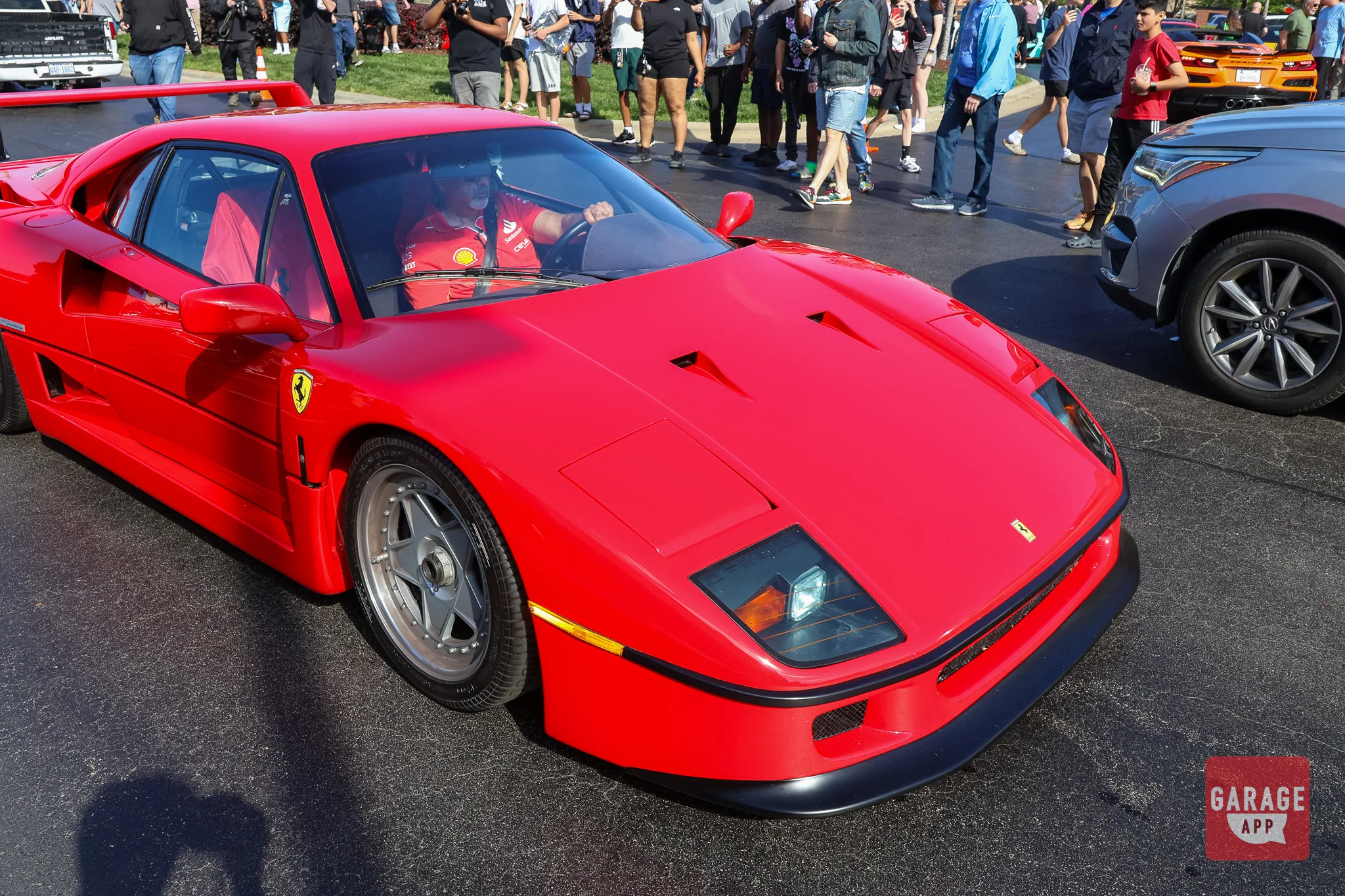
Owning or admiring an F40 is only half the story. The other half is the community around it. Ferrari owners tend to gather at concours events, marque club meets, and the best Cars & Coffee mornings, where an F40 draws a crowd every time.
This is where GarageApp fits naturally into an enthusiast's routine. You can search by make, model, and trim to find nearby Ferrari and F40 owners, then follow their local community feed to stay on top of meets worth attending.
When a concours or a big Cars & Coffee is coming up, GarageApp shows who is attending so you know before you go. You can join marque owner groups, send a direct message to arrange a meetup, and even follow local organizers.
Planning a group drive to a show? GarageApp integrates with CarPlay and Android Auto so your route and your crew stay in sync without fiddling with your phone.
Event organizers can lean on GarageApp too, using the referral program to grow turnout and reward the people who bring the community together. The F40 was built to be driven and shared, and the culture around it is very much alive.