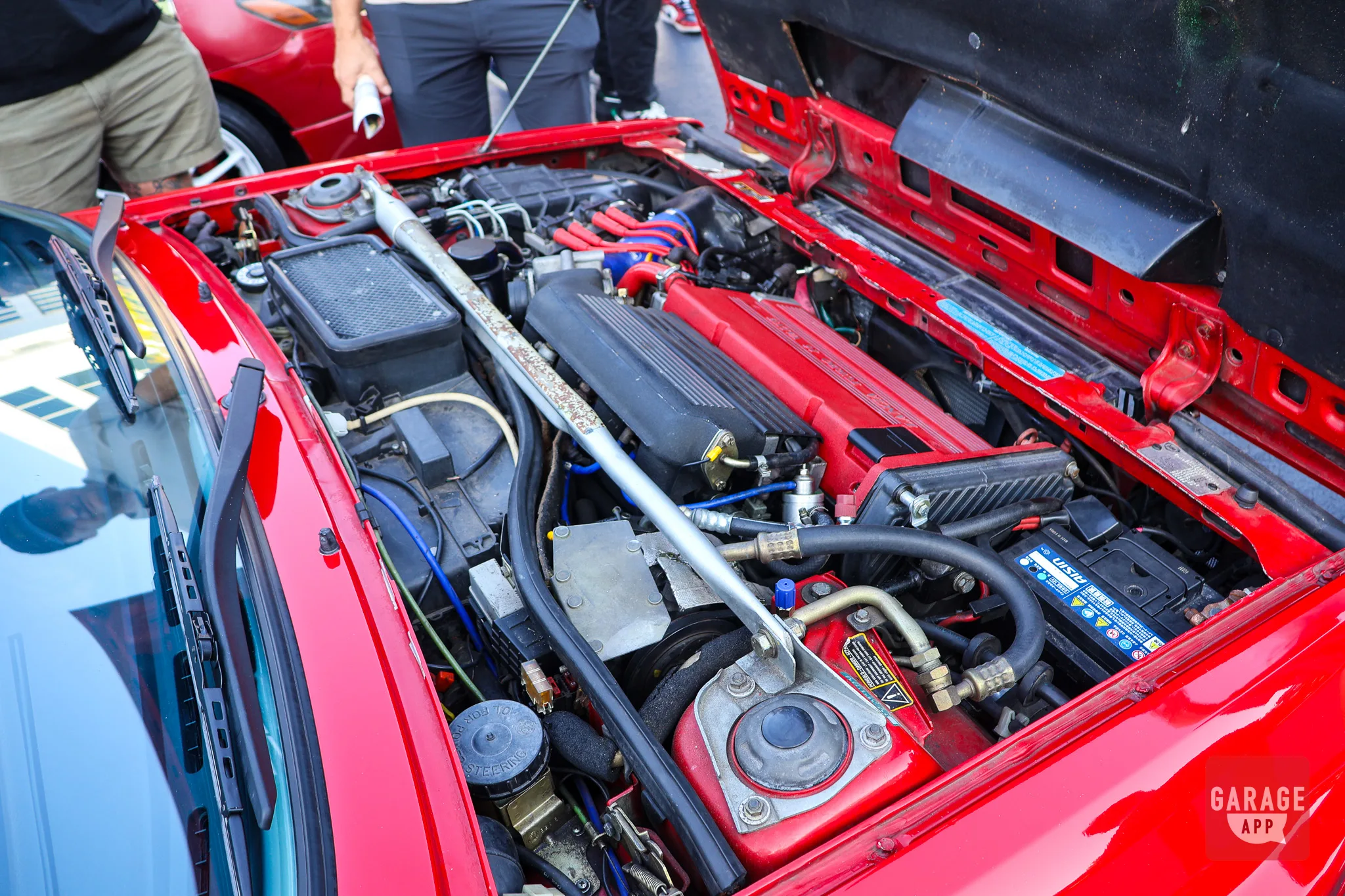
The Lancia Delta Integrale is a turbocharged, all-wheel-drive Italian hatchback built from 1987 to 1994 to homologate Lancia's Group A rally cars, and it won six consecutive World Rally Championship constructors' titles. In 2026, Hagerty values span $28,900 to $136,000, with Evo II cars trading roughly between $84,000 and $160,000 and rare factory specials going higher.
That is the short version. The long version starts with a red one parked at Cars and Coffee Morrisville.
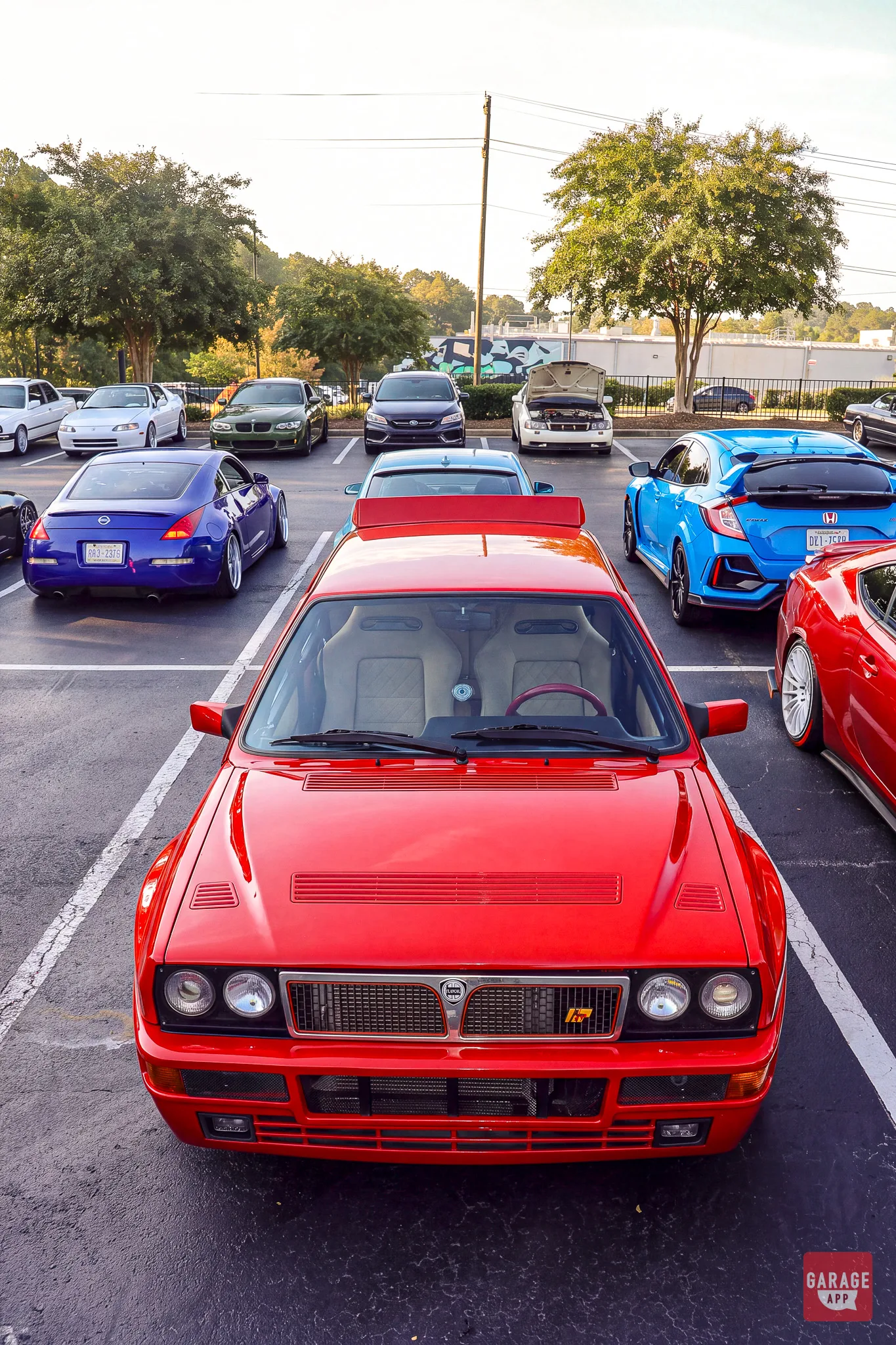
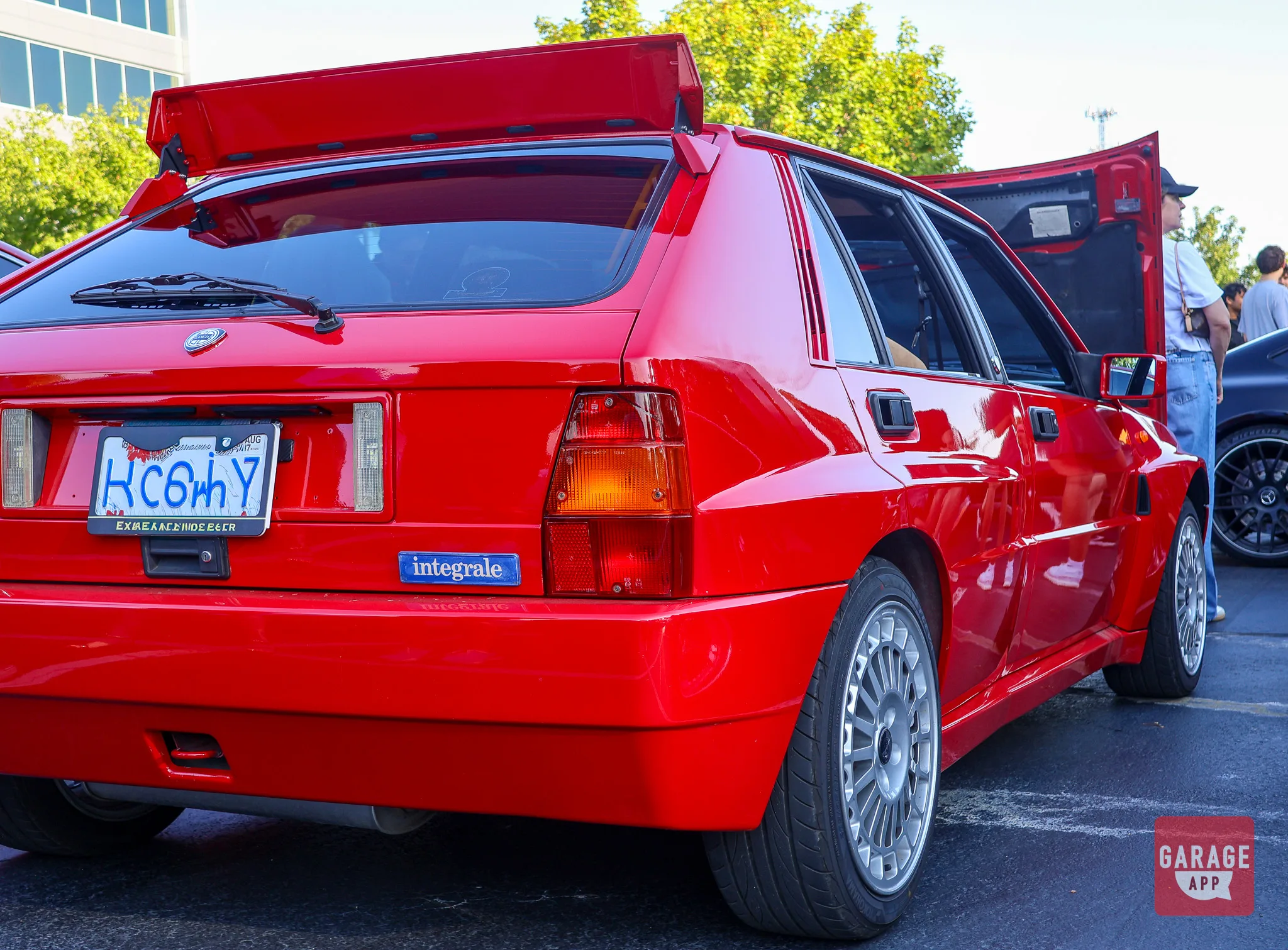
What Is the Red Integrale in Our Photo?
The car is finished in Rosso Monza red over a beige interior. It has Recaro seats, the boxed wide arches and a roof spoiler. Several Integrale generations share these cues, and plenty of earlier cars have been updated with later parts, so the badge and chassis number settle it, not the silhouette.
It drew a crowd anyway. An Integrale does that at any meet, partly because few Americans have seen one in person. If you are new to the scene, our complete guide to Cars and Coffee covers how these gatherings work.
Why Is the Delta Integrale a Rally Legend?
Because it was built to win, and it did. When Group B was cancelled after 1986, the World Rally Championship moved to Group A, which required a manufacturer to build thousands of road cars closely related to the competition car. That rule is the reason the road-going Integrale exists. Group A homologation turned a family hatchback into a street-legal rally weapon.
Lancia won the WRC constructors' title every year from 1987 through 1992. Six straight. No manufacturer had done that before. Juha Kankkunen took the drivers' title in 1987 and 1991. Miki Biasion won it in 1988 and 1989. Most of those cars wore Martini stripes, and the white car with blue and red bands is still the image most people picture when they hear the name.
That record is the core of Lancia rally history and the core of the car's value. Every road Integrale is a direct link to a works car that dominated an era.
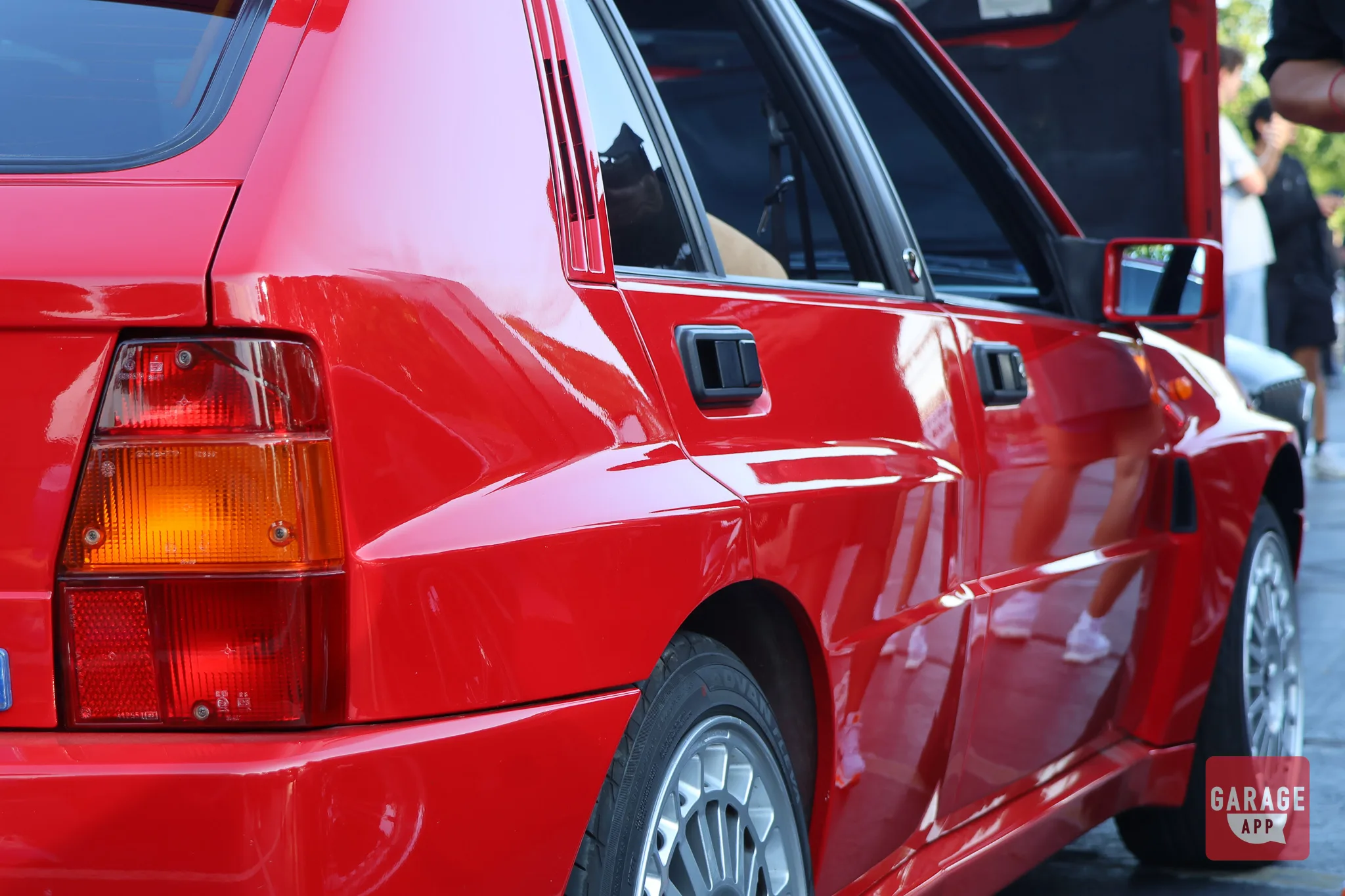
How Did Giugiaro's Family Hatch Become an Icon?
The original Delta was drawn by Giorgetto Giugiaro at Italdesign and launched in 1979. It was a clean, square, sensible five-door. Nothing about it suggested rallying.
Then the homologation cars arrived. Each step made the body angrier. The Integrale gained box-flared arches to cover a wider track, plus vents in the hood to pull heat out of the engine bay. The Evoluzione cars widened the arches again and added an adjustable roof spoiler. The proportions stayed upright and boxy. That contrast, a practical hatch shape with race-car fenders bolted on, is why the design has aged so well.
Which Delta Integrale Models Were Built?
There are five main road-car steps from the HF 4WD to the final Evo II. Output figures below other than the Evo II's, plus all production totals, still need confirmation against factory sources.
| Model | Introduced | Engine and Output |
|---|---|---|
| Delta HF 4WD | 1986 | 2.0 turbo, 8 valves, 165 hp |
| Integrale 8V | 1987 | 2.0 turbo, 8 valves, 185 hp |
| Integrale 16V | 1989 | 2.0 turbo, 16 valves, 200 hp |
| Integrale Evo I | 1991 | 2.0 turbo, 16 valves, 210 hp |
| Integrale Evo II | 1993 | 2.0 turbo, 16 valves, 215 hp |
Buyers tend to split into two camps. The 8V and 16V cars are the purer, lighter-feeling homologation specials. The Evo cars are wider, more developed and more expensive. Our take: the Evo II is the one to own if budget allows, since it was the most refined and best-sorted road car of the line.
How Much Is a Lancia Delta Integrale Worth?
It depends heavily on generation and condition. Early cars are still attainable. Evo II cars have moved into serious collector money.
- 8V benchmark: Classic.com puts a typical 8V at about $26,000. A 1988 8V sold for $13,500 in March 2026.
- Hagerty range: $28,900 to $136,000 across the model line. Hagerty valued a #4-condition 1994 Evo II at about $94,600 in January 2026.
- Integrale Evo II price, recent examples: a 1993 Evo II sold for $84,000 in Los Angeles in June 2026. Another was listed at $160,495 in Florida in September 2026.
- Factory specials: limited editions such as the Martini 6 and Dealers Collection average EUR 120,000 to 180,000, according to AutoClassic24.
Note that the $160,495 figure was an asking price, not a sale. The gap between the Los Angeles sale and the Florida listing shows how much condition, history and seller ambition move the number. Our guide to reading auction results and the collector market explains how to tell a real comp from a hopeful ask.
When comparing a Lancia Delta Integrale for sale against recent results, check the currency and the market. Many cars and comps come from Japan or Europe, and a yen or euro figure misread as dollars can wreck your valuation.
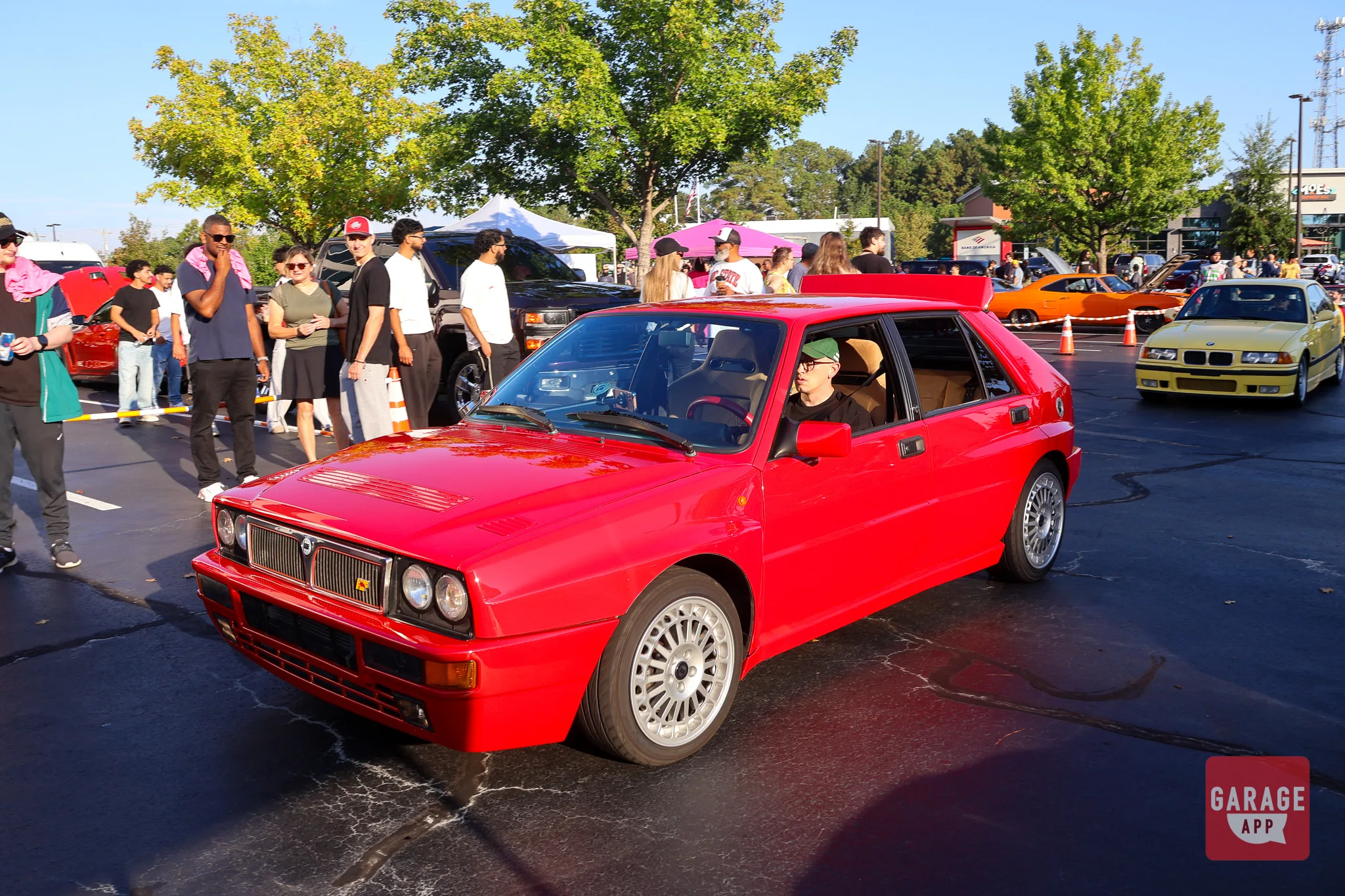
Why Have Integrale Prices Climbed?
The WRC record does most of the work. Six straight constructors' titles is a pedigree few road cars can match, and collectors pay for cars that won something.
US rarity adds to it. The Delta was never sold new in America. Lancia had left the market before the Integrale existed. Under the federal 25-year rule, every Integrale is now old enough to import legally, which opened a large new pool of buyers for a car that was scarce here.
Then there is Evo-era demand. Buyers who grew up with rally games and posters want the widest, most aggressive version, and they bid the Evo cars accordingly.
What Should You Check Before Buying One?
An Integrale rewards a careful buyer and punishes a hasty one. This is the short Integrale buyer's guide list we would work through.
- Rust: check sills, floors, wheel arches, the rear hatch area and suspension mounts. Fresh paint over a red car can hide a lot.
- Turbo and head gasket: look for blue smoke, coolant loss, white exhaust smoke or oil in the coolant. Ask for records of turbo and gasket work.
- AWD and viscous coupling: worn viscous couplings and differentials are common. Listen for drivetrain noise and feel for binding on tight, slow turns.
- Parts: body trim, interior pieces and Evo-specific parts can be hard to find and expensive. Price them before you commit.
- Japan imports: many US cars came from Japan. These can be good, but confirm the import paperwork, title and whether the odometer reads true.
- Documentation: service history, import records and original-equipment details matter, especially on specials. Missing paper means a lower price.
Run the chassis number before you travel to see a car. It confirms the variant and catches a 16V dressed up as an Evo, which matters a lot at Evo prices.
For more on proving what a car is, see our piece on provenance and documentation. A thick folder on an Integrale is worth real money.
What Is Lancia Doing With the Integrale Name Now?
Lancia marks its 120th year in 2026. The brand showed a Gamma HF Integrale at Turin in September 2026, reviving the name on a new model. A new electric Delta HF Integrale is expected later in the year, for a limited production.
Whether the new cars succeed or not, they keep the name in the news. That usually helps the originals.
The Bottom Line
The Delta HF Integrale value story is simple. It is a homologation special with an unmatched rally record, and it is rare in the US. Early 8V cars remain the entry point. Evo II cars are blue-chip. Buy the best-documented one you can afford. For the wider context on owning cars like this, start with our cornerstone, Classic, Exotic and Collector Vehicles: The Modern Owner's Guide.
If you own an Integrale, log it in GarageApp with the chassis number and service records. It keeps the history in one place and makes it easy to share at the next meet.
Seen an Integrale at your local meet? Post it on GarageApp and tag the variant. Owners on the app are usually happy to settle the 16V versus Evo debate.