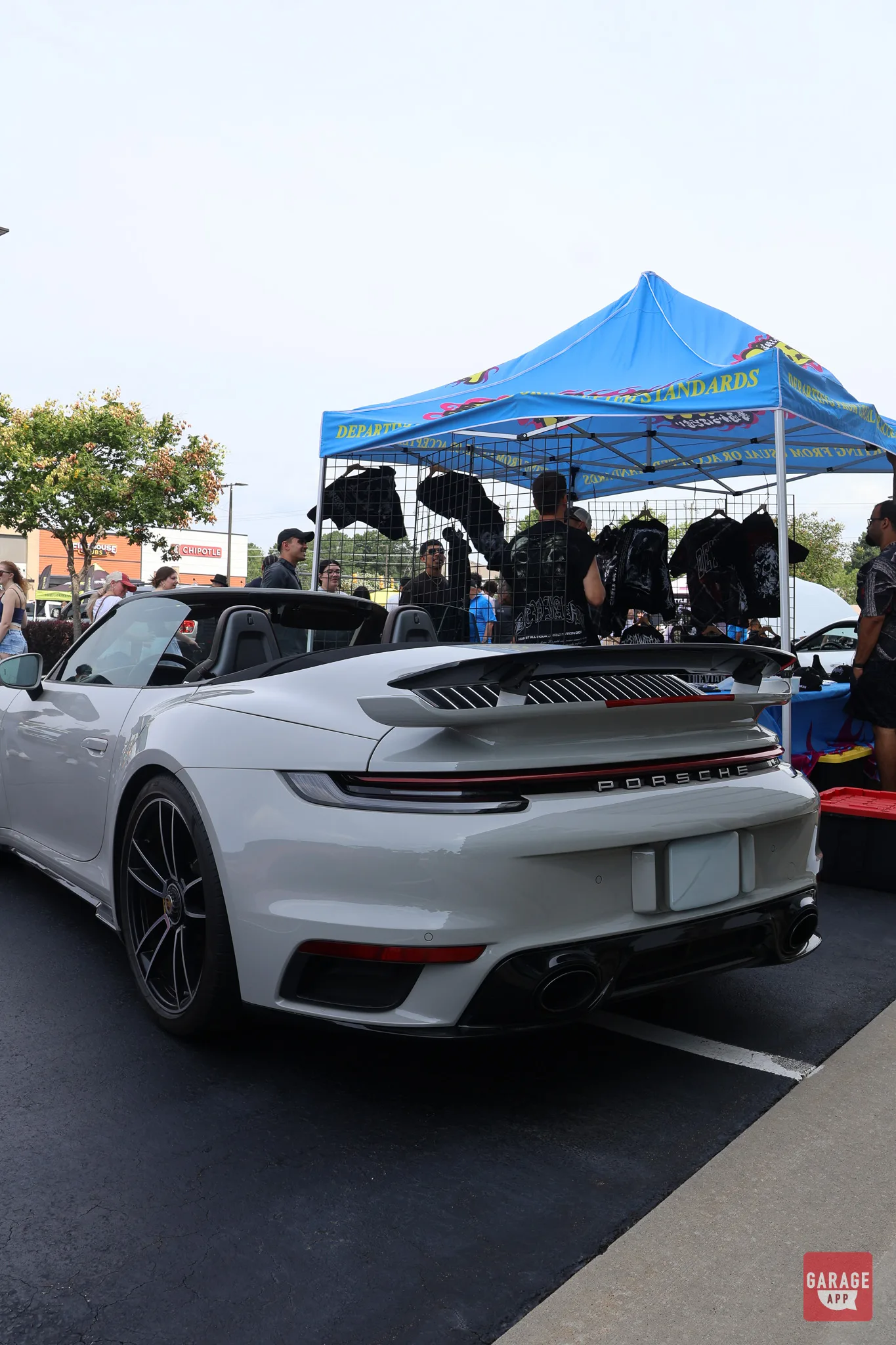

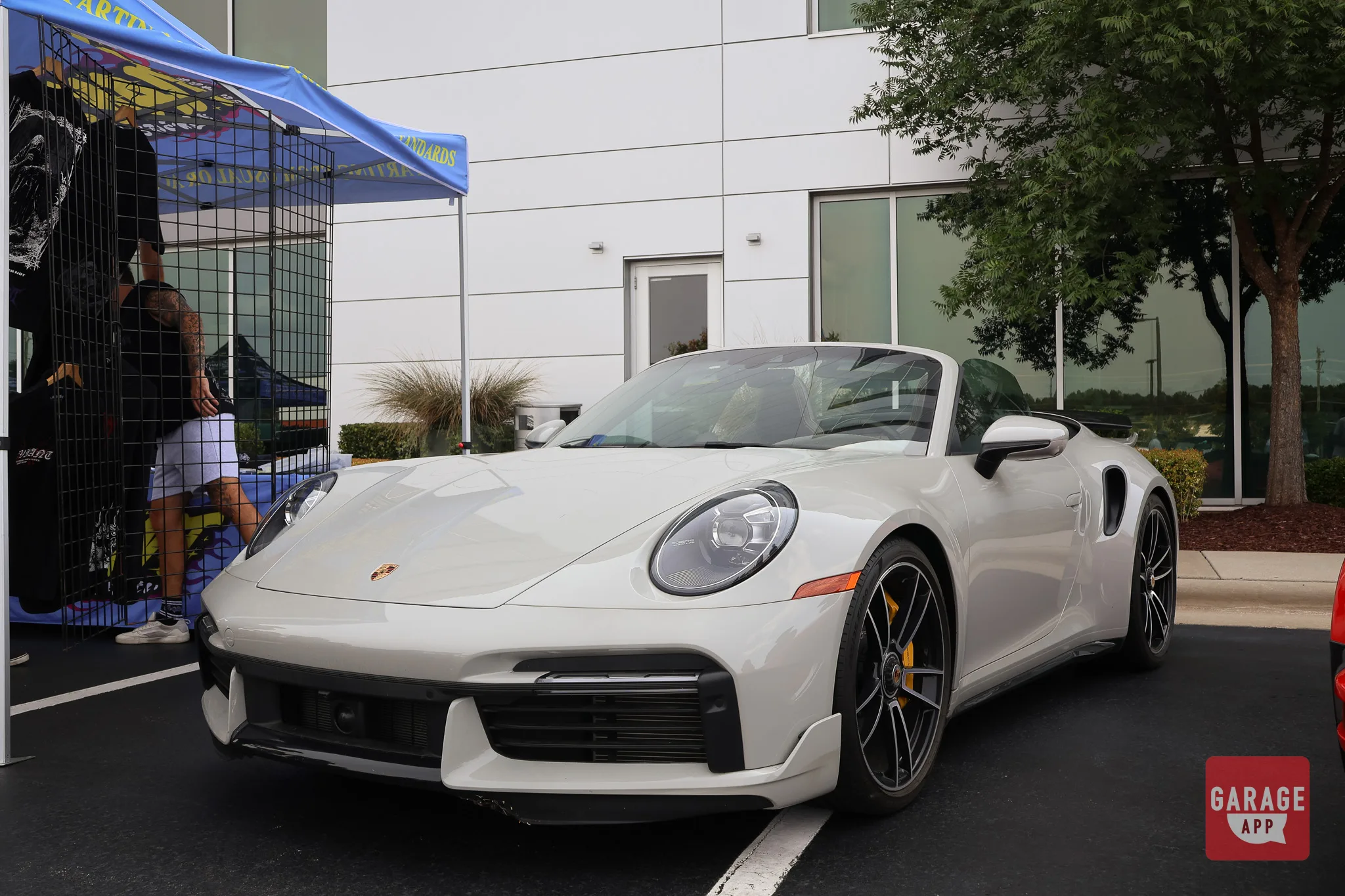
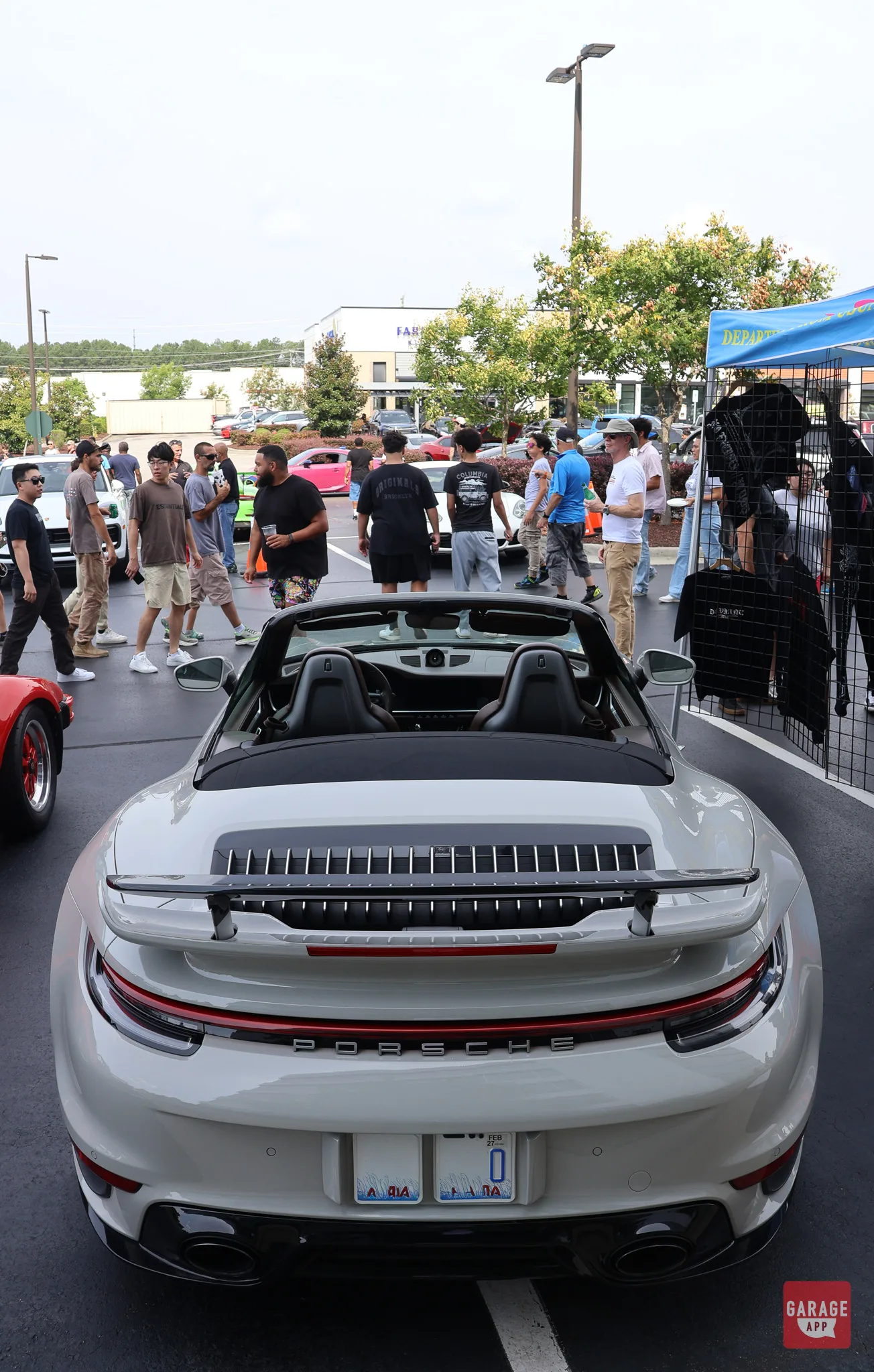
The 992.1 Turbo S can humble a hypercar on a damp back road and then sit in a school pickup line without complaint. Where the GT3 asks you to plan your week around it, the Turbo S just gets on with the job: all-wheel drive, a 640-horsepower twin-turbo flat-six, and an eight-speed PDK that make the sprint to 60 mph feel almost administrative. The car in these photos is the Cabriolet, top stowed, in a pale chalk-toned off-white that is clearly not standard white and reads like something from the Chalk or Crayon family. It is the version of this argument that gets least attention and, on the right morning, makes the most sense.
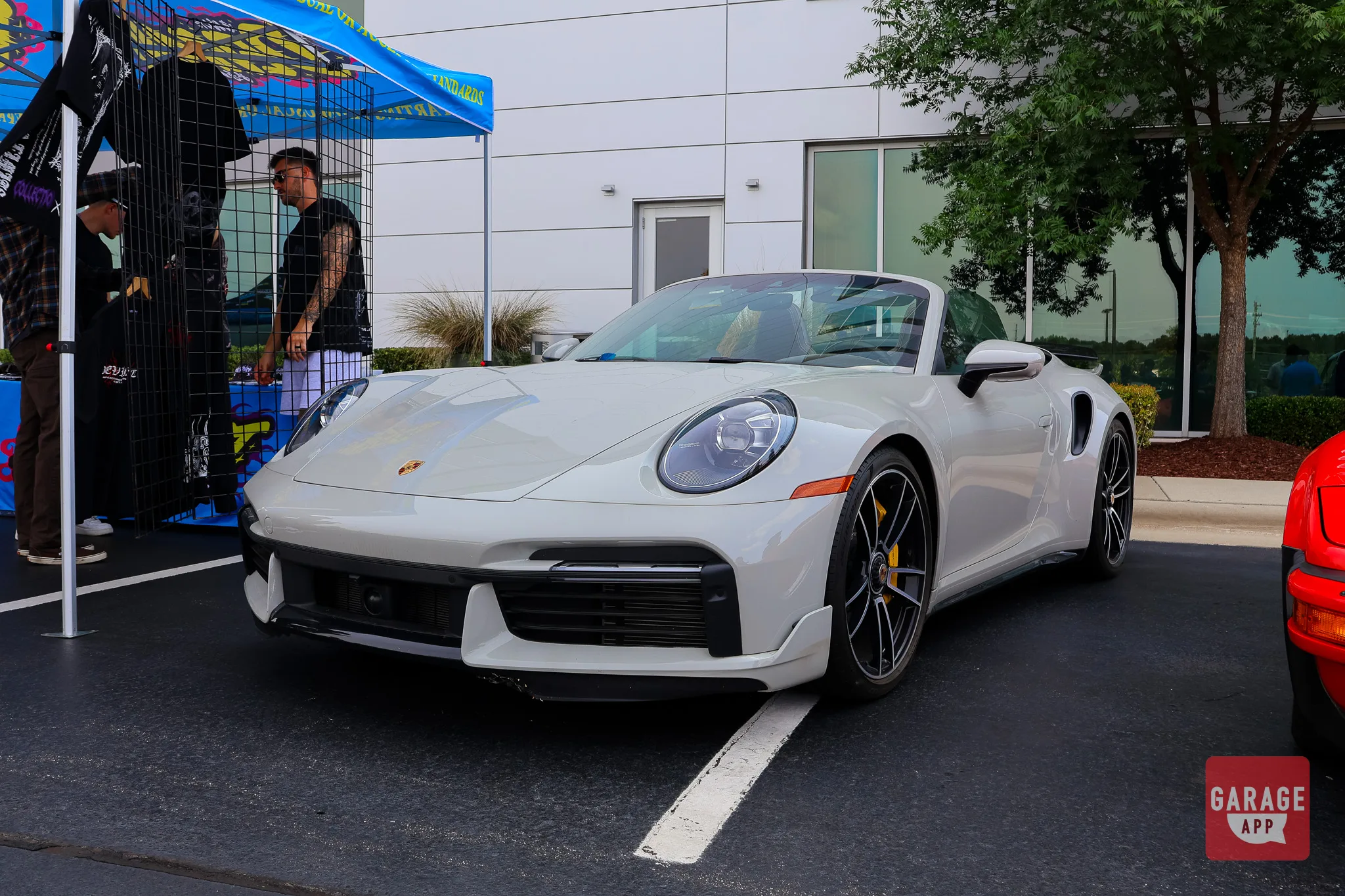
Design: Widebody Muscle, Quietly Delivered
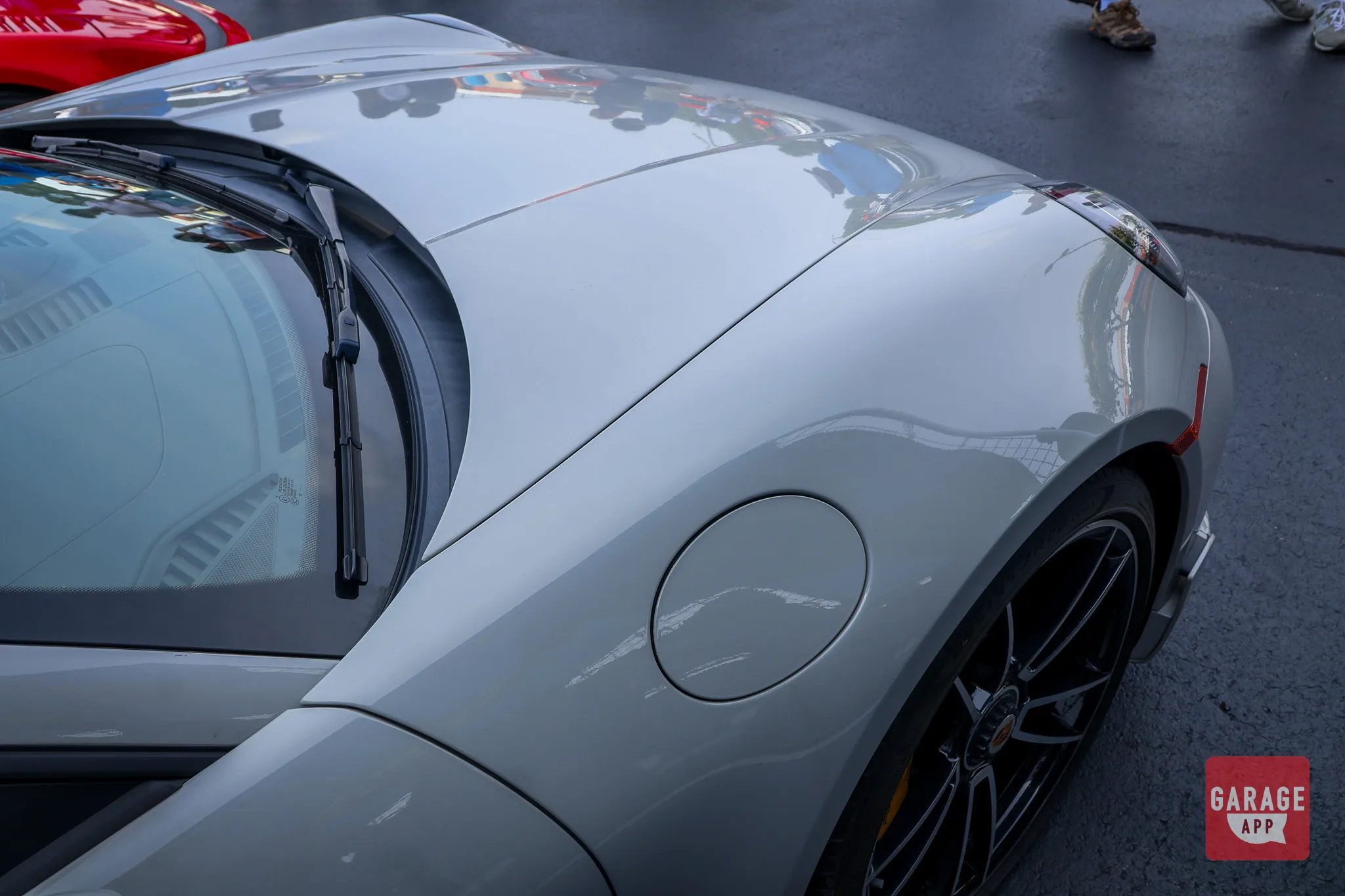
Next to a Carrera S the difference is immediate but not shouty. The Turbo body runs 45 mm wider at the front and 20 mm wider at the rear than the outgoing 991.2, with fenders flaring over 20-inch fronts on 255/35 rubber and 21-inch rears on 315/30. On this car those sit under dark-finish center-lock wheels, which is the single best thing you can do to a light-colored Turbo: the wheels read as voids and the fenders do all the talking. Behind them, yellow calipers confirm the carbon ceramic setup, which is standard on the Turbo S rather than a box you tick. The rest is Turbo-only detail: side intakes feeding the rearward-mounted intercoolers, a pneumatically inflating front spoiler, and a rear wing that changes area and angle with speed and doubles as an airbrake. Compared to a GT3 with its swan-neck wing it reads as restrained, which is exactly why the Turbo has always drawn a buyer who wants the performance without the announcement.
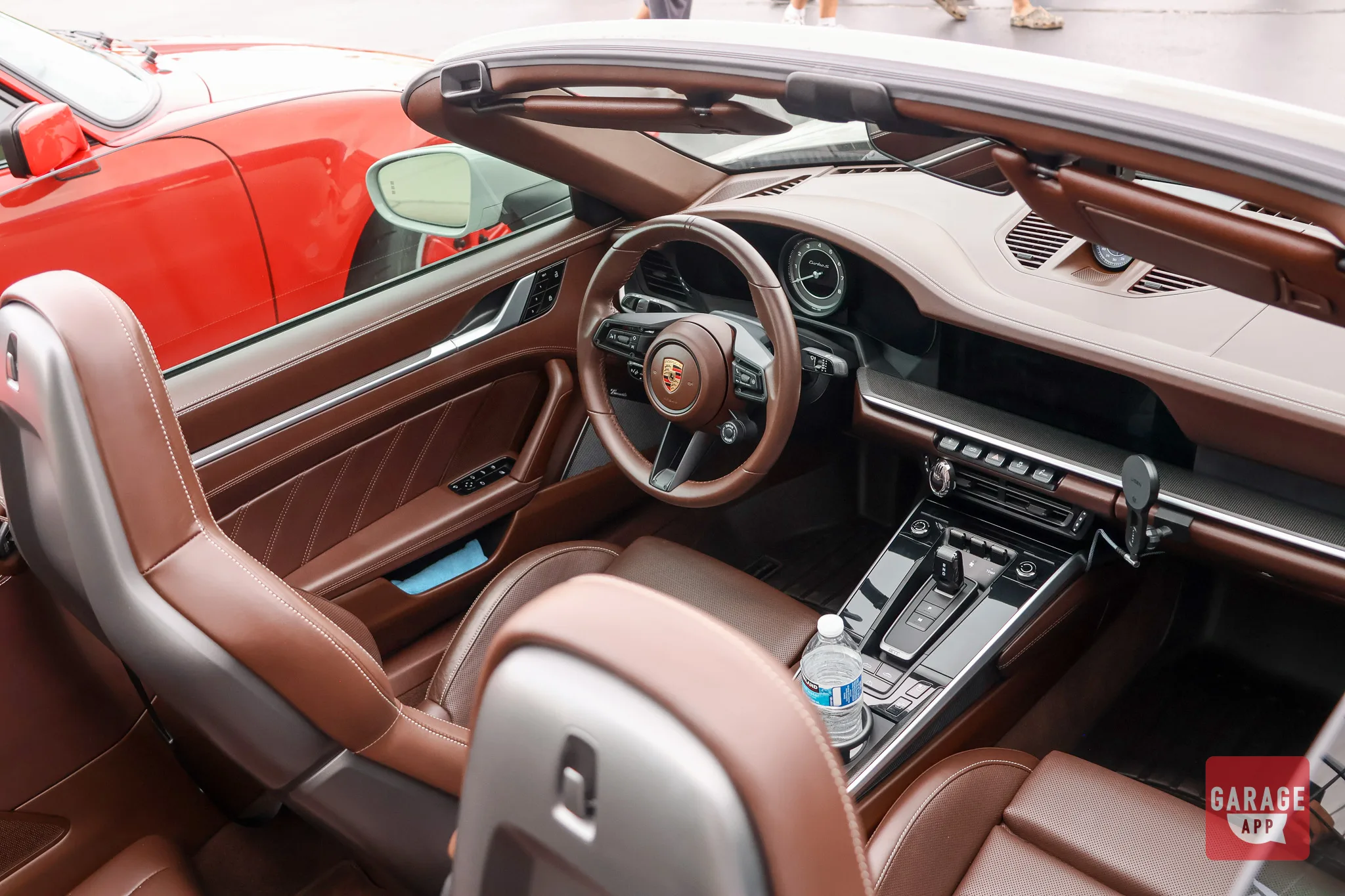
Drop the roof and the pale paint stops being the story. What you see instead is the cabin, and this one is specified about as well as a Turbo interior gets: full cognac leather with contrast white stitching running across the seats, the door cards, and the dash top. It is a warm, slightly old-money combination against the chalk exterior, and it makes the car feel like a grand tourer rather than a weapon. The multifunction wheel is wrapped in the same brown leather with paddles behind it, and there is carbon fiber trim on the console to keep it from tipping into lounge territory.
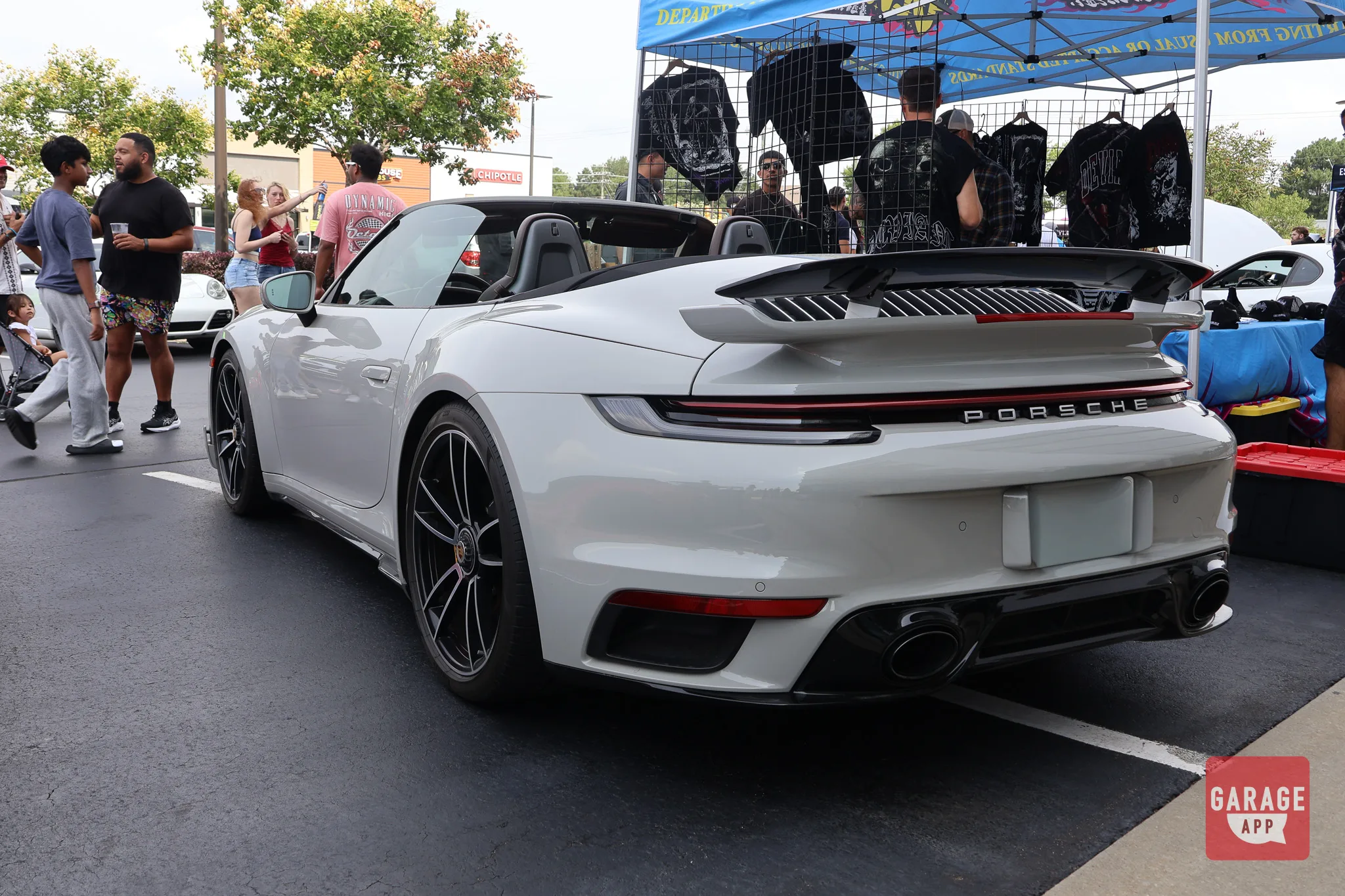
Engine and Performance
The 3,745 cc twin-turbo flat-six evolves the 991.2 unit with larger variable-turbine-geometry turbos arranged symmetrically, one spinning clockwise and one counter-clockwise, plus piezo injectors, revised charge-air cooling, and more boost. If you ever need to confirm what you are sitting in, the instrument cluster spells out Turbo S on startup, which saves a lot of guessing on a used car with no window sticker.
- Engine: 3.7-liter twin-turbo flat-six, VTG turbos
- Output: 640 hp at 6,750 rpm, 590 lb-ft from 2,500 to 4,000 rpm
- Transmission: 8-speed PDK only, all-wheel drive
- 0-60 mph: 2.7 seconds claimed for the Cabriolet, 2.6 for the coupe, with instrumented tests running quicker
- Top speed: 205 mph
- Curb weight: roughly 3,760 lb for the Cabriolet, about 125 lb over the coupe
- Brakes: carbon ceramic (PCCB) standard, 420 mm front
Launching it is comically simple. Sport Plus, left foot on the brake, right foot flat, release. The car squats, digs in, and rearranges your internal organs with zero theater. There was never a manual, and the short toggle on the console makes no pretense otherwise, but the PDK shuffles ratios so fast under full boost that a third pedal would only be in the way. With the roof down the upshift at 6,000 rpm in second stops being a drivetrain event and becomes an audible one, which is most of the case for the Cabriolet in a single sentence.
Test driving a used one? Do a hard pull from 40 mph in third rather than a standing launch. Boost delivery, wastegate rattle, and drivetrain shunt all show up far more clearly on a part-throttle roll-on than in a launch-control run.
The Drive: Supercar Pace Without the Drama
The first surprise is how normal it feels below seven-tenths. Accurate rather than chatty steering, a firm but civilized ride on standard PASM, and with the roof up a cabin quiet enough for phone calls. Then the weather turns and the point lands. The front axle sends torque forward faster than any previous Turbo, so on a cold morning with damp patches under the trees you can go to full throttle where a rear-drive 911 makes you wait. Standard rear-axle steering shrinks the widebody at low speed and settles it at high speed, and PDCC keeps the body so flat you constantly underestimate your cornering speed.
The honest criticism is that it can feel remote, because it never squirms or asks for a correction. Some drivers want that conversation, which is why the GT3 exists. The Cabriolet leans further into the other direction, trading a little structural rigidity for open air and arguably landing closer to what this car is actually for. The trade is a car you can point at a 500-mile day and arrive fresh, the same case we make for daily driving a 911.
The Turbo S has never been the most romantic 911. It has always been the most effective one.
A sentiment you will hear at any Porsche meet
Ownership, Running Costs, and Value
Turbos follow a predictable curve. Early cars sold over sticker during the 2021 to 2022 frenzy, then settled, and well-optioned low-mileage examples now trade near or slightly below their original window sticker. Running costs are reasonable until they are not: annual minor service lands between several hundred and just under a thousand dollars at a dealer, brake fluid is every two years regardless of mileage, and N-rated staggered tire sets are the real line item, with rears wearing fast if you enjoy launch control. Those yellow-caliper PCCB rotors last well in street use but cost a fortune to replace, so check wear percentages on any used car. On a Cabriolet, add the roof mechanism and its seals to your inspection list, and budget for leather care if you buy a light cognac interior that has lived with the top down.
The front axle lift is worth more than any cosmetic option. With PCCB and the deep front spoiler, driveway clearance is a genuine problem, and 40 mm of lift saves a lot of scraped chin.
On options, the boxes that consistently come back at resale are a rare or Paint to Sample color, a distinctive full-leather interior like this cognac and white stitch combination, the front axle lift, the sport exhaust with round tips, and the extended range tank if you do real road trips. Documentation matters just as much, and plenty of owners use a Virtual Garage to catalog receipts, mileage, and build details so the story travels with the car. Once you own one, use it socially. Meeting Porsche owners near you is the fastest way into the marque, and finding the better roads within an hour of home turns a solo Sunday into a five-car run.
So Is It Worth It?
If you want one car that handles a track day, a cross-country drive, a snowy commute, and a valet line without flinching, yes. Nothing else at the price does all four as well, and this is the last Turbo S with a purely internal-combustion drivetrain, a detail that will read very differently in fifteen years. Choose the Cabriolet if you value the noise and the open sky over the last tenth and the extra rigidity, because in a car this fast you will never find the limit of either version on a public road. If what you want is texture and a car that talks back at 45 mph, buy a GT3 or a manual GTS and spend the difference on tires. The Turbo S is not a compromise, it is a different thesis: maximum capability, minimum fuss.