

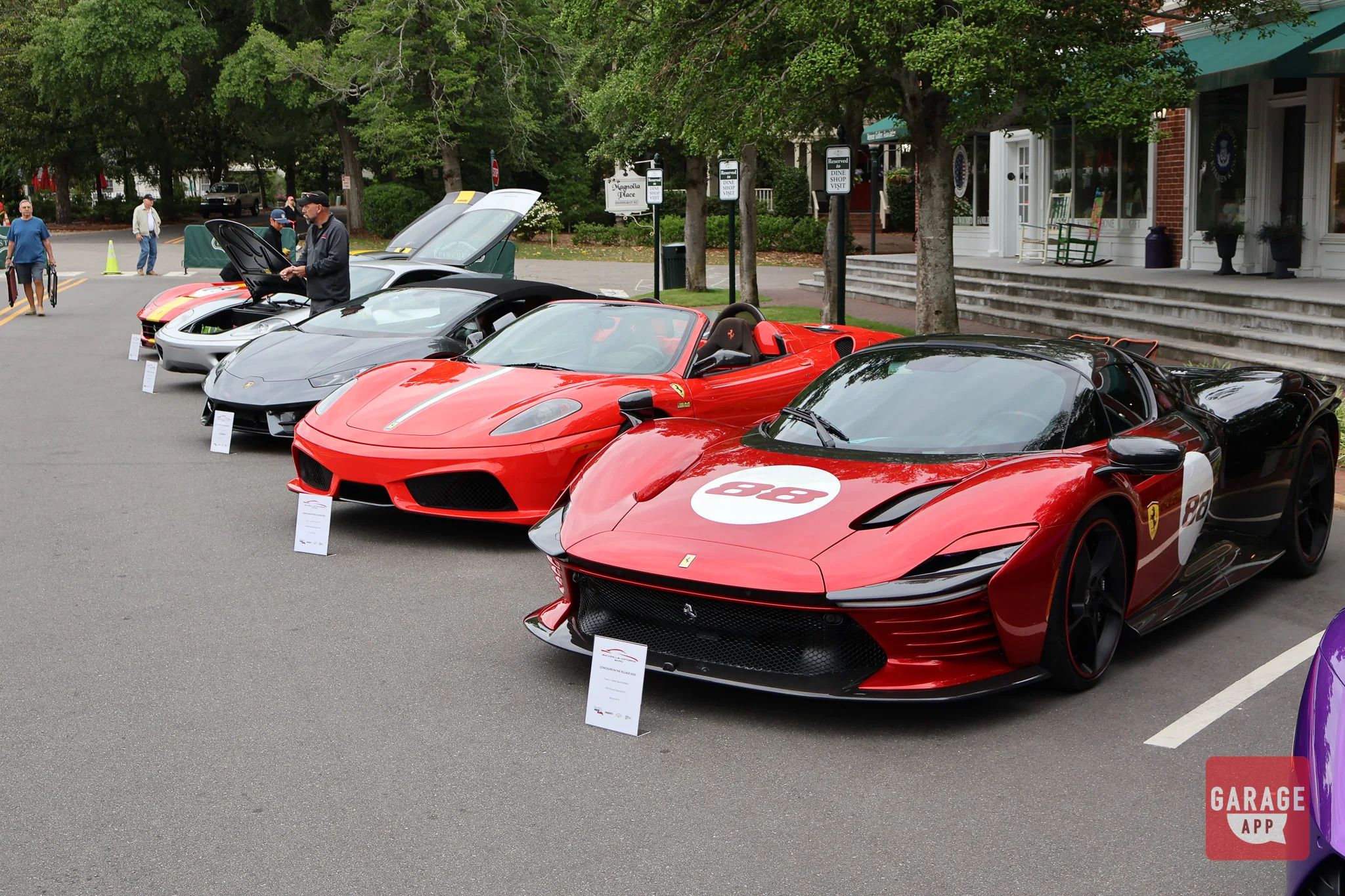
Ask ten enthusiasts what is cars and coffee and you'll get ten slightly different answers. Some will say it's just cars in a parking lot on a Saturday morning. Others will get misty about the sound of a flat-six warming up while the sun burns off the marine layer. Both are right, and both miss the bigger story. This is the deep dive into where the format came from, how it conquered the country, why the original meet died, and what makes it stick when traditional car shows keep struggling.
If you want the practical stuff, our Cars and Coffee complete guide and the beginner's guide to your first meet cover how to show up and not embarrass yourself. This piece goes the other direction: the history and the culture, told the way it actually happened.
The Real Definition (Beyond Cars in a Parking Lot)
The lazy definition is accurate but useless: a free, informal gathering where people bring interesting cars, drink coffee, and leave by mid-morning. What it misses is the mechanics that make the format work. Cars and Coffee is defined less by what's present and more by what's absent. There's no entry fee, no judging, no trophies, no class categories, no paid vendor row dictating the vibe. A million-dollar hypercar parks three spaces from a restored Miata, and nobody organizing the event decided that should happen. It just does, because the barrier to entry is a full tank and the willingness to wake up early.
That absence is the whole point. Where a concours is curated top-down, Cars and Coffee is emergent from the bottom up. The event is whatever the people who show up decide it is that week. It's a car show that refuses to behave like one, and that refusal is exactly why it spread the way it did.
The single most reliable marker of a real Cars and Coffee versus a rebranded dealership event is money. If someone is charging admission or selling you something at the entrance, the spirit has already left the building.
The Irvine Origin Story
The name and the modern format trace back to Southern California in the mid-2000s. The gathering that crystallized everything took place in Irvine, in the parking lots near the Ford premier automotive group campus and, later, the Mazda headquarters area near the 405. What started as a small collection of enthusiasts and industry people meeting on Saturday mornings grew, almost by accident, into the template every other meet would copy.
The location was not incidental. Southern California in 2006 had a stunning density of variables: perfect year-round morning weather, a car culture older than the freeways, an enormous concentration of collectors and industry engineers, and vast, empty corporate parking lots that sat unused on weekends. You needed all four at once, and Orange County had them. The crowd was genuinely eclectic. On a single Saturday you might see a Carrera GT next to a rat-rod, a McLaren F1 that someone actually drove there, and a group of college kids in slammed Civics. That mix, the sense that anything with a story was welcome, is what people fell in love with and later tried to recreate everywhere else.
The coffee in the name is almost a joke that stuck. It signals the time of day and the tone more than any beverage. Morning means the cars are freshly driven, the crowd is smaller and more serious, and everyone has somewhere to be by noon. Standing around with a paper cup, no schedule, no announcer, is the opposite of the folding-chair-and-canopy energy of a Sunday show. That casual framing is the entire cultural signature.
How It Spread Across the Country
Through the late 2000s and into the 2010s, the format went from a regional phenomenon to a national ritual, because the concept was essentially open-source. There was no franchise, no trademark holder collecting fees, no rulebook. Anyone with a parking lot, a Saturday, and a handful of friends could copy it wholesale.
- Zero infrastructure cost. No permits for a small gathering, no insurance headaches, no ticketing platform. You just told people where to be.
- Instant name recognition. Calling your local meet 'Cars and Coffee' told newcomers exactly what to expect.
- Self-organizing crowds. Give enthusiasts a place and a time and the event runs itself.
- Forums and early social media. Regional car forums and then Facebook groups let organizers pull a crowd overnight.
By the mid-2010s nearly every mid-sized American city had at least one. Some grew into massive events pulling thousands of cars; others stayed small and neighborhood-tight. The Cars and Coffee in Morrisville near Raleigh and the long-running Fuquay-Varina meet show how the same DNA produces very different local flavors depending on who shows up.
The format spread because it asked nothing of you. That was its genius and, eventually, its problem.
A common sentiment among longtime organizers
The End of the Original Meet
The original Irvine gathering did not last forever, and the way it ended became a cautionary tale. As the crowds swelled into the thousands, the very informality that made it special started to work against it. The breaking point everyone remembers is the leaving. Gather hundreds of high-powered cars and a crowd lining the exits, and someone eventually tries to show off. Burnouts, revving contests, and the occasional loss of control led to close calls, property damage, and liability the host companies were never going to accept. The corporate landlords, letting enthusiasts use their lots for free out of goodwill, pulled the plug.
That collapse taught a generation of organizers three durable lessons. A free format still needs light-touch stewardship. The relationship with the property owner is the single most fragile part of the whole thing. And culture has to be actively protected, because a huge crowd will always contain a few people who mistake attention for a green light.
If you're thinking about starting your own meet, study the Irvine ending as closely as the beginning. Our guide on how to organize a car meet covers the landlord relationship and crowd management that keep a good thing alive.
The etiquette that governs modern meets, much of it now written down in pieces like our car culture etiquette guide, exists precisely because the original meet showed everyone what happens when nobody sets the tone.
Cars and Coffee Today
The format is healthier and more widespread now than ever, but it runs on a completely different engine than the word-of-mouth era that built it. The biggest change is discovery. In 2007 you found a meet because a friend told you or you dug through a forum thread. Today it's location-aware and instant. For how smartphones and community platforms rewired the culture, read how technology is reshaping modern car meets, and for the practical hunt, our Cars and Coffee complete guide.
The through-line worth naming is the contrast. What used to require insider knowledge is now a search. GarageApp sits squarely in that shift, letting enthusiasts see nearby meets, track the cars they've spotted, and connect with people they'd otherwise only nod at across a parking lot. The old era's biggest weakness was that the community existed only for those three morning hours. Modern tools extend it into the rest of the week. There's a subtler evolution too: because building a following now matters, more attendees treat their cars as ongoing stories rather than static show pieces. Documenting a build, something we cover in how to document your car build online, has folded neatly into meet culture.
Why This Format Works When Car Shows Don't
Traditional car shows keep aging out their audience, while Cars and Coffee keeps pulling twenty-somethings out of bed at 6 a.m. on their day off. The reasons are more sociological than automotive. A formal show is a commitment: you register, you pay, you detail for a week, you sit with your car for judging. Cars and Coffee asks for none of that. You can roll in with a filthy daily, stay twenty minutes, and leave. That low commitment is what a busy person can say yes to, and it means the crowd renews itself constantly instead of calcifying.
Because there's no judging and no hierarchy, the guy with the Radical and the kid with the E36 he's still paying off talk as equals. That flat social structure is rare and valuable, the same dynamic explored in the psychology of car culture: shared enthusiasm dissolves the usual markers of status faster than almost any other hobby. It's also cross-generational. A concours skews older and a tuner meet skews younger, but Cars and Coffee is one of the few settings where both show up and mix. A grandfather explaining his Dino to a teenager who only knew it from a video game is a common scene, and it's how the culture passes itself down. If you want to build that kind of durable community, our guide on building a car enthusiast community from scratch leans on exactly these principles.
Strip it all down and Cars and Coffee endures because it's the least commercialized, least gatekept form of car gathering ever invented. Every attempt to formalize it, monetize it, or franchise it tends to kill the thing that made it worth attending. So the next time someone asks what is cars and coffee, give them the real answer. It's a mid-2000s Irvine accident that became a national ritual, nearly destroyed itself through its own informality, learned to protect its culture, and quietly became the most resilient form of car community we have. Not bad for cars in a parking lot.