

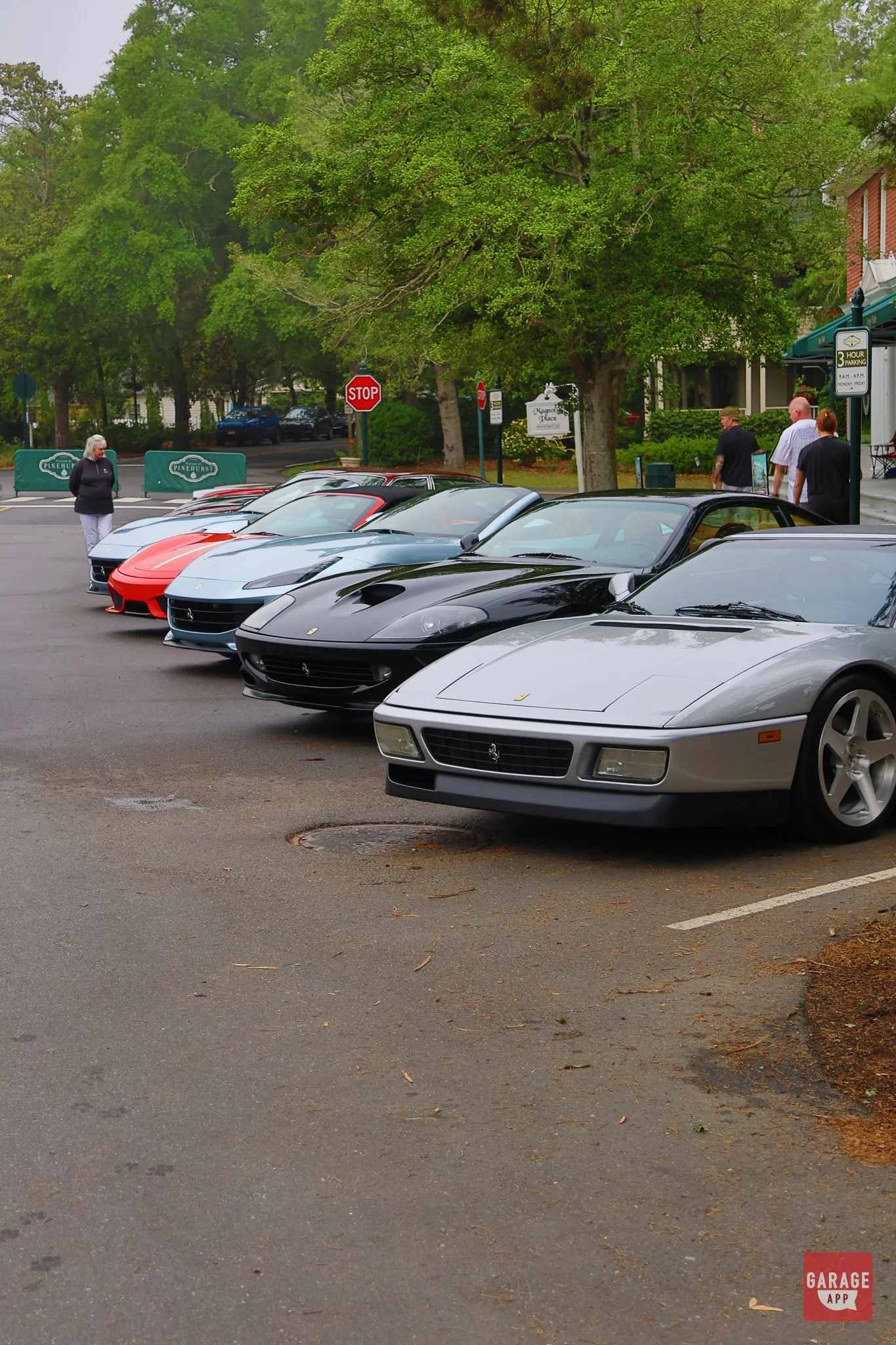
Every enthusiast community runs on a set of rules nobody wrote down. You won't find car culture etiquette printed on a sign at the meet or pinned to a forum thread, but you feel it the second someone breaks it. It's the invisible code that decides whether a space feels welcoming or turns quietly toxic. Most of us learned it by messing it up, so consider this the manual, covering the full landscape of enthusiast life, not just one parking lot on a Saturday morning.
What Car Culture Etiquette Actually Covers
When people say car enthusiast etiquette, they picture a Cars and Coffee lot. But car culture is bigger than that. It's group drives through the mountains, the forum you check every morning, track days, and the way you react when someone shows you a build that isn't your taste. The stakes are higher in some of those places, because a mistake on a group drive or a track day can hurt more than someone's feelings. The common thread is respect: for people's builds, their budgets, their skill levels, their space on the road, and their time. Automotive community etiquette is just about not being the reason a good scene goes bad.
The quickest way to learn the unwritten rules of any group is to show up, say little, and watch. The regulars will tell you everything you need to know just by how they behave.
At Meets and Shows
The basics: park cleanly, don't touch cars without permission, control your kids and your dog, and never do a smoky burnout on your way out. That last one has gotten more meets shut down than anything else. For the full breakdown of car meet etiquette rules, start with our beginner's guide to your first Cars and Coffee and the broader Cars and Coffee events guide. Once you've got the meet basics down, the rest of car culture opens up, and that's where most of the real etiquette lives.
On Group Drives and Convoys
This is where etiquette stops being about manners and starts being about safety. A group drive puts a dozen cars on public roads with wildly different drivers, and one person's ego can ruin the day for everyone. The golden rule is simple: maintain your following distance and stay in your assigned spot. Constantly jockeying for position closes up gaps, separates people at lights, and causes rear-end crashes when the pace changes suddenly.
- Leave a two to three second gap, more if the pace picks up.
- Don't pass within the group unless the lead has explicitly set that up.
- Wait at every turn until you see the car behind you make it too.
- If you fall out, don't drive like a maniac to catch up, the group will regroup.
Good drives also have a plan, a route, and a way to talk. Set up a group chat, share the route beforehand, and use your phone's connected features so nobody's staring at a screen mid-corner. Our guide on using CarPlay and Android Auto for group drives walks through keeping everyone synced, and if you're organizing something bigger, the multi-car convoy road trip planning guide is worth a read before you send that invite.
Do a driver's meeting before you roll out. Five minutes covering the route, the pace, the hand signals, and the regroup points prevents ninety percent of drive-day drama.
The fastest way to get uninvited from future drives is to treat a group cruise like a track session. If you've got the itch to push your car, GarageApp helps you find the best driving roads near you so you're chasing corners in the right setting, not in a convoy of strangers who just wanted a nice Sunday cruise.
In Online Communities and Forums
A huge chunk of car culture happens on screens now, and it's where etiquette breaks down the fastest. The anonymity of a keyboard turns otherwise decent people into gatekeepers, and algorithm-driven feeds reward outrage over usefulness. Most general Facebook car groups are dead, drowning in spam, or ruled by three angry admins who bully anyone with a modified car. We dug into why generic social media fails car communities, and the short version is that platforms built for engagement don't reward the patience and generosity that make a scene good.
The best online car spaces feel like a good garage: people help, people share, and nobody's trying to prove they're better than you.
The etiquette online mirrors the etiquette in person. Answer questions when you know the answer, don't pile on newcomers, give credit when you repost someone's car, and resist the urge to correct people who didn't ask. If you're documenting your own progress, our guide on sharing your car build online covers how to do it in a way that invites conversation instead of criticism.
Respecting Other People's Builds and Budgets
This is the rule that separates real enthusiasts from posers, and it comes down to one idea: it's not your car. "You know what you should do to that?" is the most annoying sentence in car culture. If someone asks for input, share it generously. If they don't, keep it in your head. Whole scenes are built on aesthetics outsiders don't get, like stance culture, which spent years being mocked before it went mainstream.
A clean, well-loved budget build deserves the same respect as a six-figure exotic. The psychology of car culture shows that the bonds we form over cars have almost nothing to do with money and everything to do with shared obsession. A thoughtful first mod matters more than the price tag, which is why we point newcomers to the best first car mods for beginners rather than telling them to spend big.
When you see a build you don't understand, ask the owner why they built it that way. Nine times out of ten you'll walk away impressed by the thought behind it.
Track Days and Spirited Driving
The track is where etiquette and safety fuse completely. Every track day sorts drivers into run groups by experience, so stay in yours. Sandbagging in a slow group when you're clearly faster is dangerous, and bumping yourself up before you're ready is worse. If you're brand new, our beginner's guide to your first track day explains how the groups work and what to expect before you ever put on a helmet.
Most track days use point-by passing, meaning the slower car signals which side to pass on. You never pass without the point, and never pass in a corner unless the event allows it. The same humility applies to autocross, where you're racing the clock and the cones. The beginner's guide to autocross is a low-cost, low-risk way to learn car control before you hit a real circuit. Off the track, spirited driving carries its own code: you don't drive like that near houses, schools, or in traffic, and you never make civilians the audience for your skills.
Why Good Etiquette Builds Better Communities
Every rule here comes back to a single truth: the health of car culture depends on how we treat each other. Good etiquette is contagious. When you point the slow car past you cleanly, when you compliment a build that isn't your style, when you answer the newbie's question without condescension, you set the tone and other people copy it. That's why building a car enthusiast community from scratch starts with culture long before events, and the rise of car meet culture in 2026 is proof that people are hungry for this, they just need the spaces done right. Follow the unwritten rules and car culture gives back tenfold: better drives, deeper friendships, and a garage full of stories that started with someone simply being decent to you.