

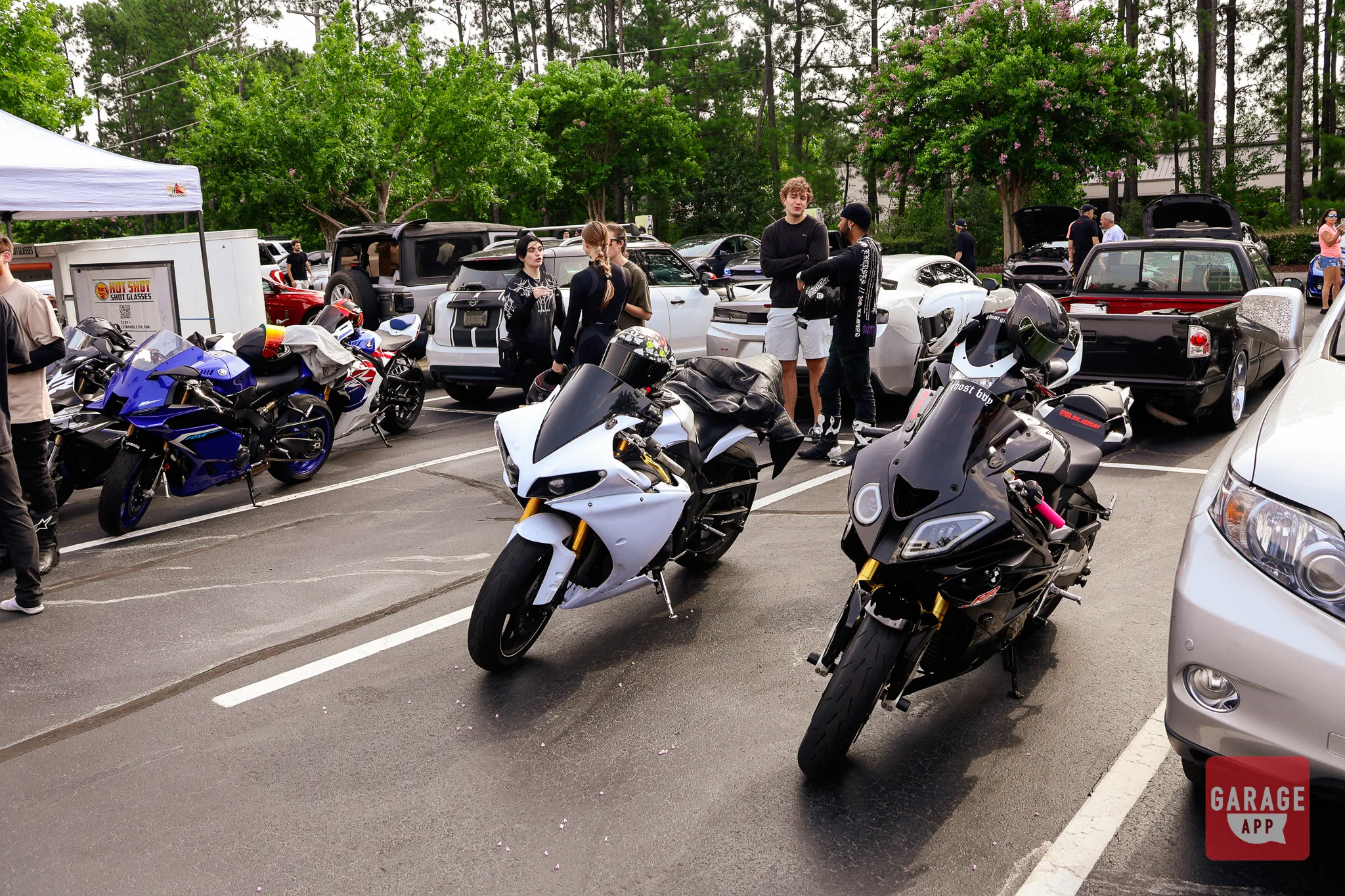
A motorcycle club is a group of riders who commit to showing up for each other on a schedule. That's the whole foundation. Riders decide to start a motorcycle club for plenty of reasons: the local scene is dead, the existing clubs don't ride the way they want, or the Sunday group chat outgrew itself. Whatever the trigger, the work is the same. You pick a focus, find a handful of founding riders, agree on rules, and put a date on the calendar. If you're still weighing whether to build something or simply join a motorcycle club that already exists, start there. If you're ready, keep reading.
What Is a Motorcycle Club?
Three things get called the same name, and mixing them up is the most common motorcycle club question there is. A motorcycle riding group is informal: no dues, no officers, just a text thread and a meeting point. A registered motorcycle club has a name, a bank account, sometimes insurance, and usually bylaws. A motorcycle brand chapter operates under a national organization's banner, follows its charter, and reports upward. All three ride together. Only the last two carry legal obligations. Before you print a single sticker, decide whether you're forming a riding group or a registered club, because the paperwork and the expectations differ sharply.
How Do You Choose a Motorcycle Club's Niche?
Vague clubs die fast. "Bikers welcome" attracts nobody in particular. Narrow it down along one of three axes and the club sells itself.
- Make or platform. Harley, Triumph, Ducati, big-bore adventure, Japanese sportbikes. Shared maintenance knowledge is a real benefit, and single-marque clubs build loyalty quickly.
- Riding style. Touring riders want 400-mile days. Track riders want lapping sessions and tire pressures. Off-road and dual-sport riders want dirt and a trailer plan. Mixing all of them on one ride frustrates everyone.
- Geography or affiliation. A local riding club built around one metro area or one canyon road has a natural boundary. Alternatively, apply to run a motorcycle chapter under an existing national club and inherit its structure.
You can broaden later. Starting broad and hoping a personality emerges almost never works.
How Do You Find and Recruit Founding Riders?
You need five or six committed people, not fifty curious ones. Start with riders you already ride with. Those are the people who will actually show up in 45-degree weather when the group is new and fragile.
After your personal network, go where riders already gather. A Saturday motorcycle meet in a parking lot is the highest-conversion recruiting ground there is, because everyone present already chose to leave the house. Same for a regional motorcycle show, swap meet, or a dealer demo day. Bring a name, a date for the first ride, and something people can scan. Riding forums and marque-specific subreddits still work for the technical crowd. GarageApp Groups covers the digital side, since riders searching for a motorcycle club near me can find yours without knowing your name first.
Don't announce a club. Announce a ride. People commit to a route and a coffee stop far more readily than to an organization that doesn't exist yet.
What's the Best Platform for Running a Motorcycle Club?
Most new clubs default to a Facebook group and then spend two years fighting the algorithm to reach their own members. Group chats work until you hit about 20 people, then they become unreadable. Email lists never die, but nobody reads them. What you actually need is ride planning with a route attached, a clear RSVP so the road captain knows how many bikes to brief, and a member roster with what everyone rides. Generic social platforms weren't built for any of that.
| Platform | Ride planning | RSVPs | Main weakness |
|---|---|---|---|
| GarageApp Groups | Routes and events built in | Yes, per event | Smaller than Facebook |
| Facebook Group | Manual posts | Loose, unreliable | Algorithmic reach, ads |
| WhatsApp / iMessage | None | Thumbs-up chaos | Breaks past 20 members |
| Email list | Attachments only | Reply-all | Nobody opens it |
What Roles and Rules Does a Motorcycle Club Need?
Five roles cover almost every club, and one person can hold two of them early on.
- President or founder. Sets direction, settles disputes, owns the calendar.
- Road captain. Plans routes, leads rides, runs the pre-ride briefing. The most important job in a motorcycle club.
- Secretary. Membership list, meeting notes, communications.
- Treasurer. Dues, event costs, the bank account. Required the moment money moves.
- Safety officer. Gear standards, first-aid kit, sweep rider assignments.
Rules should fit on one page. Helmet and gear minimums, staggered formation with a two-second following distance, no passing inside the group, hand signals everyone learns before the first mile, designated lead and sweep, and a hard no on alcohol before riding. Add your local legal realities too, since something as basic as whether lane splitting is legal in your state changes how a group of fifteen bikes moves through traffic.
How Do You Plan Your First Group Ride or Meeting?
Pick a venue with parking you can fill and a staff that won't mind fifteen bikes: a diner, a coffee shop with a big lot, a brewery on a slow afternoon. Set the meeting at 30 minutes before kickstands up so latecomers don't derail the ride.
Keep the first route short. Sixty to ninety miles, one fuel stop, one food stop, and an endpoint people can leave from easily. Share the route in advance so nobody depends on staying glued to the bike ahead. Then brief everyone out loud: formation, signals, who leads, who sweeps, what happens if the group gets split by a light. It takes four minutes and prevents most of what goes wrong. Posting it properly helps too, and the mechanics of setting up an event with a date, location, and RSVP take about as long as the briefing itself.
Assign a sweep rider with a tool kit and a tire plug kit on every single ride. One breakdown on a solo-led ride will teach this lesson the expensive way.
How Do You Grow a Motorcycle Club's Membership?
Consistency beats promotion. A ride on the second Sunday of every month, held in light rain, held when only four people come, builds a reputation that no flyer can buy. Riders trust a date they can plan around.
Feature member bikes publicly. A build thread, a photo set, a short write-up on somebody's 1998 Bandit with 90,000 miles gives that rider a reason to bring friends. Recognition is the cheapest retention tool available. As numbers climb past thirty or forty, split into subgroups by pace and riding style so the touring crowd and the canyon crowd stop resenting each other. Past a hundred members spread across a region, look seriously at how national clubs organize themselves into local chapters, because the same structure scales down cleanly. Most growth still arrives the same way it always has, through one rider telling another.
A club that rides once a month for three years will always outgrow a club that rides five times in one summer and then goes quiet.
Common wisdom among road captains
What Kinds of Rides, Meets, and Shows Should a Club Host?
Vary the format so different members find their entry point.
- Weekly or biweekly meet. Low effort, no route, just a lot and coffee. This is the backbone.
- Monthly group ride. The main event. Rotate lead riders and rotate regions.
- Charity ride. Raises money, generates local press, and attracts riders who skip everything else.
- Poker run. Five stops, five cards, best hand wins. Cheap to organize, easy for newcomers.
- Motorcycle show or bike night. Invite other clubs, add a people's-choice vote, partner with a dealer or shop.
- Track day or dirt day. Book a novice session as a group. Nothing bonds riders faster.
- Multi-day tour. One per season, booked months ahead.
How Do You Keep a Motorcycle Club Healthy Long-Term?
Founders burn out. Rotate leadership on a fixed schedule, ideally annually, before resentment sets in. Document everything: routes with fuel stops, the rulebook, the vendor contacts, the account logins. A club that lives inside one person's head dies when that person buys a boat. Revisit your niche every couple of years as well, since the single-marque versus multi-marque question tends to resurface once members start owning three bikes each. When one region gets too big to ride together, split it into a chapter instead of capping membership.
Write the bylaws before you need them. Deciding how to remove a member during a conflict is far worse than deciding it on a quiet Tuesday.
None of this requires a charter, a patch, or permission. It requires a date, a route, and people who keep showing up. If you're still sorting out what separates a real club from a group chat with a logo, read what actually makes a car or motorcycle club before you name yours.