

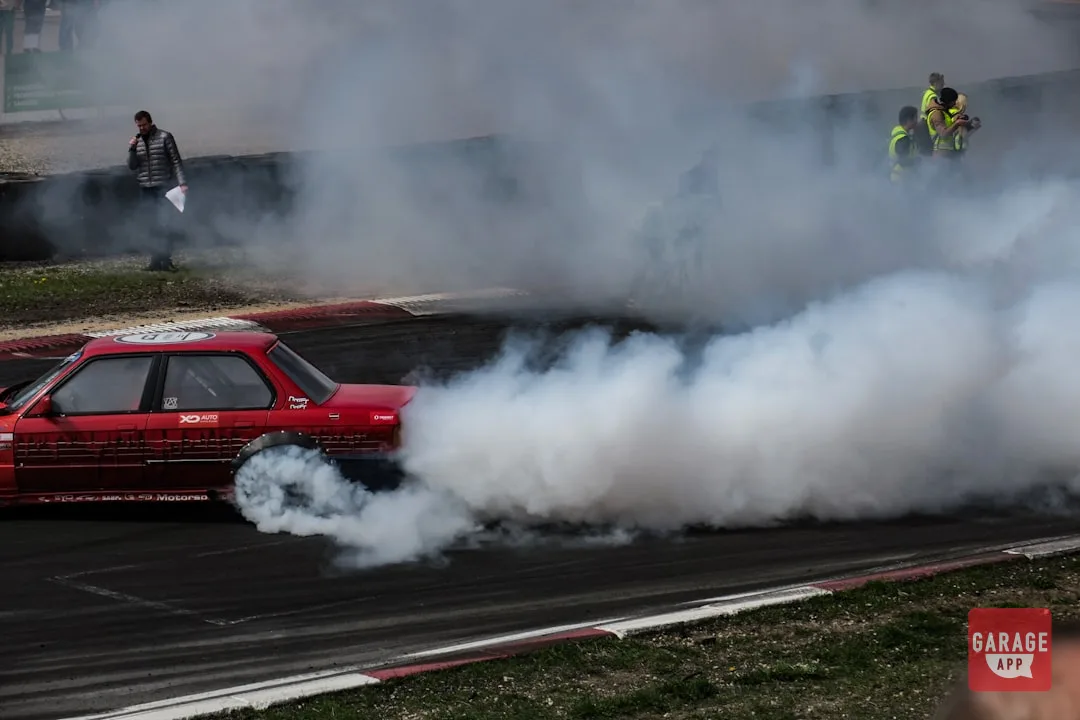
Nothing splits a parking lot faster than a stab of throttle. The cars and coffee burnout debate is the most divisive topic in the culture. Bring up revving at car meets anywhere and two camps form before the coffee cools. One side sees a clutch dump and a wall of tire smoke as harmless fun. The other sees the exact moment a great meet starts dying. Both sides are, in their own way, right, and that is why this argument refuses to go away.
This is not another quick etiquette bullet point. The Cars and Coffee cornerstone guide covers the format and the Cars and Coffee etiquette rundown touches this as one rule among many. Here we go deep on the debate: the psychology, the real consequences, the legal exposure nobody talks about, and where thoughtful enthusiasts actually land.
Why People Do It
Nobody revs to a redline in a crowded lot by accident. A lot of it comes down to clout. A loud exit is content, and a smoky burnout is guaranteed engagement, so the meet becomes a backdrop for a clip. But it isn't all calculated. A naturally aspirated V8 bouncing off the limiter feels incredible in the moment, and the psychology of car culture explains a lot of that sensory pull. The catch is that the thrill is personal while the consequences are shared. And then there's the crowd itself. One person revs, a few cheer, the cheering feeds the next guy, and a quiet lot flips into a smoke show before anyone really decided to let it.
Want to know a meet's energy before you drive across town? Check the attendee list and recent event notes on GarageApp. A heavy show-off crowd reads very differently from a quiet coffee-and-conversation gathering.
Why It's So Controversial
The core issue is that car meets almost never own the land they use. A shopping center, dealership, or office park tolerates a few hundred cars, and that toleration is fragile. Owners host because it brings goodwill and costs them nothing. The moment it starts costing them, complaints, cleanup, liability, angry tenants, the math flips. A single burnout on fresh sealcoat, or a video that goes viral for the wrong reasons, can end the arrangement overnight.
It takes years to build a meet and one bad video to lose the lot.
A sentiment repeated at nearly every large meet in the country
Noise makes it worse. Cars and Coffee happens early, exactly when sound carries and people are still asleep. A few residents dialing the non-emergency line and police start showing up as routine. Once a location is on the radar, it rarely comes off. The original Irvine Cars and Coffee is the reference point everyone reaches for: it grew into a legend, then unraveled, with reckless exits a major contributor to its decline. Every organizer since has been trying to avoid repeating it.
The Regulars' Perspective
Here is what surprises newcomers: the loudest voices against burnouts are usually the longtime regulars.
- They have the most to lose. Regulars are the ones who drive to a locked, empty lot next month when the venue pulls the plug.
- They remember the good years. They have watched a meet build slowly into something special and know how fast it can evaporate.
- They know the organizers. When a meet gets shut down, it is often a friend of theirs who eats the blame and has to go beg for a new location.
For a regular, that anonymous kid dumping the clutch is not a spectacle, he is a threat to what they built. It is the same protective instinct you see in any strong enthusiast community built from scratch.
The Legal and Liability Angle
This is the part almost nobody thinks through in the moment. In many states a burnout in a parking lot is a specific offense, often called exhibition of speed or reckless display. You do not have to be racing; spinning the tires to entertain a crowd can be enough, and penalties range from fines to license points to impound. Most municipalities also have decibel limits and time-of-day noise ordinances, and a stationary rev at 7 a.m. can be enough for a citation on its own.
Then there is the quiet one. If someone gets hurt during a burnout on private property, the landowner can be dragged into the liability conversation. A single injury claim is worth more to a property manager than a hundred Saturdays of goodwill, which is why owners pull the plug the instant they smell risk. They are not being killjoys, they are protecting themselves from a lawsuit.
Before you attend somewhere new, read the posted rules an organizer shares on their GarageApp event page. If exhibition of speed is a criminal issue in that county, a good organizer will say so directly, and that is your cue to keep it clean.
How Organizers Are Handling It
The people running meets in 2026 are not naive about this. Anyone learning how to organize a car meet now builds guardrails in from day one.
- Clearly posted rules. A visible statement that revving and burnouts mean an instant ban.
- Designated slow-exit routes. Marshals at the exit, a single controlled lane, sometimes a no-throttle zone until you clear the property.
- Banning repeat offenders. If someone builds a reputation for smoke shows, they get quietly uninvited before they cost everyone the lot.
- Direct communication. Setting expectations before the event rather than scrambling during it.
That last point is where tools matter. When an organizer can follow a local community and message attendees directly through GarageApp, the standards are set before anyone rolls in. A first-timer who reads the vibe and the rules ahead of time is far less likely to become the person in the viral clip.
Where Most Enthusiasts Actually Land
Strip away the shouting and the consensus is more nuanced than either camp admits. Almost nobody serious thinks a great exhaust note is a bad thing. A cammed LS idling, a flat-six clearing its throat, a V12 at a tasteful cold start, those are part of why we show up. The objection was never to sound. It is to context.
- Track and autocross: Send it. That is what the venue exists for. Your first track day is the right place for noise.
- Sanctioned show with a burnout area: Fine, that is the entertainment.
- Borrowed lot, early morning, near homes: Keep it civil. The lot is not yours to gamble with.
The debate never dies because it sits on a permanent tension. The machines are built to be exciting, and the venues are built to be quiet. That gap will exist as long as we keep meeting in parking lots at dawn. The best any of us can do is know where we are, read what a specific meet expects, and act accordingly. Get that right and the loud stuff has plenty of proper places to live.