

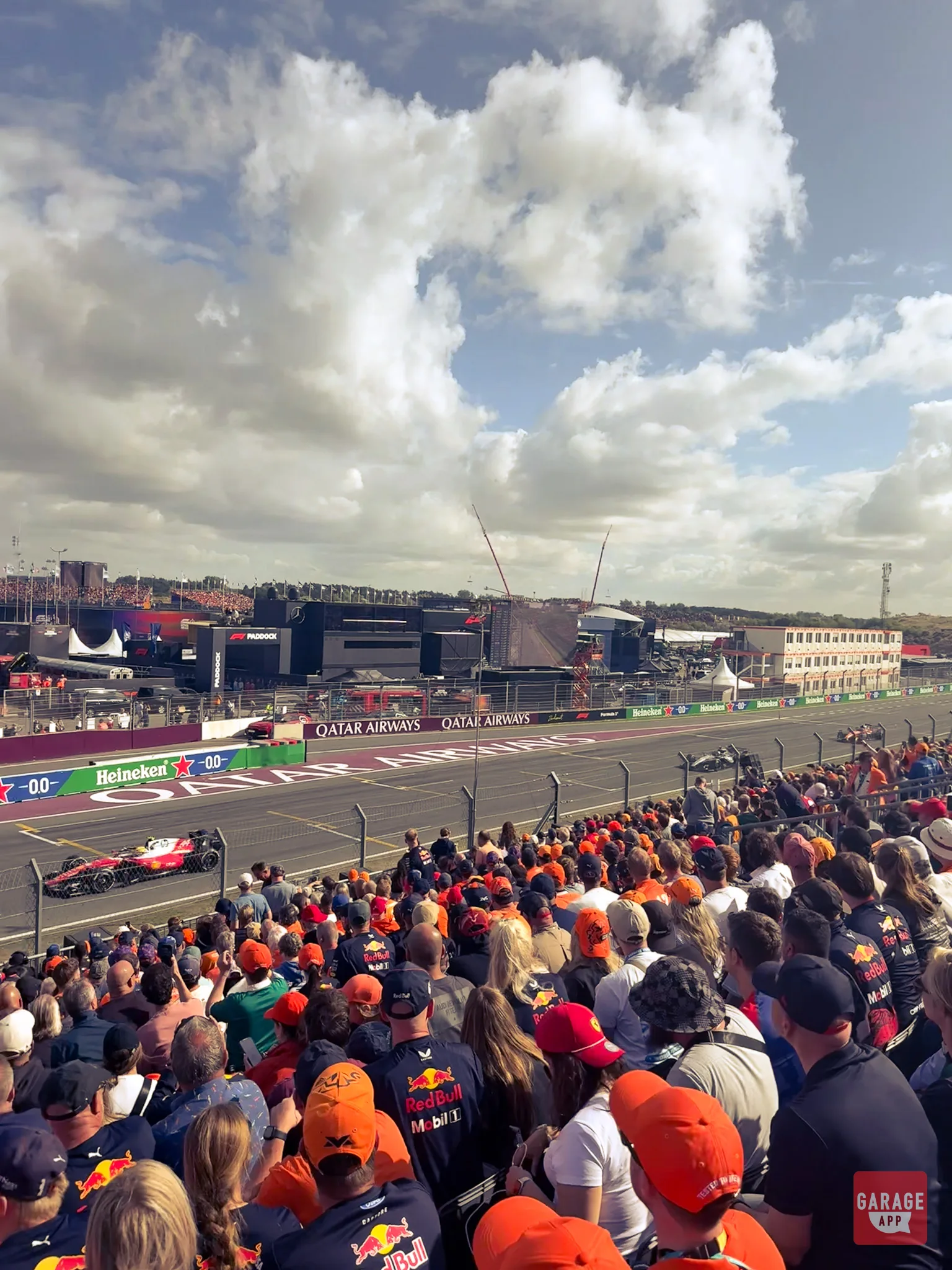
Circuit Zandvoort closed out its Formula 1 run in 2026 with a weekend built entirely around the send-off. Billed as "The Final Lap," the race marked the circuit's last scheduled appearance on the calendar, and organizers treated it accordingly, topped off by a Drivers' Parade unlike any other, 22 F1 drivers riding in 22 privately owned Spykers instead of the usual flatbed truck.
The 4.259 km road course, cut into the dunes on the Dutch North Sea coast just west of Amsterdam, hosted the Dutch Grand Prix in two separate eras, most recently from 2021 onward. Six editions in, this was the last one.
What Zandvoort Is
The track sits in the village of Zandvoort, a beach town in North Holland. Sand blows onto the asphalt. The dunes form natural banking and natural grandstands, and the elevation change is real rather than landscaped in.
Construction began in the late 1940s using roads laid during the German occupation. The circuit opened in 1948. The Dutch Grand Prix ran as a world championship round from 1952, with gaps, through 1985. Then it fell off the calendar for 35 years. Parts of the original layout were sold off and shortened in the 1990s, which is why the modern circuit is tighter than the one Niki Lauda and James Hunt raced.
If you follow F1 on video, watch onboard laps of Zandvoort rather than TV wides. The banking and the blind crests barely register from a helicopter shot.
Why did Zandvoort Return?
Zandvoort came back in September 2021. The timing was not accidental. Max Verstappen was leading a title fight, and Dutch interest in Formula 1 had gone from niche to national. He won that first race in front of a sold-out crowd, then won again in 2022 and 2023.
The crowd is the part people who went talk about first. Orange everywhere, smoke flares, campsites full days before the cars run, trains and bikes carrying most of the traffic because parking barely exists. Grandstands sold out every year of the modern run.
Drivers rated it highly and complained about it in the same breath. It is narrow. Runoff is minimal. Passing is hard outside of Tarzanbocht. That combination is unusual on a calendar full of wide, permanent, purpose-built venues, and it made Zandvoort feel closer to Suzuka or Interlagos than to anything built in the last 20 years.
Why "The Final Lap"
The 2026 Dutch Grand Prix was billed as The Final Lap because it was the circuit's last scheduled Grand Prix.
Six editions were run after the 2021 return. The 2026 race also carried the circuit's first-ever F1 Sprint, meaning Zandvoort added a format it had never hosted in either of its calendar eras on the way out. Nothing beyond that has been confirmed about a future return.
Circuits leaving the calendar tend to stay busy. Zandvoort still runs DTM, GT racing, historic meetings and track days, and it remains one of the easier European circuits to reach without a car.
The "Final Lap" Spyker Parade
The weekend's Drivers' Parade was one of the highlights of the week: 22 drivers riding in 22 privately owned Spykers, organized by Jasper den Dopper, putting a Dutch marque at the center of the last Dutch Grand Prix. It wasn't Spyker's first brush with Formula 1 either. The brand fielded its own team for a single season back in 2007, a short-lived run that still ties the marque directly into F1 history, and made pairing it with Zandvoort's farewell feel less like a stunt and more like a fitting bookend.
Where It Sits Now
Zandvoort closes with two distinct chapters: a 33-year run through the 20th century and a six-race modern revival built around a home driver winning. The weekend was a closing chapter for the circuit rather than a single result, which is why the parade, the crowd and the Sprint got as much attention as the race. Plenty of enthusiasts logged the trip alongside other bucket-list events like the biggest car shows in America or a run through the Alps, such as a Grimsel Pass road trip. Zandvoort was one of the few that came with an expiry date.