

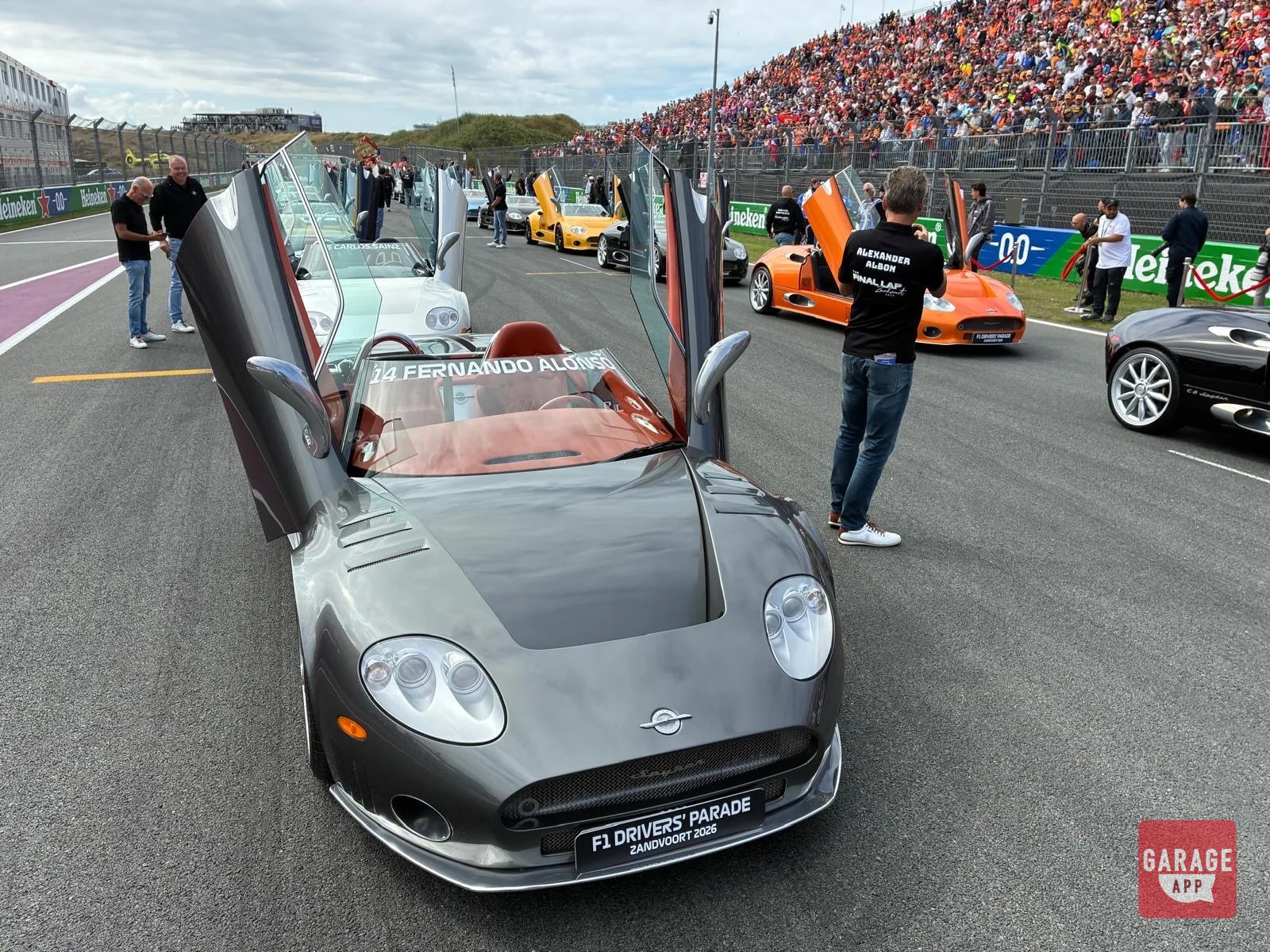
Twenty-two Formula 1 drivers, twenty-two privately owned Spykers, and one last lap around Circuit Zandvoort before the Dutch Grand Prix left the calendar for good.
No shared flatbed truck this year. No borrowed showroom fleet either. Every driver got the open cabin of a hand-built Dutch sports car pulled straight from a private collection, C8 Spyders and one Double12 Spyder, cars that usually live in garages, not on grids.
The Parade: 22 Cars, One Slow Lap of the Dunes
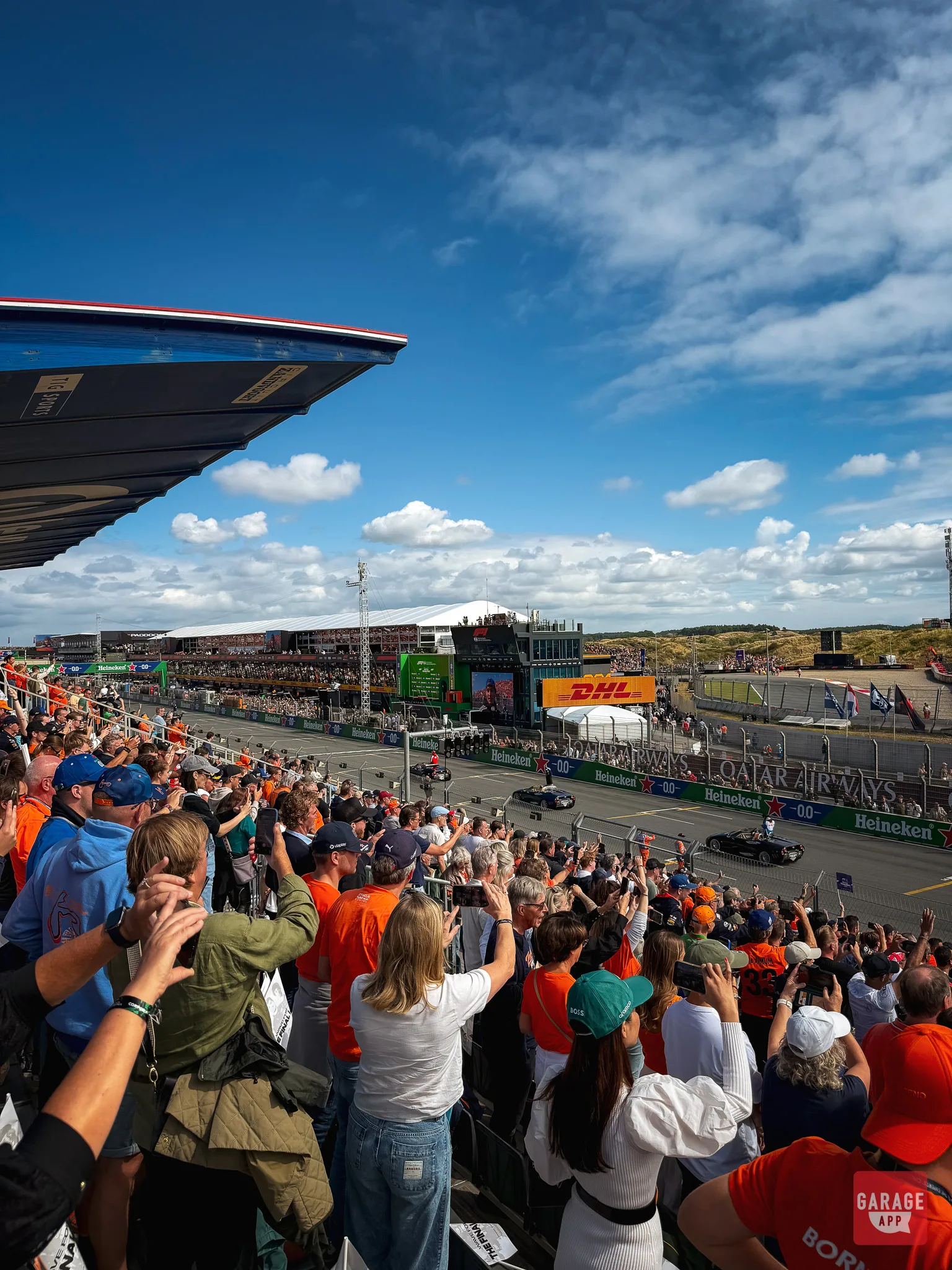
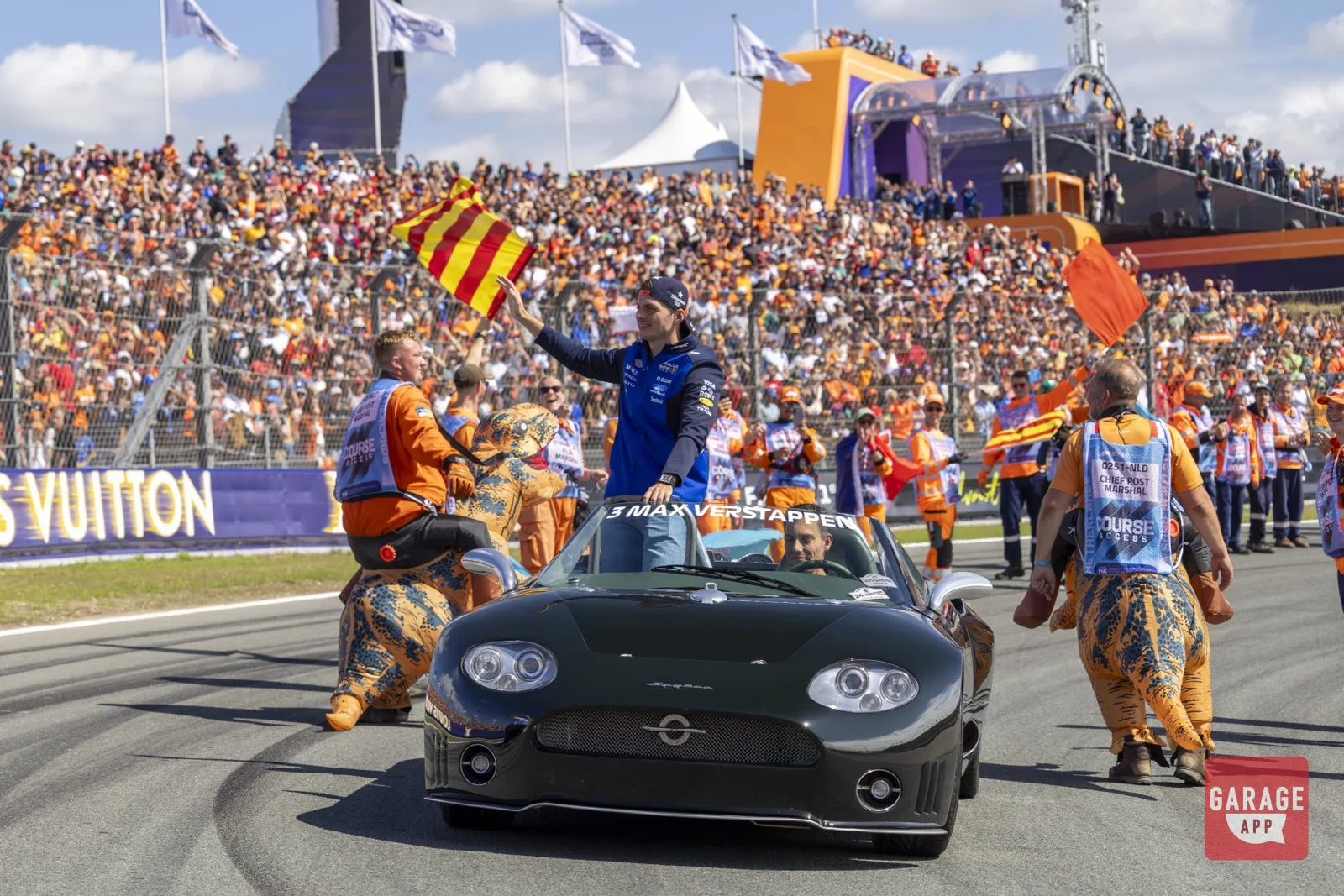
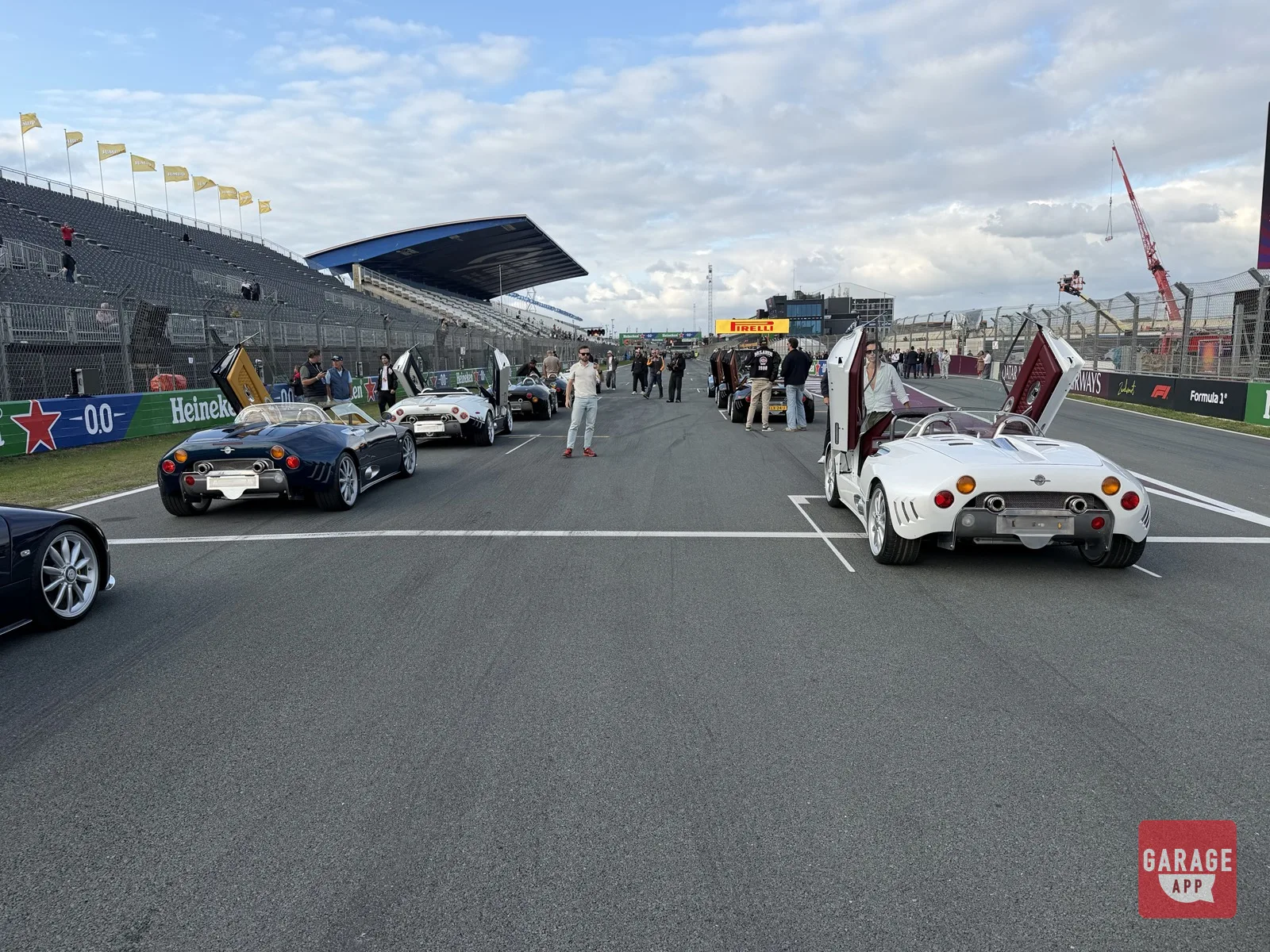
The cars went out on the grid before the drivers did. Aluminum bodywork, windscreens low, cabins open, drivers up on the rear deck the way they always sit for a parade lap. One lap of the 4.259 km circuit at walking pace.
Spyker is a Dutch marque, founded in 1880, originally as a coachbuilder before it moved into cars and aircraft. The motto on the badge reads "Nulla tenaci invia est via," for the tenacious, no road is impassable, and the company has lived up to it the hard way: bankrupt more than once, gone quiet for years at a stretch, then back in the news. Most of what the brand produced came down to the C8, with the C8 Spyder and C8 Laviolette standing out as the two most recognized variants. Every car is hand-built, low volume, and the aviation background shows up everywhere in the details, propeller motifs, exposed mechanical linkages, cabins built more like a cockpit than a dashboard. Spyker also ran a Formula 1 team for one season, in 2007.
That history is what made this parade different from a standard F1 procession. Twenty-two of these cars, most of them privately owned and shipped from all over the world, on a circuit that was about to disappear from the calendar.
| Detail | Parade at Zandvoort |
|---|---|
| Cars | 22 privately owned Spykers, mainly C8 Spyder and Double12 Spyder |
| Drivers | All 22 Formula 1 race drivers |
| Circuit | Circuit Zandvoort, 4.259 km |
| Format | One slow procession lap replacing the shared parade truck |
| Occasion | Final scheduled Dutch Grand Prix, August 2026 |
If you ever get close to a C8, look at the pedals and the gear linkage before the badge. The exposed aluminum shift mechanism and the drilled pedal set are what separate a Spyker from every other small-batch supercar of the era.
Special Thanks: Jasper den Dopper
Somebody had to make roughly two hundred phone calls. Jasper den Dopper organized the lineup. He is the reason twenty-two cars turned up from around the world.
Den Dopper works under the name SpykerEnthusiast. Dutch outlets including Quote, AutoWeek and Racing.nl have covered the operation. He built it around a marque most independent shops will not touch. Parts that were never stocked in depth. Service with no factory network behind it. Full restorations. Own a Spyker anywhere in the world, break something, and the trail leads back to him.
Getting collectors from Canada, South Africa, United States and many others from all over Europe to commit their cars to a one-lap procession thousands of miles from home is not only a logistics problem. It is a trust problem. Den Dopper spent years earning it one repair, one shipment, one late phone call at a time. Paperwork carries the rest, which is why provenance and documentation matters as much to a marque like Spyker as any mechanical work.
So, plainly: thank you, Jasper. Everyone standing on the grid that morning knew whose network they were standing in.
Among the Owners
Race day arrived with a different kind of energy in the air. Another early start, beginning with breakfast at our hotel in Leiden, about a 40-minute drive from Zandvoort. Once we got to the track, we made our way to the corporate lounge, sponsored by Volodymyr Nosov, who recently invested in Spyker Cars and is helping revive the brand. He drove the parade himself, paired with George Russell.
Before long, the drivers were called out of the Spyker lounge to where the cars were staged, getting ready for the parade. There was a trunk reveal first, packed with goodies: shoes from Van Lier, shirts, jackets, car covers from DS Covers, placards, and each car freshly detailed by PP Detailing, with leather-finished steel handles from Cools Bekleding and steel handlebars in the passenger well built by The Steel Company. Then the call came to load up, and the drivers drove their cars down to the track. Once there, they waited as the F1 drivers walked out one by one, each pairing off with a car. After brief introductions on the tarmac, everyone climbed in and the parade began.
The crowd roared. People waved from every corner of the grandstands. It was hard not to think back on everything that led to this moment: the sleepless nights, the hours spent detailing each car until it was spotless, and a fuel pump issue that turned up just the night before the race. Aside from a fuel gauge issue during the parade itself, everything came together. Looking past that one hiccup, it was a perfect Sunday. Once the lap was finished, the drivers brought the cars back off the track, past an endless line of people trying to get one last photo, and parked them back where they'd started. The attention Spyker received that weekend was hard to overstate, and it left little doubt in our minds that the brand is coming back.
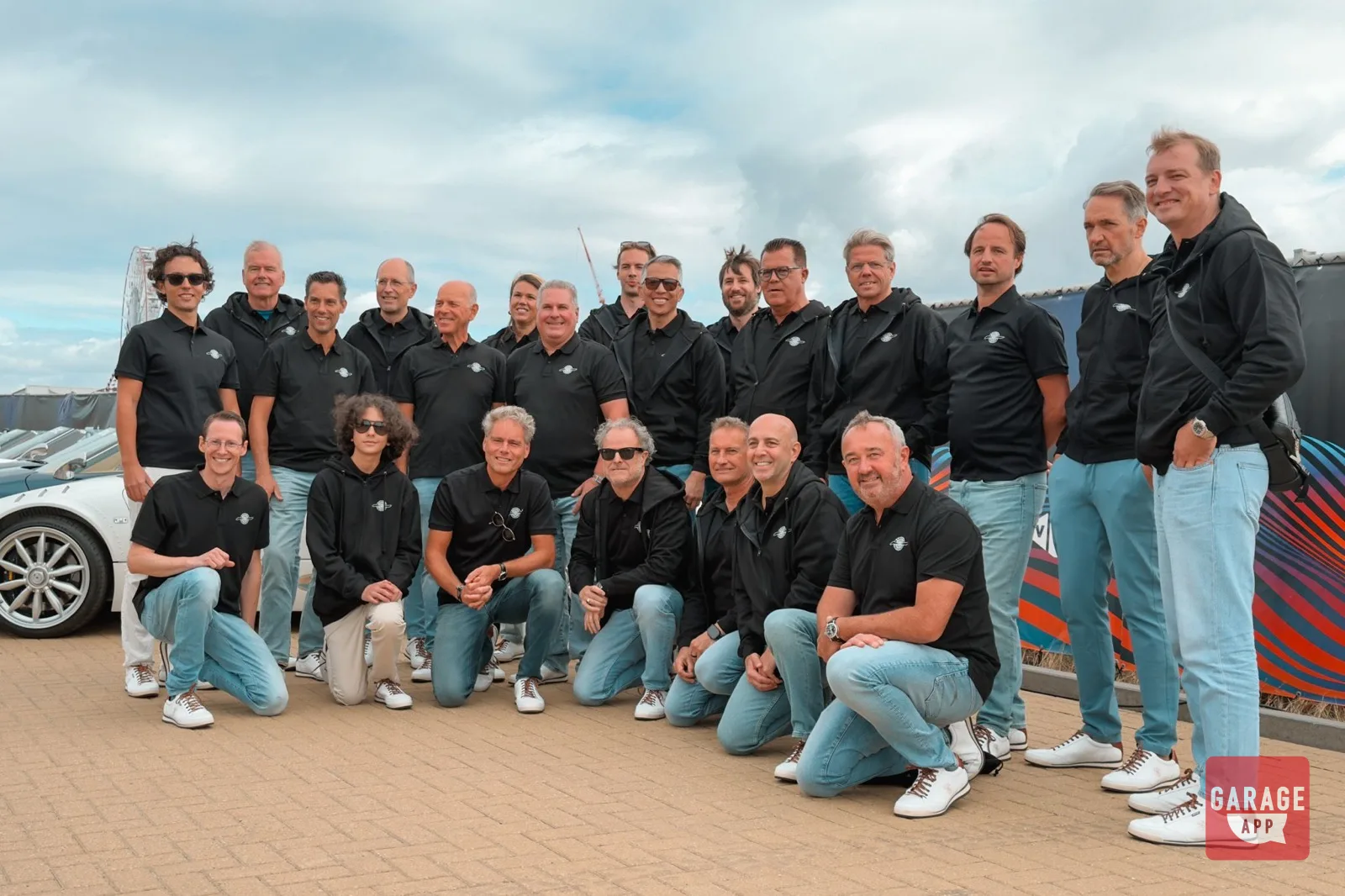
Getting to meet so many other Spyker owners and their families this weekend was a memorable experience. Spending time hanging out with them, watching the race, and having good conversations all around more then fulfilled the weekend on its own. You could tell the crowd loved the Spyker parade too, you could really feel the energy, and it was great to see the brand recognition Spyker was receiving. Special thanks to Martijn for organizing the whole weekend, seriously appreciate everything that went into pulling it off. And getting to drive on the track Saturday night before race day, all lined up together, was just an amazing experience. Not something you forget.
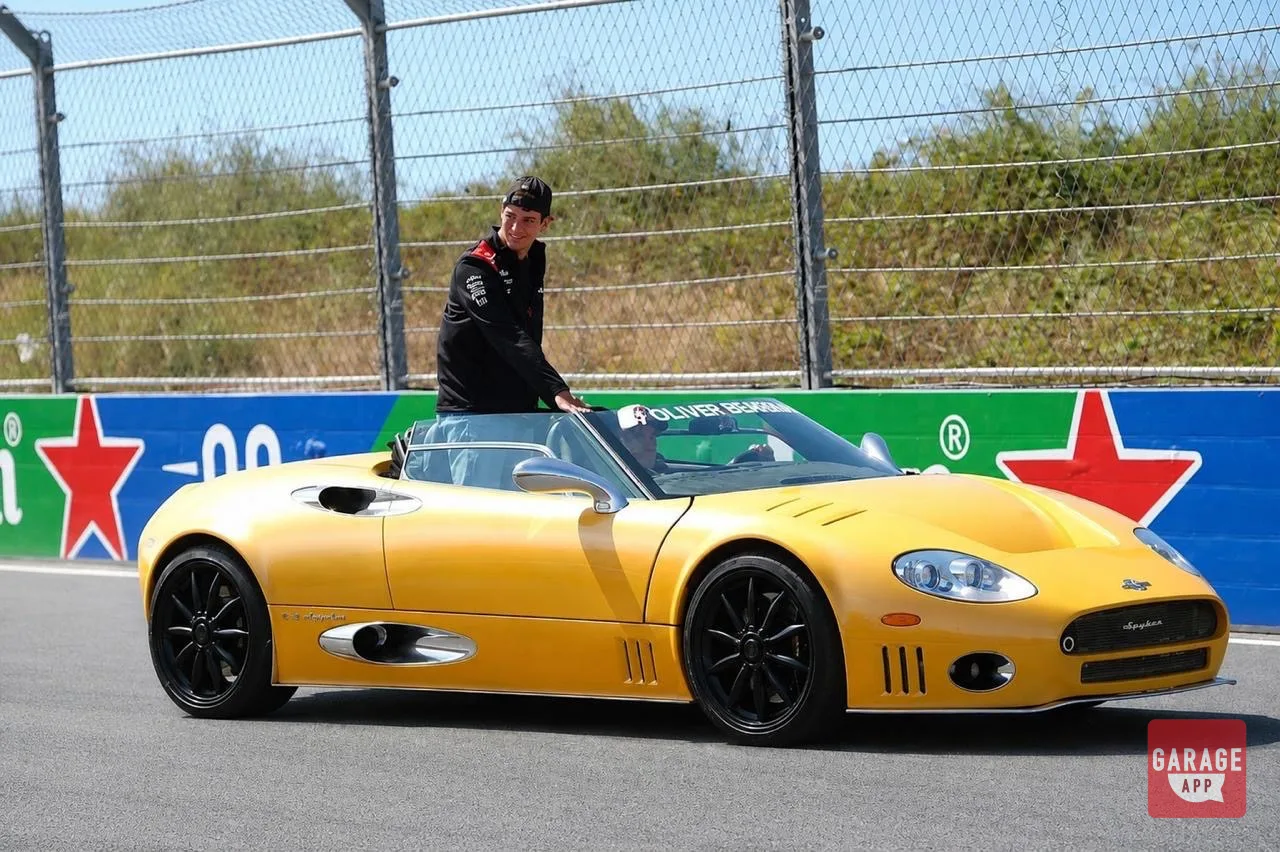
GarageApp at Zandvoort: Riding with Oliver Bearman
We were in the lineup as a guest, with a spot in the convoy and instructions to keep pace with the car ahead. Our car was a yellow C8 Spyder, as our Spyker #206 is a Laviolette, which was not suitable for the parade. Inside it looks like an aircraft designer got hold of a road car: quilted leather, machined toggle switches, that exposed shift linkage running down the center of the cabin, gauges laid out to aviation logic rather than automotive convention.
For the Spyker Parade at the Zandvoort circuit, we had the pleasure of hosting Oliver Bearman as our F1 driver. When he arrived at our car, we shook hands, and I showed him to his location for the ride. After signing a few goodies for us, Oliver asked several questions about Spyker. He mentioned he'd never seen one on the road before, and wanted to know how much horsepower the car has and what engine it runs. During the ride, he shared that he'd lived in the Netherlands for a year, which led me to ask about his Dutch. We also talked about his family, and about Haas Racing, the team he drives for, based in Charlotte, NC, not far from where we live.
At the end of the lap, we shook hands again, and I thanked him for joining us. Oliver came across as friendly and genuine throughout, and I couldn't have asked for a better driver for our Spyker parade lap.
Riding shotgun in a car like this is the moment to note the odometer, the chassis number and who was sitting in it. Ten seconds of typing, worth more later than the photos.
A Send-Off, Not a Result
Zandvoort built the whole weekend as a farewell. First Formula 1 Sprint the circuit ever ran, closing out six editions since the race came back in 2021. Nobody will remember the parade for the driving. One lap, walking pace, no overtakes. Twenty-two owners handed over irreplaceable cars for a procession, and a Dutch marque got the last word on a Dutch circuit. Plenty of the biggest car shows and motorsport events run on entry counts and attendance figures. This one ran on hundreds of phone calls.