

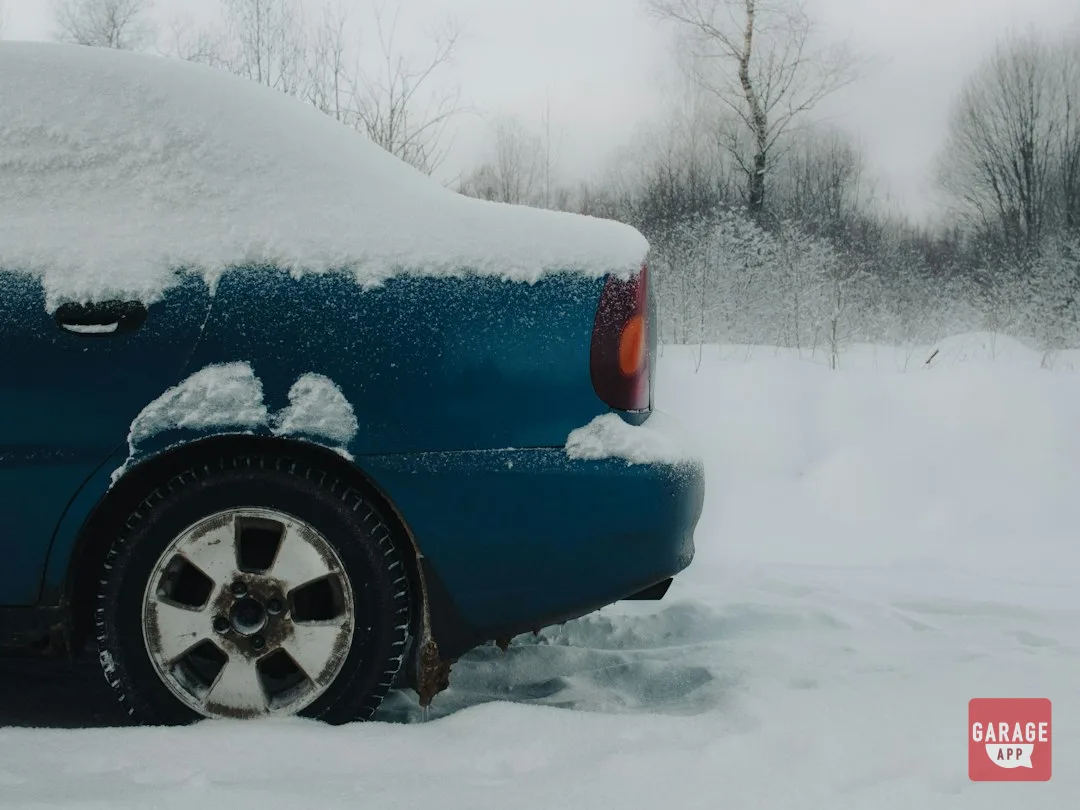
If you drive a sports car where temperatures sit below about 45 degrees Fahrenheit, the answer to winter tires for sports cars is simple: fit a dedicated performance winter tire with the Three-Peak Mountain Snowflake symbol. Summer compounds harden in the cold and lose grip even on dry roads. Putting the car away instead? Start with our storage and protection guide.
This post is for the rest of us, the people who refuse to let a perfectly good rear-drive car sit under a cover until April. I have daily-driven one through real winters, and the tires matter more than any other decision you'll make.
Why Summer Tires in Cold Weather Don't Mix
Max-performance summer tires use rubber compounds designed to stay soft and sticky at warm temperatures. As the air cools, that compound stiffens. A stiff tire can't conform to the tiny texture of the pavement, so grip drops off. That's the whole problem, and it happens on dry roads, not just snowy ones.
Tire retailers commonly cite about 45 degrees Fahrenheit as the point where summer tires start losing meaningful grip. Treat that as a rule of thumb, not physics carved in stone. Your tire manufacturer's published guidance and your owner's manual are the real authority, and some brands also warn about tread cracking from use or handling in deep cold.
Whether it's an exotic or one of the affordable used sports cars that make great daily drivers, the stock rubber was probably picked for a sunny spec sheet, not a February commute.
Tire Categories Explained, Plus the 3PMSF Symbol
Four categories get lumped together as "good enough for winter." They are not the same.
| Category | Best At | Trade-Off | Typical Marking |
|---|---|---|---|
| Performance winter | Cold dry and wet pavement, light snow, sharp steering | Less deep-snow and ice grip than studless | 3PMSF |
| Studless ice and snow | Ice, packed snow, deep snow | Softer, vaguer handling, lower speed ratings | 3PMSF, sometimes Ice Grip |
| All-weather | Year-round use in moderate climates | Compromise in both summer and winter | 3PMSF |
| All-season | Mild winters, three-season driving | Not designed for real winter conditions | M+S only |
The 3PMSF symbol (Three-Peak Mountain Snowflake) means the tire beat a standard reference tire in a standardized snow traction test by 18%. The old M+S stamp, by contrast, is based on tread geometry and doesn't require any snow performance test at all. That's why plenty of "all-season" performance tires are poor in real snow.
There's also a newer Ice Grip symbol, which indicates a tire passed a standardized ice braking test. It shows up mostly on dedicated ice and snow tires, and few performance winters carry it.
Performance winter tires are the sports car answer. They give up some deep-snow and glare-ice grip in exchange for steering precision, higher speed ratings, and the low-profile sizes your car actually uses.
Who Should Run Which
Here's my honest take. If you live on the fringe of the snowbelt, where roads get plowed quickly and most winter days are cold and dry, run performance winters. That covers a huge chunk of the country, and it keeps the car feeling like itself.
If you face regular heavy snow, unplowed side streets, or frequent ice, go studless and accept the softer feel. Even an all-wheel-drive car like a 992 Turbo S only accelerates better in snow. It doesn't stop or turn any better on the wrong tires.
Studded tires are restricted or seasonally limited in some states. Check your state DOT rules before buying, especially if you cross state lines often.
Example Performance Winter Tires
These are examples of the category, listed in no particular order. They are not rankings.
- Michelin Pilot Alpin
- Pirelli P Zero Winter and Winter Sottozero
- Bridgestone Blizzak performance lines
- Dunlop Winter Sport
Many of these come in SUV-specific versions too, handy if a performance crossover like the Macan S shares your driveway. Before you buy, read current independent testing from Tire Rack and Consumer Reports. Tire generations change often, and last year's winner may have been replaced.
The Smart Setup: A Winter Wheel and Tire Package
Mounting winter tires on your summer wheels twice a year is a hassle and risks bead damage. A dedicated winter wheel and tire package is the way to go. Owners often drop an inch in wheel diameter, which means a taller sidewall, more pothole protection, and usually cheaper tires.
The catch is brake clearance. Big calipers, like the ones on an M8 Competition, may not clear a smaller wheel. Confirm fitment with your manufacturer, owner's manual, or a reputable tire retailer before ordering.
- TPMS: Buy a second set of sensors for the winter wheels so your warning light stays off and the system works. Some cars need a relearn after each swap.
- Staggered fitments: Some owners run a square winter setup if the manufacturer approves it. Check before you assume.
- Speed ratings: Winter tires may carry a lower rating than your car's top speed. Know the limit.
- Storing summer tires: Clean them, then keep them somewhere cool, dry, and dark, away from furnaces and electric motors that produce ozone.
Mark each tire with its position (LF, RF, LR, RR) before removal. Log the swap date and tread depth alongside your other service records, as we suggest in our maintenance cadence guide.
Rear-Wheel Drive Winter Driving
Good tires do most of the work, but rear-wheel drive winter driving still rewards a lighter touch. Leave traction and stability control on. If your car has a wet or snow mode, use it. Rear-engine cars, whether you're in the air-cooled or water-cooled 911 camp, have their own rhythm on slick roads, so give yourself time to learn it.
- Smooth inputs: squeeze the throttle, brake early, and steer gently.
- Double your following distance. Stopping distances grow on cold pavement, even with winter rubber.
- Practice in an empty, legal space after a snowfall to learn how the car behaves at the limit.
Then there's salt. Rinse the underbody regularly, especially after storms, and keep a coat of protection on the paint. Our detailing basics cover the products that hold up in winter.
When to Swap Back
Swap back to summer tires once temperatures stay consistently above about 45 degrees, not after the first warm weekend. A March heat wave followed by a frosty week is classic spring behavior. Running winter tires deep into warm weather wears them fast and softens handling, so don't overstay either. Then go reward yourself with one of the best mountain driving routes once the passes open.
Stay in the Scene Through Winter
Winter doesn't have to mean disappearing. On GarageApp, follow local communities and check the location-aware feed for cold-weather meets near you. Message nearby owners of the same make and model for fitment advice before buying wheels, the way people meet Porsche owners nearby. Marque-focused groups are often the best source, a point we explore in single-marque vs. multi-marque clubs.
Note your seasonal tire swap in your GarageApp Virtual Garage. If you haven't set one up, here's how to build your digital garage.