

Buy original if the car is rare, historically significant, or headed for judged shows, because modifications can erase its premium. Buy a well-built restomod if the model is common and you want a driver, not an investment, since good ones can outsell stock examples. That is the short answer to restomod vs original. The long answer is all about execution.
Both camps have a point, and both camps have bought bad cars. A tired numbers-matching coupe with an empty history file is not automatically a better buy than a sorted restomod. A hacked-together engine swap with a rat's nest of wiring under the dash is not a better buy than anything. Below is how to weigh value, cost, drivability, and insurance before you sign. If you're newer to the hobby, our classic and collector owner's guide covers the bigger picture.
| Factor | Original | Restored-Correct | Restomod |
|---|---|---|---|
| Value drivers | Rarity, originality, matching numbers, provenance | Authenticity of parts and finishes, quality of work | Builder reputation, engineering, documentation |
| Drivability | Period-correct, demands patience in traffic | Same as new in period, which still means period | Closest to a modern car, depending on the build |
| Maintenance | Specialist parts and knowledge, often slow | Similar to original, reproduction parts help | Modern parts are easier, custom integration can be harder |
| Insurance | Agreed value against original comps | Agreed value against restored comps | Agreed value against restomod comps, build docs essential |
| Resale buyer pool | Collectors, judged-show crowd, purists | Collectors and enthusiasts who want correct | Drivers who want classic looks, narrows if the taste is niche |
Definitions: Original, Restored, and Restomod
These terms get thrown around loosely in listings, so pin them down before you shop.
- Original or numbers-matching: the car still has its factory drivetrain, and the stamped codes on the engine, transmission, and sometimes the rear axle line up with the VIN and build records. A true survivor goes further, with original paint and interior that have never been redone.
- Restored to factory spec: the car has been taken apart and rebuilt to the way it left the factory, with correct finishes, fasteners, and parts. Judges at marque shows score these on authenticity, not on how nice they drive.
- Restomod: classic body, modern mechanicals. Think electronic fuel injection, four-wheel disc brakes, updated suspension geometry, A/C that actually cools, a modern overdrive gearbox, and often a modern crate engine.
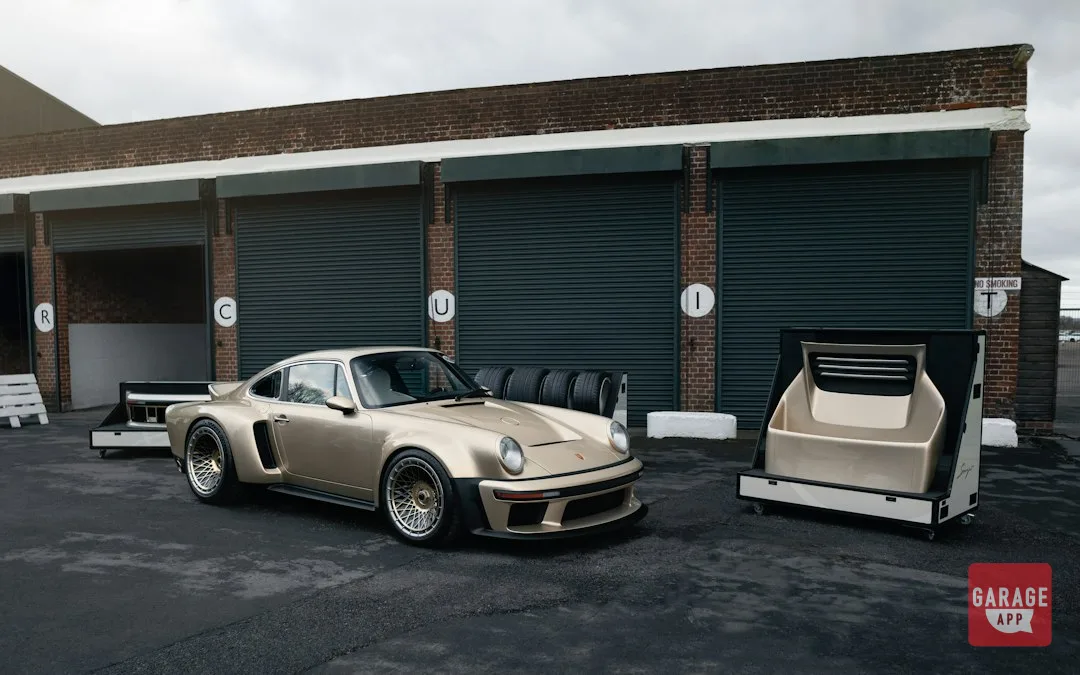
The gray zones matter too. A car with a correct-type but non-original engine is not numbers-matching, and a clone or tribute is a different animal altogether. Our breakdown of numbers-matching vs. clone vs. tribute explains how sellers blur those lines. At the far end of the restomod world sits the Singer-reimagined Porsche 911, which proved a restomod can be a collectible in its own right.
Value: Does a Restomod Increase Value?
It depends almost entirely on what the car was before the build. Rare, historically significant models command the most in original form. Turning a matching-numbers Hemi 'Cuda or an early long-hood 911 S into a restomod doesn't add value, it subtracts the very thing collectors pay for. Once the original block is gone, no amount of carbon fiber brings that premium back.
Common classics flip the math. First-generation Mustang coupes, square-body and C10 pickups, and early Broncos were built in big numbers, so originality alone doesn't carry a huge premium. A well-executed restomod of one of these often brings more than a stock example, because the buyer pool of people who want to actually drive a classic is large. Auction analysts and valuation firms have noted this split between common and rare models in their market commentary. For more on interpreting sale results, see reading the collector market.
Poor or irreversible work shrinks the pool fast. Cut floors, tubbed rear wheel wells, a wild paint color, or a one-off interior narrows who will want the car later. Build quality and documentation decide restomod value. A named builder, engineering records, and a thick receipt file sell. A vague "new everything" listing doesn't. None of this is investment advice, and if you're torn about why you're buying, it helps to decide early whether this is a driver or an investment.
Cost: Restomod vs. Restoration
Plenty of buyers assume a restomod is the cheap route because you're not chasing date-coded parts. It usually isn't. A quality restomod can cost more than a factory restoration, because you're paying for all the same bodywork and paint plus engineering. Fitting a modern engine means new mounts, a new wiring harness, fuel system changes, cooling upgrades, and driveline angles that someone has to get right. A/C has to be packaged into a dash that was never designed for it.
Factory restorations have their own cost traps, mostly in sourcing correct parts for rare cars. Either way, professional builds rarely return what they cost, which is the strongest argument for buying a finished car instead of commissioning one. Our guide to what it costs to restore a classic car breaks down where the money goes.
Buying finished is almost always cheaper than building. Let the first owner absorb the depreciation on labor, then pay a specialist to inspect what you're getting.
Driving and Safety in Modern Traffic
This is where restomods earn their keep. Drum brakes fade on long downhill runs and don't love panic stops behind a modern SUV. Original cooling systems can struggle in summer stop-and-go traffic. Many classics came with lap belts or no belts at all, and early headlights are dim by today's standards. A thoughtful restomod addresses most of that, and you'll actually want to drive it on a Tuesday.
Be honest about the limits, though. A restomod is still a classic chassis with no crumple zones or airbags in the modern sense. More power through an unbraced 1960s unibody is not automatically safer. An original car driven sensibly and kept on a solid maintenance cadence for low-mile classics can be a perfectly good weekend driver.
Reversible Upgrades That Keep Your Options Open
If you want an original car that drives a little better without killing its value, stick to changes that bolt on and bolt off.
- Front disc brake conversions that use factory mounting points rather than welding.
- Electronic ignition hidden inside the stock distributor.
- Upgraded radiator and electric fan that fit the original core support.
- Modern radial tires in period-appropriate sizes.
- Retro-look radios with Bluetooth that fit the factory dash opening.
- Three-point belts where the car has factory anchor provisions (confirm this for your model).
Keep every original part you remove. Bag it, label it, photograph it, and store it with the car's records. A future buyer who wants to return the car to stock will pay for that box.
Restomod Insurance and Insuring an Original
For either type, you want an agreed value policy, where you and the insurer settle on the car's worth up front, rather than actual cash value, which leaves the number to an adjuster after a loss. Collector insurers generally offer agreed value, but read the usage and storage conditions carefully.
Restomod insurance is not inherently hard to get, but it lives on documentation. Disclose every modification, and back it with receipts, a parts list, builder invoices, and photos of the build in progress. Value a restomod against restomod comps and an original against original comps. Pricing a resto-modded Mustang against a concours stock car, or the reverse, leaves you under-covered or overpaying. More on that in our guide to insurance and storage for collector vehicles.
Questions to Ask Before Buying Either
- Who built or restored it? A known shop with a reputation in that marque is worth real money.
- What records exist? Receipts, build sheets, and photos matter, and our guide to provenance and documentation covers what proves a car's story.
- Can the numbers be verified? For originals, have a marque specialist confirm stampings and date codes.
- Who did the wiring? On restomods this is the question that matters most. Ask about the harness, the fuse panel, and whether there are diagrams.
- Are the original parts included? Their presence keeps a restomod's options open.
- What's the title history? Check for branded titles with our clean vs. salvage vs. rebuilt title guide.
- How was the engineering validated? Ask about brake bias, cooling tests, and alignment specs on modified cars.
Pay for a pre-purchase inspection from someone who knows that specific model, not a general mechanic. On a restomod, ask them to spend time under the dash.
Where GarageApp Fits
The best intel on a specific car usually comes from people who own the same model. On GarageApp you can join marque owner groups and message owners of the same model directly, which is handy when you want to know whether a builder's reputation holds up or what a correct carburetor tag looks like. If you're deciding between club styles, our piece on single-marque vs. multi-marque clubs is worth a read.
Once you buy, the Virtual Garage gives you a place to keep build records and photos together, which pays off at insurance renewal and resale. Here's how to build your digital car garage, and if GarageApp is new to you, start with what GarageApp is.