

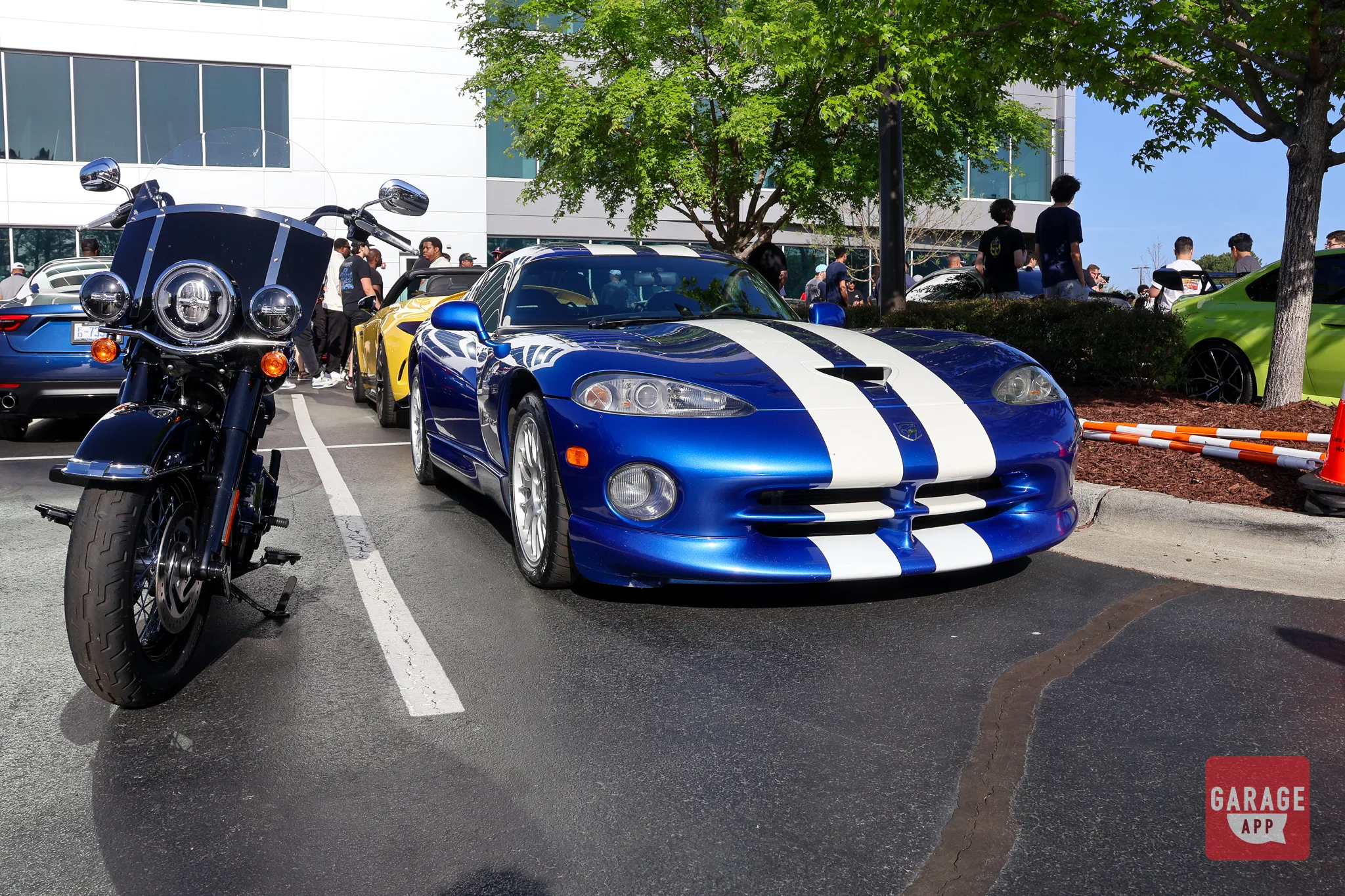
Future classic cars and collectible motorcycles tend to share a manual gearbox, a signature engine, limited production, end-of-an-era timing, and clean original condition. The strongest car candidate here is the first-gen Audi R8 V8 with the gated manual. The strongest motorcycle pick is the Honda RC51. Neither is a guarantee.
Most cars and bikes lose money from the day they leave the showroom, and almost all of them keep losing it. A small group does something different. They bottom out, hold steady for a few years, and then start climbing as clean, well documented examples disappear and the people who wanted them at 17 finally have the money. Spotting future classic cars before that climb is part market research and analyzing auctions, and part honest guesswork.
What follows are 10 candidates, five cars and five motorcycles, picked because they fit the pattern. They are not predictions. This is not financial advice, and values can fall as easily as they rise. Buy one because you want to drive or ride it, and treat any appreciation as a bonus. If you're new to the hobby, our owner's guide to classic and collector vehicles covers the basics first.
What Makes a Future Classic
There's no formula, but the vehicles that end up as cars that go up in value usually check most of these boxes. We go deeper on this in what makes a car a collector vehicle, and the bike side is covered in what actually makes a car or motorcycle a classic.
- A manual gearbox. Automakers are dropping the third pedal fast. The manual version of a car almost always outlives the automatic in collector interest.
- A naturally aspirated or signature engine. High-revving V8s, screaming fours, and V-twins with racing pedigree carry emotional weight that turbo fours rarely match.
- Low production. Rarity matters, but only when paired with desirability. A rare car nobody wants is just obscure.
- End-of-an-era status. The last manual, the last V8, the last gas version of a nameplate. Final chapters get remembered.
- Unmodified condition. Stock examples with original parts command the premium. Modified ones usually sell at a discount.
- A strong owner community. Active clubs, forums, and parts support keep a model alive and keep buyers interested.
| Vehicle | Years | Type | Why It Matters | Current Price Range |
|---|---|---|---|---|
| Audi R8 V8 manual | 2008-2015 (US) | Car | Gated manual, mid-engine V8 | $70k-$110k |
| BMW M3 E90/E92 | 2008-2013 | Car | Only V8 M3, high-revving S65 | $25k-$55k |
| Honda S2000 AP2 | 2004-2009 | Car | Last of the line, CR variant | $25k-$70k+ |
| Cadillac CTS-V Wagon | 2011-2014 | Car | Supercharged V8, rare manual | $55k-$100k+ |
| Camaro ZL1 1LE | 2018-2024 | Car | Final gas Camaro, manual only | $55k-$85k |
| Honda RC51 | 2000-2006 | Motorcycle | WSBK and AMA champion V-twin | $7k-$15k |
| Kawasaki ZRX1200R | 2001-2005 (US) | Motorcycle | Eddie Lawson tribute muscle bike | $5k-$9k |
| Ducati Monster S4R/S4RS | 2003-2008 | Motorcycle | Superbike engine in a Monster | $6k-$12k |
| Honda VFR800 | 1998-2001 | Motorcycle | Gear-driven cam V4, pre-VTEC | $3k-$6k |
| Yamaha YZF-R6 | 1999-2002 | Motorcycle | First-gen carbureted R6 | $3k-$7k |
1. Audi R8 (First Generation, V8 Manual)
The first R8 was Audi proving it could build a real supercar, and it shared bones with the Lamborghini Gallardo. The 4.2-liter V8 made 420 hp and revved past 8,000 rpm. The six-speed manual with its open metal gate is the reason this car is on the list. Nobody builds a gated shifter anymore, and the second-gen R8 dropped the manual entirely.
Best years and trims: The V8 manual coupe from 2008 to 2015 in the US is the sweet spot. The V10 manual (2010 onward in the US) is rarer and pricier. Skip the single-clutch R tronic unless you're happy paying less now and less later. Bring a Trailer results for clean manual cars have trended upward [VERIFY: confirm current BaT sales trend for first-gen R8 V8 manuals].
- Magnetic ride dampers, which leak and cost real money to replace.
- Clutch life and any signs of hard launches.
- Carbon side blades and front-end stone chips.
- Full dealer or specialist service records.
Honest risk: Running costs are exotic-car level. One bad damper bill can wipe out years of gains on paper.
2. BMW M3 (E90/E92)
This is the only M3 ever built with a V8. The S65 is a 4.0-liter that makes 414 hp and spins to 8,400 rpm, and it sounds like nothing else BMW has sold since. Everything after it went turbocharged. That alone makes the E9x one of the clearer answers to what cars will be collectible in the future, especially next to the E46 that has already climbed.
Best years and trims: Six-speed manual coupes (E92) are the most wanted. The Competition Package from 2011 onward added lower suspension and revised stability control. The E90 sedan, sold only through 2011, is rarer and still undervalued. The US Lime Rock Park Edition is the limited-run version to watch.
- Rod bearing replacement records, which are close to mandatory at this point.
- Throttle actuator function.
- Oil consumption and any idle hunting.
- Original wheels and no aggressive tune.
Honest risk: Rod bearing failure can destroy the engine, and plenty of cars haven't had the job done. Budget for it if the paperwork doesn't exist.
Rod bearing work on an S65 isn't a red flag. A seller who has done it, with receipts from a known shop, is giving you the best-case version of this car.
3. Honda S2000 (AP2)
This one is already moving, so call it a future classic that's partly arrived. The AP2 S2000 got the 2.2-liter F22C1 starting in 2004, trading a little top-end rev for more midrange. Honda ended production in 2009 and never replaced it. Clean low-mile cars and the Club Racer have sold for strong money on Bring a Trailer [VERIFY: cite specific BaT CR and low-mileage AP2 results].
Best years and trims: The 2006 to 2009 cars got drive-by-wire throttle and 17-inch wheels, with stability control added in 2008. The 2008-2009 CR is the collector trim, with a hard top, fixed wing, and sharper suspension. A standard late AP2 in an original color is the more realistic buy.
- Signs of track or drift use, which is common.
- Unmodified suspension and intake.
- Soft top condition and rear window.
- Accident history on the frame rails.
Honest risk: You may already be late. Buying at the top of a run is the classic mistake, so check recent sales before committing. Our guide to reading the collector market explains how.
4. Cadillac CTS-V Wagon
A 556-hp supercharged LSA V8 in a Cadillac station wagon, available with a six-speed manual. It reads like an enthusiast forum dream that somehow got approved. Production was small and the manual cars are a fraction of that [VERIFY: confirm total wagon and manual production figures]. Hagerty has written about the wagon's cult following [VERIFY: confirm Hagerty coverage and value trend].
Best years and trims: All model years, 2011 through 2014, are essentially the same car. The manual is the one that matters for long-term interest. Black Diamond paint and the optional Recaro seats are worth seeking out.
- Supercharger isolator noise, a known wear item.
- Rear differential and half-shaft condition.
- Magnetic ride dampers.
- Stock exhaust and no tune.
Honest risk: The market for this car is narrow and loud. If its small fan base moves on, there isn't a deep pool of mainstream buyers behind it.
5. Chevrolet Camaro ZL1 1LE
The sixth-gen Camaro ended production in early 2024 with no gas successor announced, which makes the ZL1 1LE the final hardcore version of a nameplate going back to 1967. It packs the 650-hp supercharged LT4, Multimatic DSSV dampers, and serious aero. The 1LE package was manual only.
Best years and trims: Any year from 2018 to 2024 qualifies. Final-year 2024 cars and Collector's Edition-adjacent builds may draw extra attention [VERIFY: confirm any 2024 ZL1 1LE special edition details]. Low miles and no track damage matter more than the year.
- Front splitter and underbody scrapes.
- Tire wear patterns that hint at track days.
- Adjustable damper settings left stock.
- Window sticker and original paperwork.
Honest risk: Many owners are storing these as investments, which means supply of low-mile examples could stay high for years.
6. Honda RC51 (RVT1000R)
Honda built the RC51 for one reason: to beat Ducati in World Superbike. It worked. Colin Edwards won the WSBK title in 2000 and 2002, and Nicky Hayden took the 2002 AMA Superbike championship on one. The 999cc 90-degree V-twin is unlike any other Honda. Among future classic motorcycles, this one has the clearest story.
Best years and trims: The SP1 ran 2000-2001. The SP2 from 2002 to 2006 got better fueling, a revised chassis, and Nicky Hayden replica graphics later in the run. Most buyers prefer the SP2.
- Cam chain tensioner condition.
- Original exhaust, often swapped for loud aftermarket cans.
- Stator and regulator health.
- Crash damage on fairings and frame.
Honest risk: Riding position is brutal and fuel range is short. Some buyers find it less fun than the legend suggests and sell quickly.
7. Kawasaki ZRX1200R
The ZRX1200R is a love letter to Eddie Lawson's 1980s superbikes, with the lime green bikini fairing and a big carbureted 1,164cc inline four. It's comfortable and tough. Kawasaki sold it in the US from 2001 to 2005, though Japan kept a version alive as the ZRX1200 DAEG for years after.
Best years and trims: Any US model year is fine. Lawson-replica green with the stock fairing is the color collectors want.
- Carburetor tuning and sync.
- Stock exhaust and airbox.
- Swingarm and chain adjusters.
- Signs of hard wheelie abuse.
Honest risk: Plenty were built and many are still on the road. Rarity will never be its selling point.
With bikes, original bodywork is everything. A spare set of stock panels can be worth more to the next buyer than a fresh set of tires.
8. Ducati Monster S4R/S4RS
Ducati dropped superbike engines into a naked Monster frame and gave it a single-sided swingarm and stacked side exhausts. The S4R arrived in 2003 with the 996cc four-valve engine. The S4RS from 2006 to 2008 used the 998cc Testastretta, plus Öhlins suspension and radial Brembos. Air-cooled Monsters get attention, but the liquid-cooled four-valve bikes are the sleeper.
Best years and trims: The S4RS is the one to own. A late S4R with the Testastretta engine is a cheaper middle ground [VERIFY: confirm S4R Testastretta model years by market].
- Timing belt and valve adjustment records.
- Öhlins service history on the S4RS.
- Wiring and connector corrosion.
- Original exhaust and paint.
Honest risk: Deferred maintenance is common and Desmo service is expensive. A neglected one costs more to fix than it's worth.
9. Honda VFR800 (1998-2001)
The fifth-generation VFR800 is the last one with gear-driven cams before VTEC arrived in 2002. Owners argue about it endlessly, and most prefer the earlier bike's smooth linear power and that famous V4 whine. It's a sport tourer built to last 100,000 miles, and many have.
Best years and trims: Any 1998-2001 model qualifies. Low-mile examples with factory hard bags are rare and worth extra effort to find.
- Regulator rectifier, a known failure point.
- Linked brake system function.
- Fork seal condition.
- Original muffler and seat.
Honest risk: Prices are low because supply is deep. It may hold value forever without ever really climbing.
10. Yamaha YZF-R6 (1999-2002)
The first R6 redefined the 600 supersport class with a 600cc inline four that pulled hard to a 15,500-rpm redline. The 1999-2002 bikes used carburetors before fuel injection arrived in 2003. Clean, stock first-gen bikes are getting hard to find because most were crashed, stunted, or modified. That attrition is exactly what tends to make collectible motorcycles.
Best years and trims: 1999-2000 in the original blue and white is the purist's pick. The 2001-2002 bikes got minor updates and are just as good to ride.
- Frame sliders hiding crash damage.
- Original bodywork, not aftermarket replicas.
- Carburetor condition after storage.
- Matching VIN on frame and title.
Honest risk: Yamaha built a lot of them. Only truly original bikes will separate from the pack.
Also on the Radar
A few others fit the pattern but didn't make the main list. The 1999-2004 Ford F-150 SVT Lightning, with its supercharged 5.4-liter V8, is a performance truck with a growing following. Porsche's 718 GT4 and Boxster Spyder offer the 4.0-liter flat six with a manual, something purists said Porsche would never do again. If you're weighing older Porsches instead, our air-cooled vs water-cooled 911 guide is worth a read. The early Nissan GT-R (R35) and the McLaren MP4-12C have both taken heavy depreciation and could be near the bottom [VERIFY: confirm current R35 and 12C value trends]. Several of these also show up in our list of fastest appreciating cars under $100K.
How to Buy a Future Classic
The vehicle matters less than the specific example. A mediocre car in perfect original shape usually beats a great model that's been modified and poorly maintained. Before you spend, decide whether you're a driver or a holder. Our piece on choosing between a driver and an investment car helps sort that out.
Originality
Look for factory paint, stock wheels, and original exhausts. Ask what was removed and whether the parts came with the vehicle. Reversible mods are fine. Cut wiring and welded brackets are not.
Documentation
Window stickers, service records, and ownership history add real value at resale. A thick binder tells the next buyer the car was loved. See our guide to provenance and documentation for what to collect and keep.
Specialist Inspection
Pay for a pre-purchase inspection from a shop that knows the model, not a general mechanic. An S65 specialist will catch things a quick lube shop never would. Once you own it, a proper maintenance cadence for low-mile classics and the right insurance and storage setup protect what you paid for.
Before any inspection, use GarageApp Smart Search to find local owners of the same make and model. They'll know which shops are good and which ones to avoid.
The Bottom Line
None of these is a sure thing, and that's fine. Buy the one you'd keep even if values flatlined. Before you hand over money, find people who already own one. GarageApp Groups and Smart Search by make, model, and location make it easy to reach owners who will tell you the truth about the car or bike you're chasing. If you're thinking bigger, start with our guide to starting a car or motorcycle collection.